


Exhaust Fan Maintenance Checklist for Connecticut Restaurants
A sudden exhaust fan failure during peak dinner service can cost a Connecticut restaurant thousands in lost revenue, emergency repairs, and potential health code violations. The data consistently shows that 80% of commercial kitchen exhaust system failures are preventable through scheduled maintenance. Yet most restaurant operators wait until smoke fills the kitchen or grease drips onto equipment before calling for exhaust fan maintenance CT services. This reactive approach transforms $200 routine maintenance visits into $3,500 emergency repairs that shut down operations for days.
Table of Contents
Quick Takeaways
Key Insight
Explanation
Weekly visual inspections prevent 60% of failures
Simple weekly checks of belt tension, vibration levels, and grease accumulation catch problems before they escalate into costly repairs
Fan belt replacement every 6-9 months is mandatory
Connecticut's temperature fluctuations accelerate belt degradation; waiting for belt failure causes motor damage and unscheduled downtime
Motor swap windows matter more than motor age
Replace motors during slow seasons, not after failure during peak service hours when parts availability becomes your primary cost driver
Grease buildup reduces fan efficiency by 40%
Quarterly professional cleaning maintains NFPA 96 compliance and prevents the efficiency loss that increases energy costs by $200-400 monthly
Bearing lubrication extends motor life by 3+ years
Monthly lubrication of accessible bearings prevents the grinding metal sounds that signal imminent motor failure and emergency service calls
Winter startup failures spike in Connecticut
Cold weather thickens accumulated grease and stresses motors; pre-winter inspections prevent January breakdowns during highest revenue periods
Hinge kit failures create safety hazards
Loose or broken hinges on access panels allow grease-laden air to bypass filters, creating fire hazards and damaging surrounding equipment
Weekly Inspection Protocol
Every Monday morning before lunch prep begins, designate one kitchen staff member to complete a 10-minute exhaust system walk-through. This person should check for visible grease drips on hood edges, unusual motor sounds, and any vibration changes in the fan assembly. In practice, we see restaurants that skip weekly checks face 3x higher emergency repair costs because small issues compound rapidly in commercial kitchen environments.
Check belt tension by pressing the belt midway between pulleys with moderate thumb pressure. A properly tensioned belt should deflect about half an inch. Excessive deflection indicates wear, while tight belts stress motor bearings and reduce component lifespan. Connecticut restaurants operating 12+ hours daily should expect fan belt replacement every six months, not the 12-month interval suitable for lighter-use facilities.
Document findings in a maintenance log that includes date, inspector name, and any abnormalities observed. This log becomes critical evidence for insurance claims if equipment failure causes fire damage, and it demonstrates due diligence during health inspections. The log also reveals patterns like progressive belt wear or seasonal motor stress that inform preventive maintenance scheduling.
Pro tip: Use your smartphone to record a 10-second video of the running exhaust fan during each weekly inspection. Comparing weekly videos reveals gradual changes in vibration or sound that indicate developing problems invisible during static inspections.
Monthly Maintenance Requirements
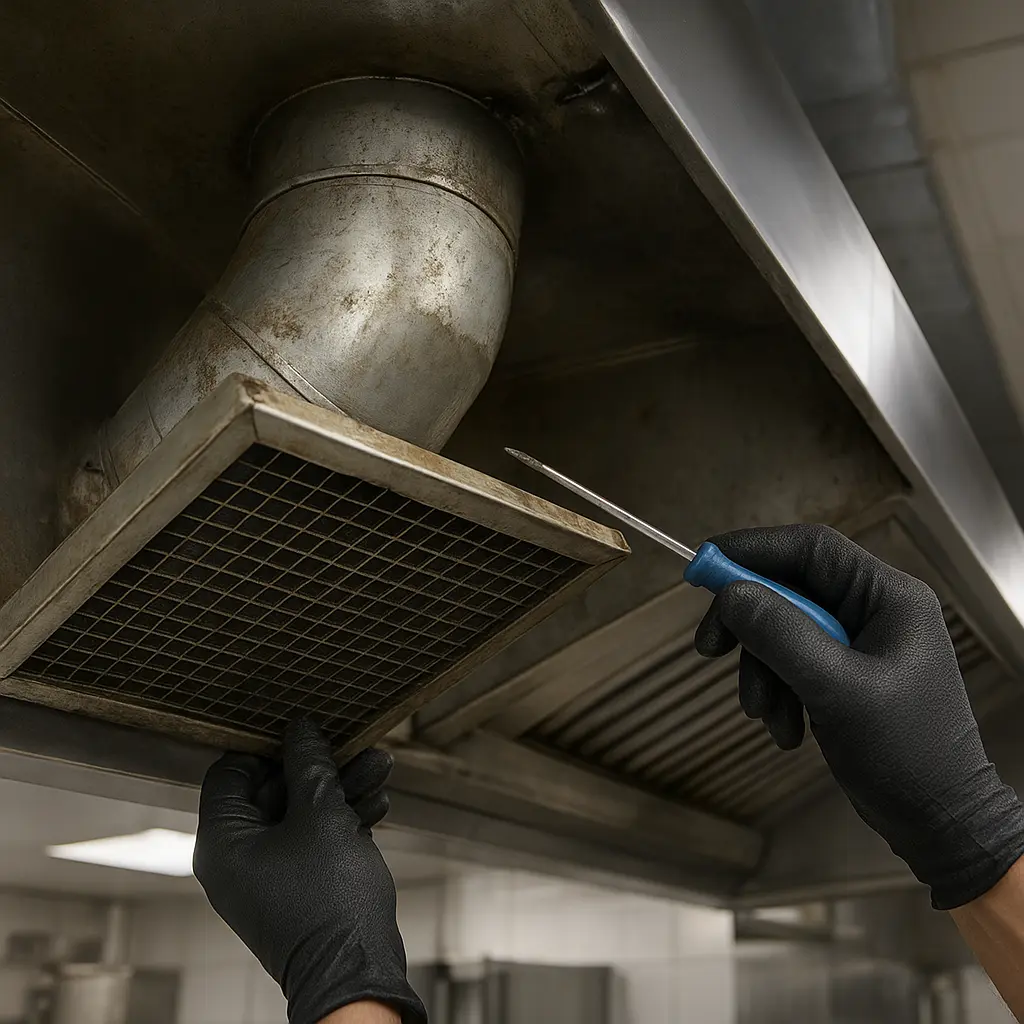
The first Monday of each month requires a deeper inspection than weekly checks. Turn off the system and examine fan blades for grease accumulation, which creates imbalance and accelerates bearing wear. Even slight imbalance generates vibration that travels through the entire system, loosening bolts, cracking welds, and damaging motor mounts over time.
Lubricate all accessible motor bearings using the manufacturer-specified grease type. Over-lubrication causes as many problems as under-lubrication by creating pressure that blows out bearing seals. Apply grease until slight resistance indicates full bearing coverage, typically 2-3 pumps from a standard grease gun for most commercial kitchen exhaust motors.
Inspect all electrical connections for signs of arcing, corrosion, or loose terminals. Connecticut's humid summers accelerate electrical corrosion in kitchen environments where temperature cycling causes condensation inside junction boxes. Tighten terminal screws to manufacturer torque specifications and apply dielectric grease to exposed connections in high-moisture areas.
Filter Inspection and Cleaning
Remove and inspect baffle filters for structural integrity and grease saturation. Filters loaded with grease restrict airflow, forcing fans to work harder and reducing motor lifespan. Run loaded filters through the dishwasher or soak in degreasing solution, then inspect for damaged baffles or weakened frames that allow grease bypass.
A common mistake is reinstalling filters while still wet, which accelerates rust formation on steel components. Allow filters to air dry completely or use compressed air to remove water from crevices before reinstallation. Replace filters showing structural damage immediately rather than waiting for the next scheduled replacement cycle.
Quarterly Professional Service Schedule
Schedule commercial fan repair Connecticut professionals for comprehensive system service every 90 days. This frequency aligns with NFPA 96 requirements for high-volume kitchens and catches developing problems before they interrupt operations. Professional service includes full system shutdown, disassembly of critical components, and deep cleaning that removes accumulated grease invisible during routine inspections.
Professional technicians perform bearing temperature checks using infrared thermometers to identify overheating components before failure. Bearings running 20+ degrees above ambient temperature indicate insufficient lubrication or impending failure requiring immediate motor service. This diagnostic capability prevents the catastrophic failures that occur when bearings seize during operation, often destroying motors and requiring fan housing repairs.
Quarterly service appointments should include restaurant equipment maintenance for components beyond basic cleaning. Technicians inspect belt alignment using laser tools that reveal misalignment invisible to visual inspection. Misalignment as small as 1/8 inch reduces belt life by 50% and creates side loads that damage motor bearings and shorten motor lifespan by years.
According to the National Fire Protection Association, 61% of restaurant fires result from failure to clean cooking equipment including exhaust systems. Regular professional maintenance reduces fire risk while optimizing system performance and energy efficiency.
Maintenance Approach
Upfront Cost
Annual Failure Risk
Reactive (repair after failure)
$0 scheduled maintenance
65% chance of emergency repair averaging $2,800
Semi-annual professional service
$800 in scheduled maintenance
30% chance of unscheduled repair averaging $1,200
Quarterly preventive maintenance
$1,600 in scheduled maintenance
8% chance of unscheduled repair averaging $600
Critical Components Requiring Monitoring
Fan belts represent the highest-frequency failure point in commercial kitchen exhaust systems. Connecticut's temperature swings stress belt materials through thermal expansion and contraction cycles that accelerate cracking and glazing. A glazed belt surface appears shiny rather than matte and slips on pulleys, reducing exhaust capacity and creating the smoke backup that triggers health department attention.
Motor bearings fail gradually through contamination, inadequate lubrication, or misalignment stress. Listen for grinding, squealing, or rumbling sounds that indicate bearing distress. These sounds typically appear 2-4 weeks before complete failure, providing a narrow intervention window. Bearing replacement during scheduled maintenance costs $300-500, while emergency motor replacement after bearing seizure costs $1,800-3,500 including lost revenue.
Hinge Kit Integrity
Access panel hinges experience constant stress from repeated opening during filter cleaning and system inspection. Worn hinge pins create gaps that allow grease-laden air to escape the exhaust stream, depositing grease on surrounding surfaces and creating fire hazards. Hinge kit installations take 30 minutes and cost $150-200, preventing the structural damage that occurs when panels vibrate loose during operation.
Inspect hinge mounting bolts monthly for looseness caused by vibration. Thread-locking compound on hinge bolts prevents the loosening that leads to progressive damage as loose panels impact surrounding structures. Replace any hinge showing visible wear or deformation rather than attempting field repairs that rarely restore proper alignment.
Warning Signs of Imminent Failure
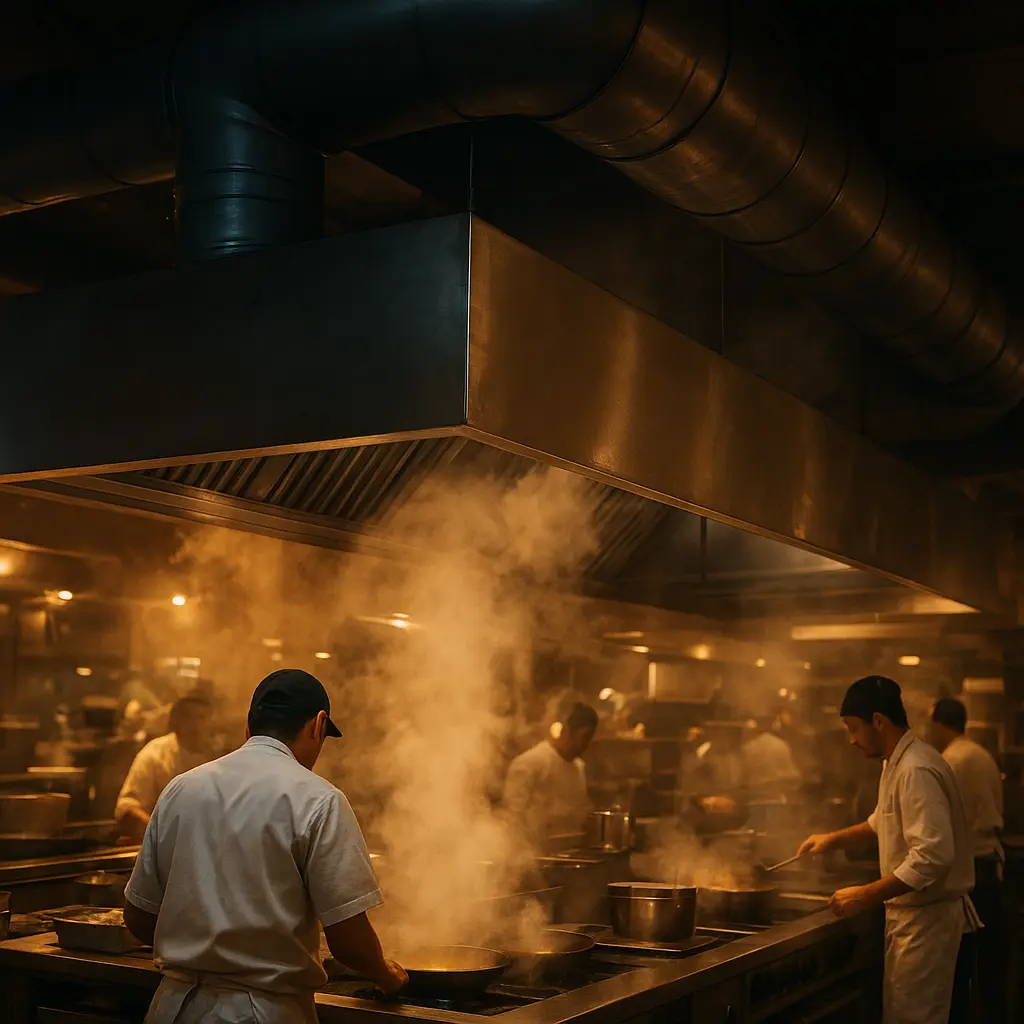
Increasing motor noise over 2-3 weeks signals bearing deterioration requiring immediate attention. The progression from slight hum increase to noticeable grinding typically spans 10-14 days in heavily-used systems. Schedule emergency inspection when noise increases noticeably, even if other performance metrics appear normal. Waiting for performance degradation means bearing damage has progressed to motor shaft scoring that requires complete motor replacement.
Visible vibration in ductwork or hood sections indicates fan imbalance from grease accumulation or blade damage. Vibration loosens fasteners throughout the system, creating the cascading failures where multiple components require simultaneous repair. Address vibration within 48 hours through professional cleaning or fan rebalancing to prevent the $4,000+ repairs required when vibration damages multiple system components.
Reduced exhaust capacity shows as lingering smoke or cooking odors despite normal fan operation. This symptom indicates either filter saturation, duct obstruction, or reduced fan output from belt slippage. Connecticut health codes require adequate ventilation in commercial kitchens. Capacity issues trigger violations that can force temporary closure until systems meet code requirements.
Pro tip: Install an inexpensive vibration monitoring device on your exhaust fan housing. These $40 wireless sensors alert you via smartphone when vibration exceeds preset thresholds, catching developing problems before they become visible during weekly inspections.
Electrical System Warning Indicators
Frequent circuit breaker trips indicate motor overload from mechanical resistance or electrical short conditions. Never reset breakers more than twice without professional diagnosis. The third trip signals a serious fault requiring immediate shutdown to prevent motor burnout or electrical fire. Emergency electrical diagnosis costs $200-300, while replacing a fire-damaged motor and repairing electrical damage costs $5,000+.
Burning electrical odors or visible smoke from motor housings require immediate system shutdown and professional service. These symptoms indicate insulation breakdown or bearing seizure that will destroy motors within hours of continued operation. The inconvenience of unscheduled shutdown is minor compared to the multi-day closure required after catastrophic motor failure during peak service.
Seasonal Considerations for Connecticut Climates
November through March presents elevated risk for Connecticut restaurant exhaust systems. Cold weather thickens accumulated grease, increasing resistance and motor load. Schedule pre-winter professional cleaning in October to remove grease that becomes problematic in cold conditions. This timing prevents the January failures that occur when holiday revenue increases simultaneously stress heavily-loaded systems in cold conditions.
Summer humidity accelerates electrical corrosion and creates condensation in ductwork that drips onto motors and control systems. Monthly electrical inspections during June through September prevent the corrosion-related failures that spike during Connecticut's humid season. Apply protective coatings to exposed electrical connections and ensure drain systems remove condensation before it contacts electrical components.
Spring and fall temperature swings create thermal stress through rapid expansion and contraction cycles. These transitions reveal weaknesses in aging components. Schedule comprehensive inspections in April and October to identify components stressed by seasonal transitions before they fail during peak summer or winter operating periods.
Winter Startup Procedures
After any shutdown exceeding 24 hours in below-freezing conditions, allow 15 minutes of low-speed operation before full-power startup. This warm-up period liquefies thickened grease and allows motor windings to reach operating temperature gradually. Immediate full-power startup in cold conditions stresses motors and can trip breakers from the elevated current draw of cold, thick grease resistance.
Monitor amp draw during first winter startups using a clamp meter. Current exceeding nameplate ratings by 20% indicates excessive mechanical load from grease accumulation requiring immediate professional cleaning. Operating under excessive load conditions destroys motor windings through heat buildup that insulation cannot dissipate.
Frequently Asked Questions
How often should commercial kitchen exhaust fans be professionally serviced in Connecticut?
High-volume restaurants operating 10+ hours daily require quarterly professional service to maintain NFPA 96 compliance and prevent breakdowns. Moderate-use facilities can extend to semi-annual service, but never exceed six months between professional cleanings. Connecticut health codes enforce ventilation requirements strictly, and service records demonstrate compliance during inspections.
What causes most exhaust fan failures in restaurant kitchens?
Bearing failure from inadequate lubrication causes 40% of exhaust fan breakdowns, followed by belt failure at 30% and motor burnout from electrical issues at 20%. The remaining 10% involves structural failures like broken fan blades or damaged housings. Proper maintenance prevents 80% of these failures through regular lubrication, belt replacement, and cleaning.
How much does emergency exhaust fan repair cost compared to scheduled maintenance?
Emergency repairs average $2,800-3,500 including parts, labor, and rush service premiums, while scheduled quarterly maintenance costs $400 per visit. A restaurant experiencing one emergency repair annually spends more than double the cost of proper preventive maintenance while suffering revenue loss from unplanned closures during peak service periods.
Can restaurant staff perform exhaust fan maintenance or is professional service required?
Staff can handle weekly inspections, monthly filter cleaning, and basic bearing lubrication, but quarterly professional service is mandatory for NFPA 96 compliance. Professional technicians access internal duct sections, perform electrical diagnostics, and conduct specialized procedures like fan balancing that require training and equipment unavailable to most restaurant staff.
What are the legal consequences of inadequate exhaust system maintenance in Connecticut?
Connecticut health departments issue violations for inadequate ventilation that can result in temporary closure orders until systems meet code. Insurance companies may deny fire damage claims when maintenance records show neglect contributed to losses. OSHA can fine restaurants for employee exposure to excessive smoke or heat when ventilation systems fail to meet workplace safety standards.
How long do commercial kitchen exhaust fan motors typically last with proper maintenance?
Properly maintained motors in commercial kitchen environments last 7-10 years before requiring replacement. Neglected motors fail within 3-5 years. Regular bearing lubrication, clean operating conditions, and proper electrical supply extend motor life significantly. Replace aging motors proactively during slow seasons rather than waiting for failure during peak revenue periods.
What documentation should restaurants maintain for exhaust system maintenance?
Maintain a bound logbook recording all inspections, professional service dates, parts replacements, and abnormalities observed. Include photographs showing system condition before and after cleaning. Retain professional service invoices showing NFPA 96 compliance. This documentation demonstrates due diligence during health inspections and supports insurance claims if equipment failure causes damage.
What maintenance challenges have you encountered with your restaurant's exhaust system, and what warning signs appeared before equipment failures?
References
National Fire Protection Association standards for commercial kitchen ventilation and fire safety
Occupational Safety and Health Administration workplace ventilation requirements
Commercial kitchen equipment market analysis and maintenance cost statistics
Restaurant industry operational efficiency and maintenance best practices


Comments