


How to Choose a Hood Cleaning Company in Connecticut
Most Connecticut restaurant owners realize they need hood cleaning only when a fire marshal flags their exhaust system during an inspection. By then, the grease buildup is serious, the compliance gap is already documented, and a rushed hiring decision often makes things worse. Knowing how to choose a hood cleaning company in Connecticut before you are under pressure is what separates kitchens that stay compliant from those that rack up violations, voided insurance claims, and preventable fire damage. This guide gives you the specific criteria, the right questions to ask, and the red flags that should end a conversation with any vendor immediately.
Table of Contents
Quick Takeaways
Key Insight
Explanation
IKECA certification is the baseline, not a bonus
Technicians certified by the International Kitchen Exhaust Cleaning Association (IKECA) have been tested on NFPA 96 standards. Any company unable to name the certification type and number should not be on your shortlist.
Connecticut incorporates NFPA 96 directly into state fire code
The Connecticut State Fire Safety Code adopts NFPA 96 as its minimum standard. The local fire marshal sets the actual frequency, and that frequency can be stricter than the NFPA baseline.
Cleaning scope must be confirmed in writing
A compliant clean covers the hood, plenum, filters, all ductwork sections, and the rooftop fan. Verbal scope agreements lead to disputes and incomplete documentation when inspectors arrive.
Before-and-after photos are non-negotiable documentation
Photos of grease levels at the start and end of every service protect you during insurance claims and fire marshal audits. Refuse any provider who does not offer them.
Service frequency depends on your cooking type, not just your calendar
High-volume or solid-fuel operations may require monthly or quarterly cleaning. A knowledgeable company tailors the schedule to your actual cooking volume, not a one-size-fits-all annual visit.
Proof-of-Performance documentation is required for compliance
After every service, you are entitled to a written report documenting what was cleaned, grease levels found, any areas that could not be accessed, and the technician's signature.
Insurance and liability coverage must be verified independently
Ask for a certificate of insurance and confirm it is current. A company working without adequate liability coverage exposes your property to uninsured risk during every service visit.
Why the Wrong Choice Costs More Than You Think
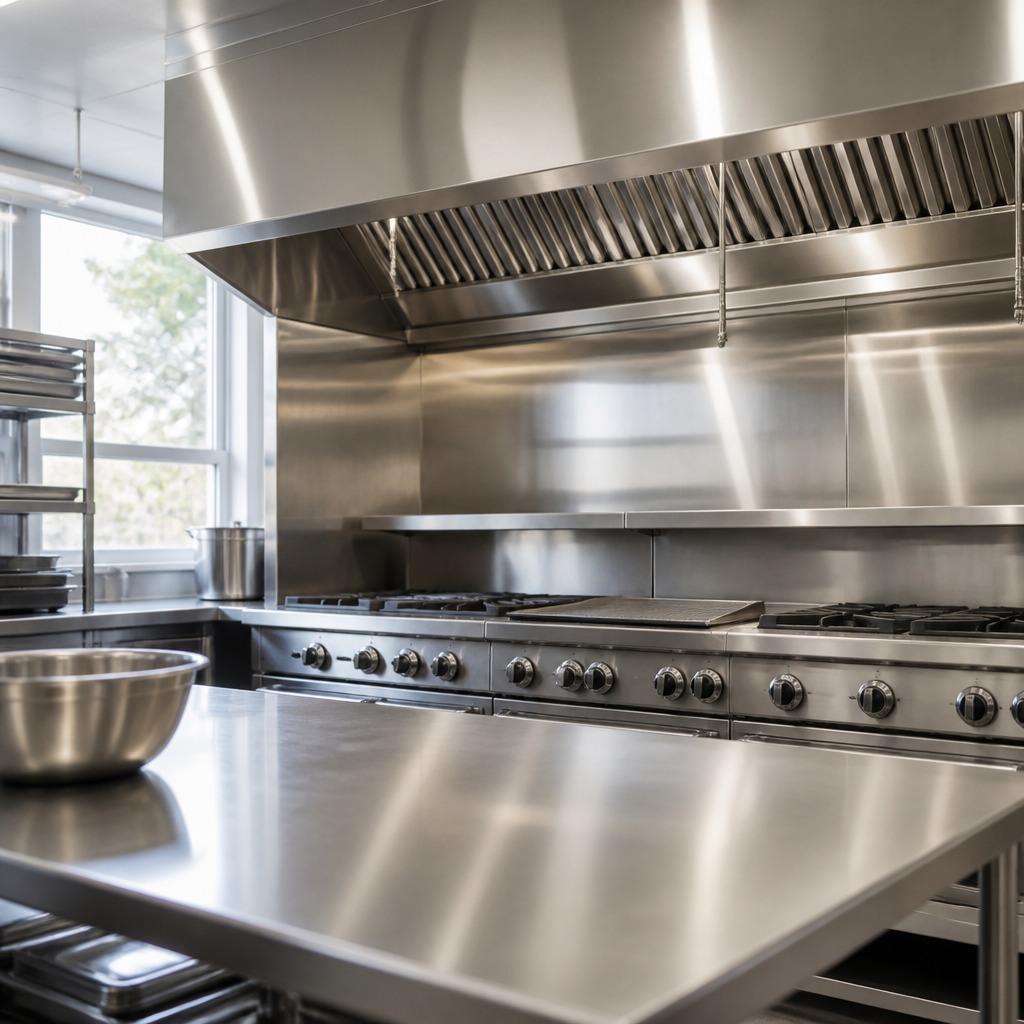
A surface-level hood cleaning looks identical to a compliant full-system clean from the outside. The stainless steel hood canopy looks spotless. But when grease remains packed into the plenum, the ductwork, and the rooftop fan housing, you have paid for the appearance of compliance without actually achieving it. That distinction matters enormously when a fire marshal inspects your system or when a kitchen fire triggers an insurance investigation.
The National Fire Protection Association has documented that cooking equipment is the leading cause of restaurant fires, with cooking materials such as oils and grease being the first ignition source in a significant portion of those fires. A neglected exhaust system does not just create a fine risk. It creates a fire pathway that runs from your cooking line straight through your ceiling and roof. The financial and human cost of that outcome far exceeds the premium a qualified company charges over a low-bid provider who cleans only what is visible.
In practice, the Connecticut food service operators who face the worst compliance problems are not those who skipped cleaning entirely. They are those who hired a company that looked credible but delivered surface-level work without proper documentation. When the fire marshal arrives and finds grease in the ductwork despite a cleaning invoice on file, the operator bears the responsibility, not the vendor.


NFPA 96 and Connecticut Fire Code: What You Actually Need
Connecticut incorporates NFPA 96, the Standard for Ventilation Control and Fire Protection of Commercial Cooking Operations, directly into the Connecticut State Fire Safety Code. This means compliance with NFPA 96 is not advisory for Connecticut restaurants. It is the legal minimum, and the Connecticut fire marshal oversees enforcement by conducting inspections and reviewing cleaning documentation from food service establishments across the state.
The core principle is straightforward: NFPA 96 sets a minimum cleaning schedule, but the local or state fire marshal determines the actual required frequency. That frequency can be stricter than what NFPA 96 specifies. Under NFPA 96, cleaning intervals are tied to cooking type and volume. Monthly cleaning applies to solid-fuel cooking operations such as wood-fired or charcoal equipment. Quarterly cleaning applies to high-volume operations such as 24-hour diners or heavy charbroiling kitchens. Semi-annual cleaning applies to moderate-volume kitchens such as standard sit-down restaurants. Annual cleaning applies to low-volume operations such as seasonal businesses or institutional kitchens with limited cooking activity.
Your fire marshal can order more frequent cleaning at any time if grease buildup is observed beyond acceptable levels. That makes choosing a company with a genuine understanding of NFPA 96, not just one that mentions it in their marketing, an operational necessity for every Connecticut food service establishment.
Pro tip: Ask any prospective cleaning company to walk you through your recommended frequency based on your specific cooking equipment and volume before you discuss pricing. A company that jumps straight to quoting an annual clean for a high-volume kitchen that charbroils daily is telling you something important about how they approach their work.
What Documentation Compliant Cleaning Produces
Every compliant cleaning visit must produce written documentation. This includes a service report specifying which components were cleaned, the grease levels found, any areas that could not be accessed, and the technician's signature. Reputable companies also issue an IKECA Proof-of-Performance decal after every service and provide before-and-after photos of grease levels and cleaned surfaces. These documents are what your fire marshal and your insurance carrier will ask for. If a company cannot describe this paperwork process before the job, they are unlikely to produce it after.
Credentials to Verify Before You Sign Anything
Credentials in this industry are verifiable, not self-reported. Before committing to any company, confirm three things independently: certification, insurance, and references from accounts similar to yours.
IKECA Certification: What It Means and How to Verify It
IKECA, the International Kitchen Exhaust Cleaning Association, was founded in 1989 and sets the benchmark standard for kitchen exhaust cleaning work, fire safety, and compliance with codes including NFPA 96. IKECA-certified technicians have been trained and tested against established industry standards. They understand which areas of a system collect the most grease and have documented procedures for cleaning them properly. Incomplete cleaning leaves grease in hard-to-reach areas, and an untrained technician will miss these spots consistently. Ask any company for the specific certification type, either CECT (Certified Exhaust Cleaning Technician) or CECS (Certified Exhaust Cleaning Supervisor), and the certification number, then verify it on the IKECA member directory before any service date.
Many jurisdictions and facility managers now require IKECA certification before awarding service contracts. If a company does not hold current IKECA credentials, the decision is simple: do not hire them. This is not a technicality. It determines whether your system is legally compliant, how your fire risk is managed, and whether your service documentation will hold up during an inspection.
Insurance and Liability Coverage
Request a certificate of insurance and confirm it is current. Reputable companies carry substantial general liability coverage. A company working in your kitchen without adequate coverage exposes your property to uninsured risk, and some building owners and facility managers require proof of coverage before authorizing any access. Do not take a verbal assurance. Ask for the certificate and read the expiration date.
Pro tip: Call the insurance carrier listed on the certificate to confirm the policy is active. Policy certificates can be outdated, and verifying directly takes two minutes and eliminates the risk of working with a lapsed policy.
What a Complete Cleaning Service Actually Includes
A compliant hood cleaning service covers every component of the exhaust system, not just the surfaces visible from the kitchen floor. The scope must include the hood canopy, the plenum chamber above the filters, all filters, the ductwork from the hood to the rooftop, and the rooftop exhaust fan. Any company that describes its service without mentioning ductwork access or rooftop fan cleaning is describing an incomplete service, regardless of how reasonable the price looks.
A common problem is that a kitchen's stainless steel hood canopy looks clean after a surface wipe, but when the full exhaust system, including plenum, ducts, and rooftop fans, is inspected, it still contains significant grease accumulation.
When evaluating scope, ask specifically whether service includes manual entry into ductwork or only vacuum and brush cleaning of visible surfaces. A compliant clean requires reaching and cleaning all ductwork sections. Confirm in writing which components the quoted price covers. Scope disputes after the fact are common when this is handled verbally, and the operator almost always loses those arguments because the cleaning invoice rarely specifies what was and was not cleaned.
Beyond the core cleaning scope, established commercial kitchen service providers also handle maintenance work that directly affects exhaust system performance. Exhaust fan repair, fan belt replacement, motor swaps, and hinge kit installations are part of keeping a system both clean and functional. A company that only cleans but cannot identify or address mechanical issues in the exhaust fan is giving you an incomplete picture of your system's condition. Grease trap cleaning and restaurant equipment detailing are also components of a comprehensive commercial kitchen exhaust cleaning program in Connecticut.

How to Evaluate Quotes and Compare Service Tiers
Getting at least three quotes before selecting a provider is standard practice. But comparing quotes only on price misses the point. The question is not which company charges less. The question is what each company is actually quoting. Two quotes for the same kitchen can describe completely different scopes of work and produce completely different compliance outcomes.
When you receive a quote, confirm what components are covered, whether before-and-after photography is included, what documentation will be produced, whether the frequency recommendation is based on your actual cooking type and volume, and whether the technicians hold current IKECA credentials. A quote that addresses all of these points is worth more than a lower number that does not.
Price alone is a poor signal in this market. A very low quote typically reflects one of two things: a compressed scope that skips ductwork and rooftop fan cleaning, or a company operating without proper certification and insurance. Both outcomes cost far more than the savings when a fire marshal audit or an insurance claim surfaces the deficiency. For Connecticut restaurants operating across multiple locations, ask whether the company services the entire state or only specific regions. A provider with demonstrated coverage across all Connecticut service areas eliminates the operational complexity of managing multiple vendors for different locations.
Red Flags That Disqualify a Vendor Immediately
Some signals should end the conversation regardless of price, availability, or how professional the company's website looks. These are not judgment calls. They are clear indicators that the company either cannot or will not deliver compliant work.
The first disqualifier is an inability to name IKECA certification type and number. A legitimate company knows its technicians' credentials without hesitation. The second is an unwillingness to provide a certificate of insurance before scheduling. The third is a quote that does not specify ductwork and rooftop fan cleaning in writing. The fourth is an inability to describe the documentation and service report process. The fifth is a company that recommends annual cleaning for a kitchen that clearly operates at high volume with heavy charbroiling equipment. That recommendation reveals either ignorance of NFPA 96 requirements or a deliberate choice to underservice accounts.
A common mistake Connecticut operators make is treating a cleaning company's responsiveness and price as the primary selection criteria. Both matter once the baseline credentials are confirmed. Before that point, they are irrelevant. A company that answers calls quickly and quotes low but delivers surface-level undocumented work is worse than a slower, more expensive company that produces compliant documentation every visit. Hartford area kitchens and those along the Connecticut shoreline near Norwalk operate under the same NFPA 96 requirements, and the standard for vendor selection is identical regardless of location.
Comparing Service Approaches Side by Side
Not all hood cleaning services are structured the same way. Understanding the difference between a surface clean, a standard clean, and a full-system compliant clean helps you evaluate what any given quote actually delivers.
Service Approach
What Is Covered
Connecticut Compliance Outcome
Surface-Only Clean
Hood canopy exterior and filters cleaned, ductwork and rooftop fan not addressed or only partially brushed
Does not meet NFPA 96 requirements. Fire marshal inspection will identify grease in ductwork. Documentation is typically absent or minimal.
Standard Partial-System Clean
Hood, plenum, and filters cleaned, some ductwork addressed, rooftop fan may or may not be included depending on quote scope
Partial compliance at best. Acceptable only if ductwork is short and fully accessible. Risky for kitchens with vertical or horizontal duct runs exceeding accessible length.
Full-System NFPA 96 Compliant Clean
Hood canopy, plenum, all filters, all ductwork sections including access panel areas, and rooftop exhaust fan cleaned. Before-and-after photos taken. IKECA Proof-of-Performance decal issued. Written service report provided.
Fully compliant with Connecticut State Fire Safety Code and NFPA 96. Documentation satisfies fire marshal audits and insurance carrier requirements.
The practical difference between a partial-system clean and a full-system compliant clean is not always visible at the hood level. It shows up in the ductwork, in the documentation package, and in the outcome when a fire marshal reviews your records. Any company offering the best kitchen hood cleaning service in Connecticut should be able to describe, without prompting, exactly how their service maps to the full-system compliant column above.
Frequently Asked Questions
How often does a Connecticut restaurant legally need hood cleaning?
The required frequency depends on your cooking type and volume under NFPA 96, which Connecticut incorporates directly into its State Fire Safety Code. Solid-fuel cooking operations require monthly cleaning. High-volume operations such as 24-hour diners or heavy charbroiling kitchens require quarterly cleaning. Moderate-volume restaurants require semi-annual cleaning. Low-volume or seasonal operations may clean annually. Your local fire marshal can order more frequent cleaning at any time based on observed grease accumulation, so the schedule must be built around your actual cooking activity, not a default annual assumption.
What credentials should I verify before hiring a commercial exhaust cleaning service in Connecticut?
Verify that the company holds current IKECA certification and ask for the specific certification type (CECT or CECS) along with the certification number so you can confirm it directly with the IKECA member directory. Request a current certificate of general liability insurance and confirm it has not lapsed. Ask for references from clients with similar kitchen setups and cooking volumes. A company that hesitates on any of these points is not ready to be hired.
What does a compliant hood cleaning service report need to contain?
After every compliant cleaning visit, you should receive a written service report documenting which components were cleaned, the grease levels found before cleaning, any areas that could not be accessed and why, and the technician's signature. The company should also provide before-and-after photographs and issue an IKECA Proof-of-Performance decal. These documents are what your fire marshal and insurance carrier will request during an audit or claim investigation.
Is the cheapest quote a reliable way to find the best kitchen hood cleaning in Connecticut?
No. A low quote almost always reflects a compressed scope, missing certification, or absent insurance coverage. Two quotes for the same kitchen can describe completely different scopes of work. Always compare quotes based on what components are covered in writing, what documentation is included, whether the technicians are IKECA certified, and whether the service frequency recommendation matches your actual cooking type and volume. The cheapest quote that delivers surface-level, undocumented cleaning is an expensive mistake when a fire marshal or insurance adjuster reviews your records.
What is the difference between hood cleaning and exhaust system cleaning?
Hood cleaning in a marketing or casual sense often refers to cleaning the visible hood canopy and filters. Exhaust system cleaning, as required under NFPA 96, covers the entire path grease travels: the hood, the plenum above the filters, all ductwork from the hood to the roof, and the rooftop exhaust fan. A compliant service must cover the full system. Always confirm the complete scope in writing before any work begins, because verbal descriptions of scope are frequently different from what is actually delivered.
Do I need separate vendors for cleaning and for exhaust fan repair or maintenance?
Not necessarily. Working with a single provider who handles both cleaning and mechanical maintenance, including exhaust fan repair, fan belt replacement, motor swaps, and hinge kit installations, gives you a cleaner operational picture and a single point of accountability for your exhaust system's condition. A company that only cleans but cannot assess or address mechanical wear in your exhaust fan is giving you an incomplete evaluation every service visit. Grease trap cleaning and restaurant equipment detailing are also services worth consolidating with your primary exhaust system provider if they offer them.
Does the location of my Connecticut restaurant affect which cleaning company I should choose?
Your location affects availability, response time, and whether a company genuinely services your area or subcontracts out. The NFPA 96 compliance requirements are identical across all Connecticut jurisdictions, so the selection criteria do not change based on geography. What does change is the local fire marshal's enforcement posture, which can be stricter in some jurisdictions than the NFPA 96 minimum. Confirm that any company you consider has documented experience with kitchens in your specific county or region and is familiar with how your local authority having jurisdiction interprets and enforces cleaning frequency requirements.
Have you recently gone through the process of evaluating hood cleaning companies for your Connecticut kitchen? Share what criteria mattered most or where you ran into unexpected complications.


Comments