


Restaurant Kitchen Safety July 4th: CT Guide
- Jul 11
- 12 min read
July 4th is the single busiest restaurant day of the year in Connecticut, and it is also one of the most dangerous. The National Fire Protection Association reports that cooking equipment is the leading cause of restaurant fires, and holiday volume spikes push already-stressed kitchens past their limits. Grease buildup that was manageable on a Tuesday in April becomes a serious fire risk when your line is running at 200 percent capacity. If you operate a food service establishment in CT and you have not audited your exhaust system, filters, and hood before the Fourth, you are rolling the dice on your business. This guide covers restaurant kitchen safety July 4th preparation from the inside out.
Table of Contents
Quick Takeaways
Key Insight
Explanation
July 4th doubles fire risk
Extended cooking hours and high cooking temperatures accelerate grease accumulation in hoods and ducts, dramatically increasing ignition risk compared to a standard service day.
Clean your hood before the holiday, not after
A pre-holiday professional hood cleaning removes the grease deposits that ignite under heavy cooking loads. Post-holiday cleaning does not prevent the fire that already happened.
Filters must be checked, not assumed clean
Baffle filters saturated with grease reduce airflow and create a direct flame path into the duct. Check them 48 hours before your holiday service, not the morning of.
NFPA 96 is a legal floor, not a ceiling
Connecticut restaurants must meet NFPA 96 cleaning frequency standards, but high-volume operations cooking heavily during holidays should exceed those minimums for real fire safety.
Exhaust fan performance matters on hot days
July heat reduces fan efficiency. A fan running with a worn belt or failing motor on a 90-degree holiday weekend is a ventilation failure waiting to happen.
Staff training is not optional on busy nights
New seasonal staff hired for the summer often lack proper fire response training. A written protocol reviewed before July 4th service can prevent a minor flare-up from becoming a suppression event.
Grease trap overflows spike in July
High-volume holiday cooking generates significantly more grease waste. An overfull grease trap causes backups that create sanitation violations and secondary fire hazards.
Why July 4th Is a Fire Risk Multiplier for CT Restaurants
The data consistently shows that restaurant fires spike around major holidays, and July 4th sits at the top of that list alongside Thanksgiving and Christmas Eve. According to the NFPA, an estimated 7,410 structure fires occur in eating and drinking establishments annually, with cooking equipment responsible for 61 percent of those incidents. On high-volume days, every risk factor is amplified.
Connecticut restaurants face a specific challenge in July: the combination of outdoor heat and an overloaded kitchen creates conditions where exhaust systems work harder but perform worse. Ambient temperatures above 85 degrees reduce the natural pressure differential that helps your exhaust fan pull air through the system. The result is reduced capture velocity at the hood face, meaning grease-laden air is more likely to escape into the kitchen rather than being channeled into the duct.
A common mistake is treating July 4th as just a busy day that requires more prep food and extra staff. The actual risk is mechanical and structural. Grease that has been slowly coating the interior of your ducts since your last cleaning becomes a ready ignition source the moment cooking volume and heat spikes. One unattended flare-up on a broiler or flat top is all it takes.
"Cooking fires are the number one cause of home and restaurant structure fires in the United States. The majority are preventable with basic equipment maintenance and staff awareness." - National Fire Protection Association
Hood and Exhaust System Readiness Before the Holiday Rush
Your hood, filters, ductwork, and exhaust fan are a single connected system. A failure anywhere in that chain compromises the entire system's ability to capture and remove grease-laden cooking vapors. Before July 4th, each component needs to be inspected individually, not just given a visual once-over during a slow morning.


Baffle Filters: The First Line of Defense
Baffle filters are designed to capture grease particles before they enter the duct. When they are clean and properly installed, they do their job effectively. When they are saturated, they become a grease reservoir directly above your cooking line. Pull them out and hold them up to the light. If you cannot see through them, they need to be cleaned or replaced before your holiday service.
Pro tip: Run your baffle filters through a commercial dishwasher cycle 48 hours before July 4th so they have time to dry completely before reinstallation. A wet filter reinstalled into a hot hood creates steam issues and reduces grease capture efficiency.
Duct Interior Inspection for Grease Accumulation
Most restaurant operators never look inside their ducts, and that is exactly the problem. NFPA 96 establishes inspection schedules based on cooking volume and fuel type, with high-volume operations requiring quarterly inspections. If your last professional hood cleaning was more than three months ago and you are about to run a 14-hour service on July 4th, you need to schedule a cleaning before the holiday, full stop.
Superior Clean's commercial kitchen hood cleaning service covers the full system: hood surfaces, baffle filters, ductwork, and the exhaust fan housing. For Connecticut restaurants preparing for a high-volume holiday, a pre-Fourth cleaning is not a luxury. It is the difference between a fire prevention measure and a fire waiting to happen. Learn more about hood cleaning services in Connecticut.
Exhaust Fan Motor and Belt Condition
July is the worst month to discover your exhaust fan belt is cracked or your motor is running hot. Fan belt failure during peak service shuts down your entire ventilation system. In practice, a belt that has been in service for 18 months in a high-volume kitchen has probably reached the end of its reliable life. Check it visually for cracks, fraying, and glazing before the holiday. If there is any doubt, replace it. The cost of a belt is negligible compared to the cost of a suppression system discharge or a kitchen shutdown. Superior Clean handles exhaust fan repair and fan belt replacement for CT restaurants.
Holiday Restaurant Fire Prevention CT: Pre-Holiday Checklist
Holiday restaurant fire prevention in CT requires a structured approach, not a mental checklist run through during a busy Wednesday prep shift. Write it down, assign it to a specific person, and complete it no later than July 2nd. That gives you 48 hours to address anything that needs repair or professional service before the Fourth arrives.
Here is what that checklist should include, based on the specific failure points that cause holiday kitchen fires in Connecticut restaurants:
Hood cleaning status confirmed: Verify the date of your last professional hood cleaning against NFPA 96 requirements for your cooking volume and type.
Baffle filters cleaned and reinstalled: All filters clean, dry, and properly seated in their tracks.
Duct access panels inspected: Open and visually check for heavy grease accumulation or standing grease in horizontal duct runs.
Exhaust fan belt inspected: Visual check for wear, cracking, and correct tension.
Exhaust fan motor checked: Listen for abnormal noise, check for excessive heat during operation.
Fire suppression system inspection current: Confirm your ansul system was last inspected within the past six months.
Suppression system nozzles unobstructed: No equipment has been moved under the hood that would block nozzle coverage.
Grease trap pumped and capacity confirmed: Confirm available capacity for holiday volume. Schedule pumping if within 75 percent of capacity.
Fire extinguishers fully charged and accessible: Verify pressure gauge readings and confirm staff know locations.
Emergency contact numbers posted: Suppression system service provider, Superior Clean's service number, local fire department non-emergency line.
Pro tip: Take dated photos of your hood, filters, and suppression nozzles as part of this pre-holiday inspection. If an incident occurs, documentation of your maintenance practices is critical for insurance purposes and for demonstrating NFPA 96 compliance to Connecticut fire marshals.
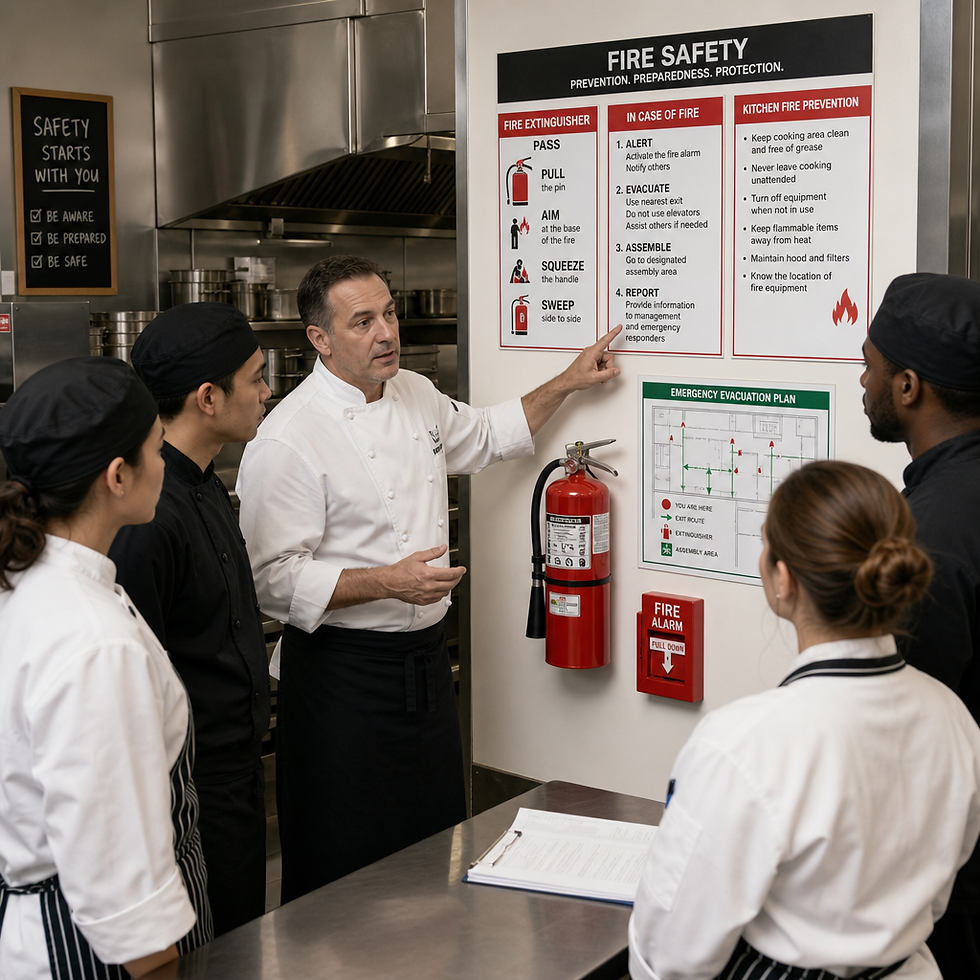
Busy Restaurant Kitchen Tips Connecticut: Managing the Rush Safely
Running a safe kitchen during a July 4th rush in Connecticut is a different challenge than managing a standard Friday night. Volume is higher, staff fatigue sets in faster, and the pressure to keep tickets moving creates conditions where safety habits slip. These busy restaurant kitchen tips for Connecticut operators are based on what actually goes wrong during holiday service, not textbook scenarios.
Control Cooking Temperatures Under Volume Pressure
The instinct during a rush is to crank every burner to maximum and keep them there. In practice, running equipment at maximum output for extended periods generates significantly more cooking vapors than normal service, overwhelming the exhaust system's capture capacity. Train your line cooks to maintain consistent, appropriate temperatures rather than spiking heat to catch up with tickets.
Overloaded fryers are a specific risk. A fryer filled beyond its rated capacity with cold product drops oil temperature sharply, causing operators to increase heat. When that food finishes cooking and leaves the fryer, the bare oil superheats rapidly. That is a grease fire scenario. Enforce fryer load limits regardless of ticket pressure.
Assign a Dedicated Fire Safety Monitor for July 4th Service
On a normal service night, your kitchen manager handles fire safety as part of general oversight. On July 4th, that is not enough. Assign one person during each shift to specifically monitor the cooking line, check that suppression system pull cables are unobstructed, and confirm that the hood is visibly clearing smoke from the cooking zone. This does not require additional staff. It requires redefining one existing role's priorities for the night.
Keep the Hood Capture Zone Clear
A common problem during busy service is equipment migration. Portable steam tables, extra prep surfaces, and equipment moved for efficiency during setup can end up positioned partially outside the hood's capture zone. Any cooking that happens outside the area directly under the hood is cooking that is not being ventilated. On July 4th, confirm that every active cooking station sits within the hood's effective capture area before service begins.
Comparison of Grease Management Approaches for High-Volume Days
Not all approaches to managing grease risk on a high-volume holiday are equal. The table below compares three real approaches Connecticut restaurant operators use, with honest assessments of their effectiveness specifically for July 4th conditions.
Approach
What It Involves
Effectiveness for July 4th
Professional Pre-Holiday Hood Cleaning
Full system cleaning by a certified provider like Superior Clean covering hood, filters, ductwork, and fan housing before the holiday. Includes written service documentation for NFPA 96 compliance.
High. Removes accumulated grease before it becomes an ignition source during peak cooking loads. Provides documented compliance for CT fire inspections.
In-House Filter Cleaning Only
Kitchen staff clean baffle filters in the dish machine and wipe down accessible hood surfaces. Duct interior and fan housing are not addressed.
Moderate for surface risk only. Does nothing for grease accumulation in ducts or fan housing, which are the primary ignition points in serious kitchen fires.
Scheduled Annual Cleaning Without Holiday Adjustment
Following NFPA 96 minimum annual schedule without increasing frequency based on seasonal volume spikes. Cleaning happens when scheduled, not when conditions demand it.
Low for high-volume operators. Annual cleaning is the minimum for low-volume kitchens. A restaurant that significantly increases output for summer holidays should treat that period as a trigger for additional cleaning, not wait for the annual date.
Staff Protocols That Actually Reduce Risk During Peak Service
Written protocols matter on high-volume holiday nights because verbal instructions given during the chaos of a pre-shift setup do not stick. Before July 4th service, distribute a one-page written protocol to every kitchen staff member. It does not need to be elaborate. It needs to be specific and actionable.
The protocols that consistently reduce incident risk in busy Connecticut kitchens are straightforward. Never leave a cooking station unattended while equipment is at temperature. Keep combustible materials, including paper towels, cardboard, and cloth, at least three feet away from active cooking surfaces. Know where the ansul system pull station is located before service begins, not during an emergency. Report any visible smoke from the hood that does not clear within 30 seconds immediately to the kitchen manager.
Seasonal and temporary staff hired for the summer deserve specific attention. A new employee who started three weeks ago for the summer rush may never have seen a kitchen fire suppression system activate. Walk new staff through the suppression system pull station location, the fire extinguisher locations, and the exit routes as part of onboarding, not as an afterthought before a holiday shift.
The question of whether staff should attempt to fight a small grease fire with an extinguisher or immediately pull the suppression system is one that requires a clear policy. The generally accepted practice is: if a fire is contained to a cooking vessel and can be smothered by covering the vessel, do that first. If the fire reaches the hood or duct, pull the suppression system immediately and evacuate the kitchen. This decision cannot be made in the moment without prior training.
After the Fourth: Immediate Post-Holiday Steps
The day after July 4th is not the day to rest. It is the day to assess the condition of your exhaust system after one of the most intensive cooking periods of the year. What you do in the 24 hours after the holiday directly affects your fire risk for the rest of July and August, which are also high-volume months for Connecticut restaurants.
Start with a visual inspection of your hood and filters before the first service of July 5th. After a 12-to-14-hour holiday service, grease accumulation on filters and hood surfaces will be visibly higher than it was before the holiday. Pull the filters, check the baffle condition, and schedule a professional cleaning if you see standing grease in the filter channels or on the hood baffle surface.
Check your grease trap. A high-volume July 4th service generates a significant amount of grease waste, and traps that were at 60 or 70 percent capacity before the holiday may be at or over capacity after it. An overflowing grease trap creates a sanitation violation and a secondary fire hazard if overflow reaches hot surfaces or electrical components. Superior Clean provides grease trap cleaning services for Connecticut restaurants.
Document what you observed. Note any equipment that ran unusually hot, any suppression system anomalies, any filter conditions that concerned you. This documentation informs your maintenance schedule for the rest of the summer and demonstrates due diligence to your insurer and to Connecticut fire inspectors.
Frequently Asked Questions
How often should Connecticut restaurants clean their hoods before a high-volume holiday like July 4th?
NFPA 96 sets minimum cleaning frequencies based on cooking type and volume, ranging from monthly for high-volume operations to annually for low-volume ones. For a restaurant that significantly increases its cooking output during summer holidays, the right answer is: your last cleaning should be within 90 days before any major volume spike. If you are a moderate-volume CT restaurant with a quarterly schedule, confirm your last cleaning falls within that window before July 4th. If it does not, schedule a pre-holiday cleaning.
What are the signs that a commercial kitchen hood needs cleaning before July 4th?
The most visible signs are grease dripping from the hood canopy, visible grease buildup on baffle filter surfaces, a persistent greasy film on kitchen surfaces near the hood, and reduced airflow that makes the kitchen smokier than usual during normal service. Any one of these signs before a high-volume holiday means you need a professional cleaning before the Fourth, not after it.
Is a pre-holiday hood cleaning required by Connecticut law?
Connecticut does not have a specific statute requiring pre-holiday cleaning. However, NFPA 96, which Connecticut fire marshals use as the compliance standard, requires cleaning at frequencies that are determined by cooking volume and type. If operating at holiday volumes pushes you past your scheduled cleaning interval, compliance requires cleaning. Beyond legal minimums, the liability and business continuity risks of a holiday kitchen fire make pre-holiday cleaning a straightforward business decision.
What should Connecticut restaurant managers do if a grease fire starts during July 4th service?
If a fire starts in a cooking vessel, cover the vessel with a lid to smother it and remove the heat source. Do not move the vessel. Do not use water on a grease fire. If the fire reaches the hood or duct, or if it cannot be immediately controlled, pull the ansul suppression system pull station and evacuate all kitchen staff. Call 911 immediately. Do not re-enter the kitchen until the fire department clears it. After any suppression system activation, the system must be professionally inspected and recharged before the kitchen can operate.
How does July heat affect commercial kitchen exhaust systems in Connecticut?
High ambient temperatures reduce the pressure differential between the kitchen interior and the outside air, which is what drives exhaust fan performance. On a 90-degree July day, your fan works harder to move the same volume of air. If the fan belt is worn, the motor is running at reduced efficiency, or the duct has accumulated grease narrowing the airflow path, the system may not be able to maintain adequate capture velocity at the hood face. This means more cooking vapors, smoke, and grease particles escape into the kitchen rather than being exhausted. Regular maintenance before summer peaks prevents this compounding performance loss.
Does Superior Clean serve all of Connecticut for pre-holiday hood cleaning?
Superior Clean provides commercial kitchen hood cleaning and exhaust system maintenance throughout Connecticut. If you need a pre-July 4th cleaning scheduled on short notice, contact them directly through the Superior Clean contact page to confirm availability and scheduling for your location.
If you manage a Connecticut restaurant kitchen and have dealt with a close call or a maintenance issue around a major holiday, sharing what you found and how you handled it helps other operators in the state make better decisions before the next busy season.
We would love your feedback and any insights you would share with others. What perspective would you add?


Comments