


University Dining Hall Hood Cleaning in CT: NFPA 96 Guide
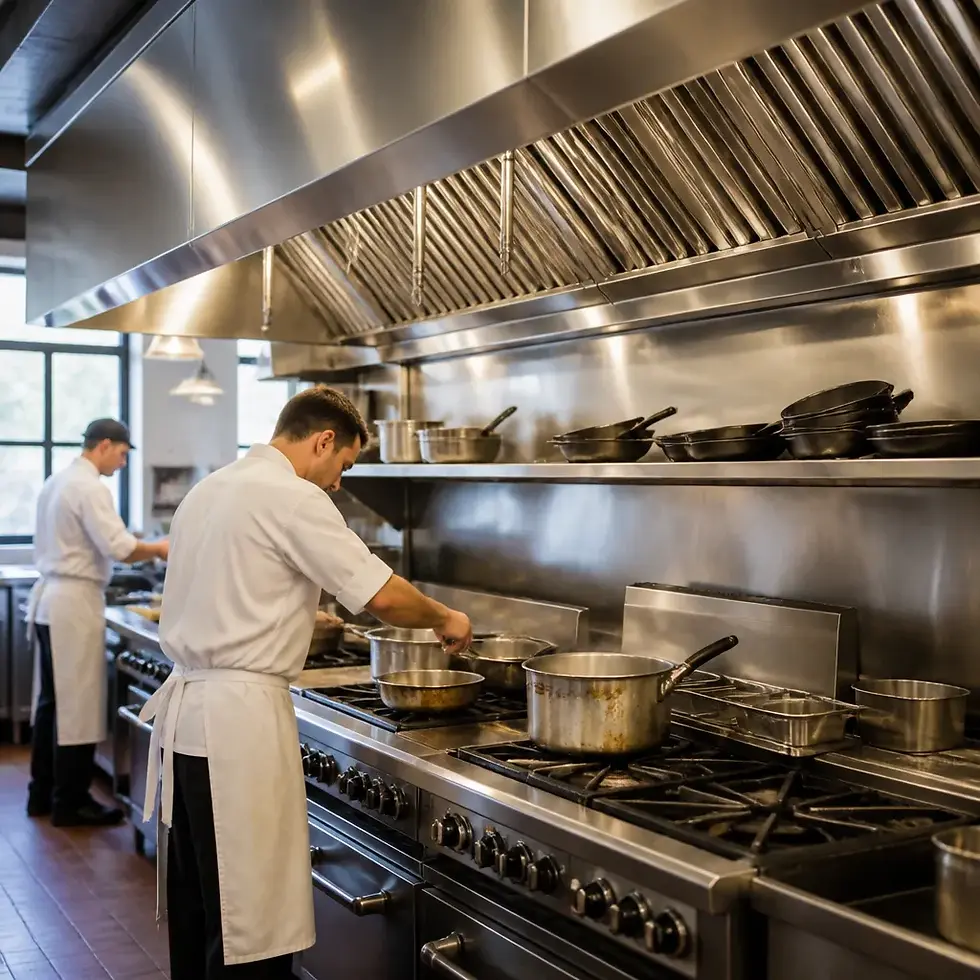
A university dining hall can run more cooking hours in a week than many restaurants do in a month. Hoods over the main line, woks at the stir-fry station, and a fryer bank at the grill all feed grease into shared exhaust paths that climb through several floors to a rooftop fan. In Connecticut, where campus kitchens answer to local fire marshals and insurance reviewers, a loose university dining hall hood cleaning schedule can turn into a failed inspection or a serious fire. This guide covers large-scale commercial kitchen NFPA 96 compliance on campus, from scheduling around the academic calendar to the records inspectors ask for first.
Table of Contents
Quick Takeaways
Key Insight | Explanation |
|---|---|
Map every exhaust run before you book anything | Record which hood feeds which fan and duct run, so no connected section gets skipped during a cleaning. |
Set the interval by the heaviest station | A wok line or fryer bank under a shared hood sets the cleaning clock for the whole system, not the average load. |
Use winter and spring breaks for deep work | Reduced meal counts let you take fans offline and finish vertical duct runs without disrupting service. |
Inspectors read records before they read grease | Dated service reports and before-and-after photos for every exhaust path prove the work happened. |
A finding can shorten the schedule | Grease found during an inspection justifies an earlier cleaning, even when the last service was recent. |
Fans, filters, and belts affect how fast grease builds | Weak airflow lets grease cool and settle in the duct sooner, so mechanical upkeep belongs in the cleaning plan. |
Why University Dining Halls Are a Different Compliance Problem
Most restaurant owners picture exhaust cleaning as one hood over one line. A university dining hall is a different system. A typical main servery may have several canopies, a separate grill station, a bakery exhaust, and a dish room that vents its own heat, and many of those runs merge before they reach the roof.

When the system is built this way, the question is not whether the visible hoods look clean. The question is whether every connected run, fan, and filter bank has been cleaned on a documented schedule. A single missed duct section can hold enough grease to become a fire path, even when the canopy above the line looks spotless.
Volume and Hours on a Campus Line
Dining halls often serve breakfast, lunch, and dinner seven days a week, and some buildings add late-night service. That is long cooking time for equipment that was never designed for continuous frying. A wok station or char grill running through a three-hour dinner rush can produce more grease in one week than a small restaurant produces in a month.
Frying and grilling drive most of the load. If one exhaust system serves a fryer bank, a flat-top, and a broiler, plan the interval for the heaviest station. Facility managers who average the load across the whole kitchen end up with clean-looking hoods and greasy ducts.
Who Signs Off on the Work
On many campuses, the foodservice operator, the facilities department, and the university risk office all have a stake in the exhaust system, but nobody owns the full record. The cleaning vendor may be hired through one party while the fire suppression work is handled by another. That split is where service records quietly disappear.
Name one person as the owner of the exhaust schedule. Give that person the service reports, the inspection findings, and the authority to call a cleaning early. Without that owner, a missed cycle can sit unnoticed until a fire official finds it during a walkthrough.
On a campus, the exhaust system is only as compliant as its least documented duct run.
Mapping Every Exhaust Run on a Multi-Hood Campus Kitchen
Before you schedule anything, build a map. List every hood canopy, every exhaust fan, every filter bank, and every duct run that connects them. Mark which fan serves which hood and where the ducts merge. Older dining halls often have additions where the original drawings no longer match what is on the roof.
Walk the roof with the facilities team and confirm fan locations and the number of exhaust outlets. Photograph each access panel and the point where each duct enters the plenum. This becomes your baseline, and it is far cheaper to build now than to reconstruct during an inspection.
Building the Cleaning Map
A workable map needs four columns: the hood or station, the fan that serves it, the duct run it feeds, and the date each section was last cleaned. Keep it in a shared file that both facilities and the foodservice operator can open. A spreadsheet is fine. A binder in a back office is not.
Access Panels and Hard-to-Reach Sections
Ducts in dining halls often have bends, shared chases, and runs hidden behind ceilings or walls. Some services clean only the reachable portions, which leaves horizontal sections and vertical runs untouched. Ask any vendor to list which sections they will open, which they will clean through a panel, and which they cannot reach. A vendor who cannot answer that has not planned the job.
If access panels are missing, install them before the cleaning, not after. Panels added during the job cost less than a return visit, and they let the next crew clean the same run without rebuilding part of the duct.
Scheduling Cleanings Around the Academic Calendar
Campus kitchens rarely close completely, but dining halls do shrink. Thanksgiving break, the winter closure, and spring recess usually bring lower meal counts, and some buildings move to limited menus. Those quieter windows are the safest time to schedule deep duct work, because fans can come offline without disrupting service.
Why Break Windows Beat Weekend Slots
Weekend cleanings look convenient on paper, but a crew that starts Saturday night and runs into Sunday leaves no margin. A duct section that needs a second pass can delay the restart of the line. During a break, you can take an exhaust fan out of service for a full day, finish the vertical run, and test airflow before students return.
The window before the winter closure is short this year. If your dining hall has not had a full exhaust cleaning in several months, book that work for the Thanksgiving break rather than waiting until January, when the backlog for holiday work is heavier.
Matching Intervals to Each Station
Set separate intervals for the heaviest stations. A fryer line under one hood may need attention on a shorter cycle than a bakery exhaust. Put the fastest cycle on the highest-grease stations, and review those intervals after every inspection.
Pro tip: Schedule a light inspection of filters and fan housings at the midpoint between full cleanings. Grease caught early is far easier to remove than grease that has already reached the ductwork.
Inspection Readiness and Documentation Records
Inspectors do not expect a perfect kitchen. They expect a record that shows you found grease, removed it on a set schedule, and fixed what failed. Missing paperwork often causes more trouble than the grease itself, because an inspector has no way to confirm the work happened.

What a Useful Service Report Contains
A report should list each hood, filter, fan, and duct section cleaned, along with the date, the technician, and the condition before and after the work. Include photos of the access points and the rooftop fan housing. Note any damaged components, such as worn belts, failed hinge kits, or fan motors that need replacement.
Keep the reports on site and in the facilities office. A binder near the line lets day staff answer an inspector's first question without a phone call.
Handling Findings Between Visits
If an inspector flags grease on a duct or fan, do not wait for the next scheduled cycle. Ask the cleaning contractor for an earlier visit and document the new date. Officials look at how quickly a facility responds, and a prompt, documented correction often matters more than the original finding.
Keep a corrective action log with dated entries that show the problem and the fix. A log like that tells a fire official far more than a clean report that appears only after an inspection.
Choosing a Cleaning Model for a Large Campus Kitchen
Universities usually handle exhaust cleaning in one of three ways. Each has a place, and each fails in a predictable way. The right choice depends on how many buildings you run, how strict your records must be, and whether you have staff who can supervise the work.
Approach | How It Works | Where It Breaks Down |
|---|---|---|
In-house facilities crew | Staff clean hoods and reachable ducts on a set calendar | Rarely has the equipment or training for vertical runs, and records tend to be thin |
Scheduled contract cleaning | A specialized contractor cleans the full system on a fixed interval | Works well when the interval fits the cooking load, but fails if nobody reviews the schedule after inspections |
Reactive cleaning after findings | Work is ordered only after a violation or visible grease buildup | Leaves long gaps between cycles, lets fire risk build unseen, and usually costs more on rush scheduling |
Why Scheduled Contract Cleaning Usually Wins
For most campuses, scheduled contract cleaning is the strongest option. A contractor works from your cleaning map, cleans the full path from hood to rooftop, and produces the documentation an inspector expects. The contract should name the sections covered, the interval, and the report format before any work begins.
The weak point is the review step. Once a year is not enough for a busy line. Revisit the interval after every inspection and after any major menu change, such as adding a fryer or a wok station.
What a Hybrid Model Looks Like
The most practical setup pairs scheduled contract cleaning with routine staff upkeep. Staff wipe down canopies and check filters on a weekly basis, and the contractor handles the full duct and fan work. Staff upkeep is useful, but it does not replace a full NFPA 96 cleaning of the ducts and fans.
Fan, Filter, and Grease Trap Maintenance Between Cleanings
Duct cleaning gets most of the attention, but the components around it decide how well the system pulls grease out of the air. A clogged filter or a weak fan moves less air through the hood, so grease vapor cools and settles sooner in the duct. That turns a manageable cleaning cycle into a heavy one.
Filters and Baffles
Pull baffle filters on the schedule you set for each station, not at the first sign of trouble. Scrape and wash them where you can, and replace any that are bent or no longer seat properly. A loose filter lets vapor bypass the baffle and carry grease straight into the plenum.
Fan Belts, Motors, and Hinge Kits
Exhaust fans on campus roofs run hard and sit in all kinds of weather. Check belt tension and wear at each service visit, and replace belts before they slip. A motor that runs hot or vibrates is telling you something, and it should be inspected before it fails during service. Hinge kits matter too. A hood access panel that will not stay open slows the crew and tempts them to skip sections.
A planned belt or motor swap during a break costs far less than an emergency call during a dinner rush. Build those replacements into the same calendar as the duct work.
Grease Traps Are Part of the Same System
Grease traps and interceptors do not connect to the hood, but they handle the same kitchen grease load. A trap that backs up sends fats into drains and can disrupt the whole kitchen. Schedule trap cleaning on the same calendar as hood work so one coordinator can manage access and waste removal.
Pro tip: Label every fan, filter bank, and access panel with a number that matches your cleaning map. Crews work faster, and missed sections are much easier to spot during a walkthrough.
Common Mistakes in Large-Scale Hood Cleaning
Most problems on campus come from a handful of habits. They are easy to fix once you know what to look for. The first sign is usually paperwork that does not match the roof.

Cleaning Only the Visible Hoods
A crew that wipes the canopy and calls the job finished has not cleaned the system. Grease collects in the plenum, the horizontal ducts, and the rooftop fan housing. Ask for a list of sections cleaned, not just a total price for the visit.
Assuming Someone Else Booked the Cleaning
Shared responsibility produces missed cycles. Confirm in writing which party books the work, which party pays for it, and who receives the report. A calendar entry with a named owner prevents most of the gaps we see on multi-building campuses.
Skipping the Rooftop and Fan Housing
Fans are often the last item on the list because they sit above the roof line. A fan cleaned at the hood but not at the housing still releases grease into the exhaust stream. Include the fan housing, curb, and any rooftop containment area in every scope of work.
Frequently Asked Questions
How often does a university dining hall hood need cleaning under NFPA 96?
NFPA 96 sets minimum cleaning intervals based on cooking volume and fuel type, and local fire officials can require shorter intervals. A high-volume campus line with fryers and woks typically needs quarterly cleaning or more often, and solid-fuel cooking needs even shorter cycles. Ask your local fire marshal to confirm the interval for your specific kitchen in writing.
Can a dining hall schedule hood cleaning during the semester?
Yes, but deep duct and fan work is safer during breaks. Partial cleanings and hood-line work can happen after service during the semester, while full vertical duct cleaning and fan removal fit better into lower-volume windows.
What records should a campus keep for an inspection?
Keep dated service reports for every exhaust section, before-and-after photos, the current cleaning map, and a corrective action log. Store copies on site and in the facilities office so the records are available during an unannounced visit.
Who is responsible for exhaust cleaning on a university campus?
Responsibility is often split between the foodservice operator, facilities, and the university risk office. Pick one owner, put that owner's name on the cleaning schedule, and require the contractor to send reports to that person. Some fire departments publish approved cleaner lists, which is a useful model for asking any contractor to show proof of qualification.
Is weekly staff cleaning enough to keep a dining hall compliant?
No. Weekly canopy wipe-downs and filter checks help control grease between visits, but they do not replace full NFPA 96 cleaning of ducts, plenums, and fans. Treat staff upkeep as a supplement to the professional schedule, not a substitute for it.
What are the warning signs that a campus exhaust system needs service before its scheduled date?
Watch for visible grease at duct access points, smoke or heat lingering in the dining room, weak airflow at the hood, and fans that run hot, rattle, or vibrate. Any of these signs justifies an earlier cleaning and a documented service visit.
Share your experience with exhaust scheduling on a multi-hood line, and tell us which part has been hardest to keep on track.
We would love your feedback and any insights you would share with others. What perspective would you add?


Comments