


Commercial Kitchen Deep Cleaning CT: What's Included
- Jul 1
- 11 min read
Grease fires are the leading cause of restaurant fires in the United States, and the majority of them are preventable. If your Connecticut commercial kitchen has not had a professional deep clean in the last 90 days, you are operating with a measurable fire risk that no amount of daily line cleaning eliminates. Commercial kitchen deep cleaning in Connecticut is not a luxury service or an optional add-on. It is a fire code obligation, a health department requirement, and the single most direct way to extend the life of your exhaust equipment. This article breaks down exactly what a professional deep clean includes, what it costs you when skipped, and why the standard varies so much between providers.
Table of Contents
Quick Takeaways
Key Insight
Explanation
NFPA 96 sets the legal baseline
Connecticut fire codes reference NFPA 96 directly. Non-compliant kitchens risk permit suspension and insurance claim denial after a fire.
Hood cleaning is not the same as deep cleaning
A true deep clean covers hoods, ducts, fans, filters, grease traps, and equipment surfaces. Hood-only services leave grease accumulation in the duct and fan system.
Cleaning frequency depends on cooking volume
High-volume fryer operations require quarterly cleaning. Solid-fuel cooking may require monthly service under NFPA 96 guidelines.
Grease buildup reduces fan efficiency
A grease-coated fan motor works harder and draws more electricity. Regular cleaning measurably reduces energy consumption and extends motor life.
Insurance coverage depends on documented cleaning
Most commercial property insurers require proof of regular hood and exhaust cleaning. Without service records, fire-related claims can be denied.
Equipment detailing prevents cross-contamination
Deep cleaning fryers, grills, and ovens removes carbon buildup that harbors bacteria and affects food flavor at high temperatures.
Fan belt and hinge condition matters
Worn fan belts and stiff hinges are common findings during professional deep cleans. Replacing them during a cleaning visit avoids a separate emergency service call.
What Commercial Kitchen Deep Cleaning Actually Means
The phrase gets used loosely, and that ambiguity costs restaurant operators real money. A commercial kitchen deep clean is not a thorough version of your nightly closing routine. It is a systematic, chemical-assisted, access-required cleaning of every surface, cavity, and component that accumulates grease, carbon, and organic waste during normal cooking operations.
In practice, this means pulling equipment away from walls, accessing interior duct runs, removing fan assemblies, and treating surfaces with degreasers that are not safe or practical for kitchen staff to handle during operating hours. The work happens overnight or during scheduled closures because the process involves water pressure, chemical dwell time, and full access to areas that cannot be reached during service.
What separates a professional deep clean from a vendor who calls it a deep clean is documentation and scope. A legitimate service provides before-and-after inspection reports, identifies mechanical issues like worn fan belts or failing motors, and issues a certificate of completion that satisfies NFPA 96 documentation requirements. That certificate is what your fire marshal and insurance carrier will ask for.


What's Included in a Professional Deep Clean
The scope of a professional restaurant deep cleaning in CT covers six distinct system areas. Any service that skips one of these areas is not a complete deep clean, regardless of what the invoice says.
Hood and Filter Cleaning
Filters are removed and degreased in a hot-water tank or by hand with alkaline degreasers. The hood canopy interior, including the plenum chamber above the filters, is scraped and chemically treated. Grease drip trays and drain channels are cleared. This is the most visible part of the job, but it is not the most critical.
Duct and Exhaust System Cleaning
This is where fire risk actually lives. Grease accumulates on duct walls throughout the entire run from hood to rooftop exhaust point. Technicians access the duct through access panels, scrape and wash interior surfaces, and verify that grease does not exceed the 1/8-inch threshold mandated by NFPA 96 for high-volume operations. Ducts that have never been cleaned often contain inches of hardened grease that ordinary hood cleaning never touches.
Exhaust Fan Cleaning and Inspection
The rooftop exhaust fan collects grease from every cooking cycle. Fan blades become unbalanced from grease buildup, which creates vibration that accelerates bearing wear. A complete deep clean removes the grease from fan blades, housing, and curb, then inspects fan belts and motor condition. Fan belt replacement during a cleaning visit is far cheaper than an emergency call when a belt snaps during dinner service.
Grease Trap Cleaning
Connecticut food service establishments are required to maintain functioning grease traps. A full-service deep clean includes pumping and cleaning the grease trap to prevent drain backups, odor issues, and municipal sewer violations. Neglected grease traps are one of the most common reasons Connecticut restaurants receive health department citations.
Equipment Detailing
Fryers, flat tops, ovens, and ranges accumulate carbon and grease on exterior and interior surfaces that affect both food safety and equipment performance. Professional equipment detailing strips these surfaces without damaging seals or coatings. This step also gives technicians a clear view of equipment condition, including burner function and pilot light alignment.
Hinge Kit and Mechanical Checks
Access doors on hoods and ducts use hinge kits that corrode and seize over time. Stuck access doors mean incomplete cleaning and NFPA 96 compliance failures. Replacing hinge kits during a deep clean visit keeps access points functional for both routine inspection and emergency access.
Pro tip: Ask your cleaning provider to show you the grease depth measurement inside your duct run before and after service. Any provider who cannot tell you the pre-cleaning grease depth is not doing a compliant inspection.
NFPA 96 and Connecticut Fire Code Compliance
NFPA 96, the Standard for Ventilation Control and Fire Protection of Commercial Cooking Operations, is the document that governs every hood cleaning requirement in Connecticut. The Connecticut State Fire Prevention Code adopts NFPA 96 by reference, which means its requirements carry the force of state law for any commercial food service establishment.
The standard specifies minimum cleaning frequencies based on cooking type, requires written documentation of every cleaning event, and mandates that cleaning reach from the hood filters all the way to the rooftop discharge point. A service that only cleans the hood and filters does not satisfy NFPA 96, full stop.
"Failure to maintain exhaust systems in accordance with NFPA 96 is one of the most cited violations during post-fire investigations in commercial kitchens. The grease was there. The cleaning records were not." - National Fire Protection Association, NFPA 96 Commentary
Connecticut fire marshals conduct inspections of food service establishments and specifically check for current cleaning certificates. If your most recent certificate is expired relative to your cooking volume and frequency, you can be ordered to suspend operations until the system is cleaned and re-certified. That is not a theoretical risk. It happens to Connecticut restaurants every year.
Pro tip: Keep your cleaning certificates physically posted near the hood system and digitally stored with your insurance documents. If a fire occurs and your insurer requests documentation, you need it available immediately, not after a search through old emails.
How Often CT Restaurants Need Deep Cleaning
NFPA 96 sets minimum cleaning intervals based on cooking type and volume. These are floors, not targets. High-volume operations often need more frequent service than the minimum requires.
Solid-fuel cooking operations using wood or charcoal require cleaning at least monthly. High-volume charbroiling, wok cooking, and 24-hour operations require quarterly cleaning at minimum. Standard restaurant operations with moderate fryer and grill use fall into the quarterly category as well. Low-volume operations, such as seasonal establishments or facilities with limited cooking, may qualify for semi-annual cleaning.
The practical reality for most Connecticut restaurants is that quarterly service is the appropriate baseline. A busy Friday and Saturday night service alone produces enough grease vapor to meaningfully coat duct walls over three months. Waiting six months is a compliance risk and a mechanical maintenance failure at the same time.

Comparing Cleaning Service Approaches
Not every provider offering professional kitchen cleaning services in Connecticut delivers the same scope or quality. The table below compares the three most common service approaches you will encounter when sourcing a provider.
Service Approach
What Is Typically Included
Compliance and Risk Profile
Hood-Only Service
Filter removal and soak, hood canopy wipe-down, visible grease trap surface cleaning. No duct access, no fan cleaning, no equipment detailing.
Does NOT satisfy NFPA 96. Insurance compliance is at risk. Fire hazard remains in duct and fan system. Common with low-cost competitors.
Hood and Duct Service
Filter cleaning, hood interior, duct interior cleaning from hood to fan. Fan cleaning may or may not be included. Grease trap and equipment not covered.
Partially compliant with NFPA 96 if duct is cleaned to discharge point. Does not address grease trap or equipment surface risks. Better than hood-only but incomplete.
Full-System Deep Clean
Filters, hood interior and plenum, full duct run to rooftop, exhaust fan blades and housing, grease trap pump and clean, equipment detailing, mechanical inspection including fan belts and hinge kits.
Full NFPA 96 compliance when documented correctly. Covers all fire risk points. Extends equipment life. The only approach that covers both fire code and health code obligations simultaneously.
A common mistake Connecticut restaurant operators make is selecting a provider based on price without understanding what the quoted price actually covers. A hood-only service at half the price of a full-system deep clean is not a bargain. It is an incomplete job that leaves the most dangerous grease accumulation untouched.
Signs Your Kitchen Is Overdue for a Deep Clean
Kitchen staff often adapt to conditions that would alarm an outside observer. There are specific, observable signs that a Connecticut commercial kitchen is overdue for a professional deep clean, and none of them require an inspection report to notice.
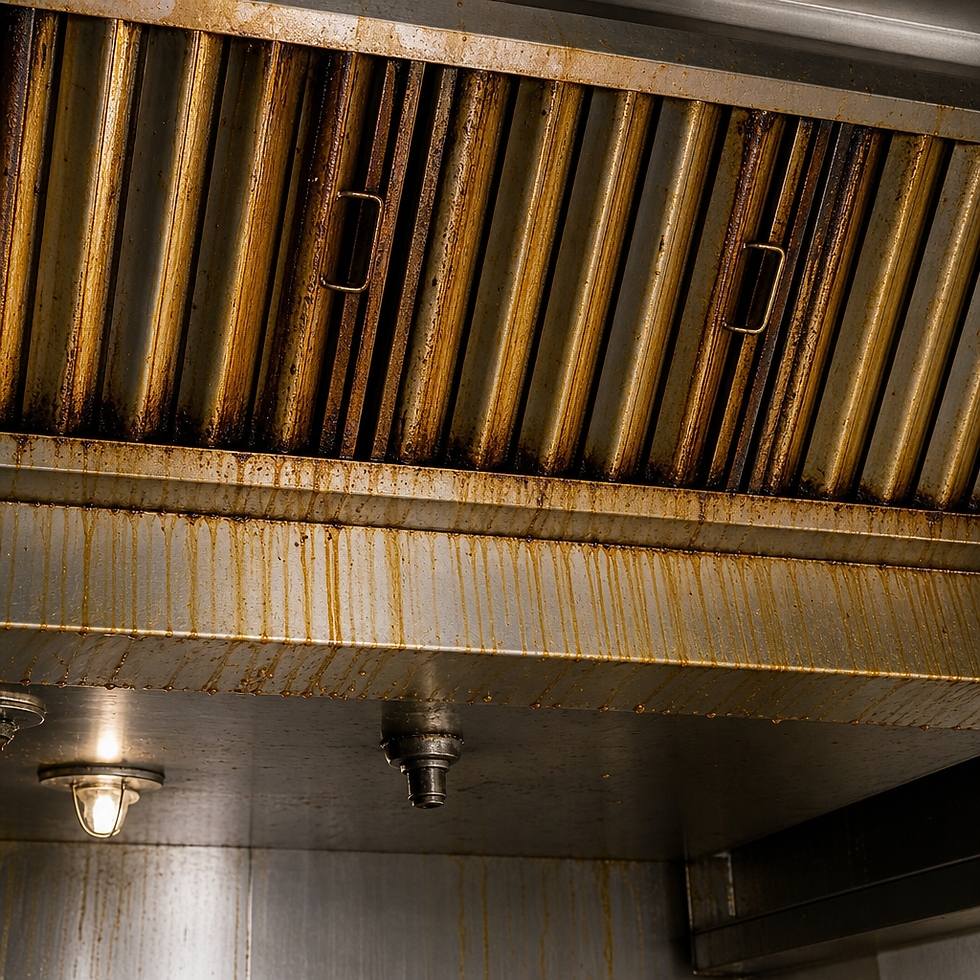
Visible grease on the exterior of the hood canopy or dripping from filter edges is the most obvious indicator. Grease should not be visible on exterior surfaces during normal operation. If it is, the interior accumulation is already beyond safe levels.
A persistent burning smell that does not correspond to any food being cooked is often grease combusting on duct walls or fan surfaces. This is not a minor odor issue. It is a warning that ignition is possible.
Reduced airflow above cooking equipment is a fan performance issue caused by grease buildup on fan blades and housing. If your kitchen feels smokier than usual or hood suction seems weaker, the fan is working against a grease load it cannot clear efficiently.
Drain backups or odors from the floor drain area near cooking equipment frequently trace back to a grease trap that is at or beyond capacity. This is both a plumbing problem and a health department violation waiting to happen.
What Happens When Deep Cleaning Is Skipped
The data consistently shows that grease-related fires account for the largest share of commercial kitchen fire losses. According to the National Fire Protection Association, cooking equipment fires cause an average of $172 million in direct property damage annually across U.S. restaurants. Grease accumulation in exhaust systems is a primary contributing factor in a significant portion of those incidents.
Beyond fire risk, skipping deep cleaning creates cascading equipment failures. Fan motors running against grease-coated blades draw excess current and overheat. Fan belts in neglected systems wear faster because the drive system is working harder than its design load. Grease trap overflow creates drain backups that shut down kitchen operations mid-service, which is an operational disaster no restaurant can absorb without financial damage.
The insurance consequence is equally direct. Connecticut commercial property policies for food service establishments typically include provisions requiring regular hood and exhaust cleaning. If a fire investigation reveals that cleaning was overdue, the insurer can deny the claim under a maintenance failure exclusion. That means the full cost of repairs, inventory loss, and business interruption falls on the operator with no coverage offset.
A common mistake is treating deep cleaning as a cost center rather than a maintenance investment. The math is straightforward: quarterly cleaning costs a fraction of a single exhaust fan replacement, far less than a health department closure, and is incomparable to the cost of a grease fire that triggers insurance complications.
Choosing the Right Professional Kitchen Cleaning Service in CT
Connecticut restaurant operators have several options when sourcing a professional kitchen cleaning provider, and the differences between them matter significantly for both compliance and equipment outcomes.
The first question to ask any provider is whether they clean from the hood filters all the way to the rooftop exhaust discharge point. If the answer is anything other than a clear yes, the service does not satisfy NFPA 96. The second question is what documentation they provide. You need a signed service certificate that specifies the date, the system cleaned, the technician name, and the grease depth measured before and after service.
Providers who also handle exhaust fan repair, fan belt replacement, motor swaps, and hinge kit installations during the same service visit deliver significantly more value than cleaning-only providers. Identifying a worn fan belt during a cleaning visit and replacing it on the spot eliminates a separate appointment, a separate service call fee, and the operational risk of the belt failing between scheduled cleanings.
Superior Clean serves Connecticut food service establishments with full-system deep cleaning that covers every component from filters to rooftop fan, plus mechanical maintenance during each visit. For restaurant owners and facility managers who need documented NFPA 96 compliance and want a single provider for both cleaning and exhaust system maintenance, that integrated approach is the most efficient path to keeping kitchens safe and equipment performing correctly. You can review the full range of services at superior-clean.com.
Frequently Asked Questions
How long does a commercial kitchen deep clean take?
A full-system deep clean for a standard Connecticut restaurant kitchen typically takes between 4 and 8 hours depending on kitchen size, cooking volume, and how long since the last professional service. Heavily soiled systems with multiple cooking lines and long duct runs can take longer. Most providers schedule overnight work to avoid disrupting service hours.
What is the difference between a hood cleaning and a deep clean?
Hood cleaning typically refers to servicing the hood canopy, filters, and visible grease surfaces. A deep clean extends to the entire exhaust system including duct runs, rooftop fan, grease trap, and equipment surfaces. NFPA 96 requires the full system to be cleaned, so hood-only service does not satisfy Connecticut fire code requirements.
How much does commercial kitchen deep cleaning cost in Connecticut?
Pricing varies based on kitchen size, number of hoods, duct length, and whether additional services like grease trap cleaning or equipment detailing are included. A basic hood cleaning from a low-cost provider might run $150 to $300, but a full NFPA 96-compliant deep clean with documentation, duct cleaning, and fan service from a qualified Connecticut provider typically starts higher and reflects the actual scope of work required. Comparing quotes without specifying full-system scope will always produce misleading price comparisons.
Can I lose my insurance coverage if I skip kitchen deep cleaning?
Yes. Commercial property insurance policies for food service establishments commonly require documented proof of regular hood and exhaust cleaning. If a grease fire occurs and your insurer determines that cleaning was overdue or that no documentation exists, the claim can be denied under a maintenance failure exclusion. This is not a theoretical risk. Keep service certificates on file and accessible.
Does Connecticut require a certificate after every cleaning?
NFPA 96, which Connecticut fire code adopts by reference, requires that every cleaning be documented with a signed certification that identifies the company, the technician, the date, the system serviced, and the condition of the system before and after cleaning. Fire marshals request these certificates during inspections. Posting the certificate near the hood system is standard practice and demonstrates immediate compliance during an inspection visit.
What happens if my exhaust fan is found to be in poor condition during a deep clean?
A qualified provider will document the finding and offer repair or replacement options during the same visit when parts are available. Common issues found during deep cleans include worn fan belts, seized hinge kits on access panels, and motor bearing wear. Addressing these during a scheduled cleaning visit is significantly less expensive than an emergency service call when the equipment fails during operating hours.
How do I know if a cleaning company is actually cleaning the full duct system?
The most reliable indicators are access panel marks showing the technician entered the duct at multiple points along the run, a grease depth measurement recorded before cleaning, and a rooftop photo or report showing the fan and curb were cleaned. Ask for this documentation before you book. Any reputable provider doing a compliant job will have it ready. Providers who cannot supply this information are not cleaning the full system.
If you manage a Connecticut commercial kitchen and have specific questions about what a full-system deep clean involves for your setup, share your situation in the comments or reach out directly. Every kitchen is different, and the right cleaning scope should match your actual cooking volume and equipment configuration.


Comments