


Cooking Method Impact on Hood Cleaning Frequency
- Jun 15
- 10 min read
If your kitchen runs a charbroiler eight hours a day, cleaning your exhaust hood on the same schedule as the sandwich shop next door is a fire waiting to happen. Cooking method impact on grease accumulation is one of the most underestimated variables in commercial kitchen maintenance, and the consequences of getting it wrong range from failed health inspections to catastrophic grease fires. NFPA 96 acknowledges this directly by tying required cleaning intervals to the type of cooking equipment in use. This article breaks down exactly how different cooking methods change your grease accumulation rate and what that means for your cleaning frequency in a Connecticut commercial kitchen.
Table of Contents
Quick Takeaways
Key Insight
Explanation
Charbroilers demand the most frequent cleaning
Open-flame charbroiling aerosolizes animal fat at high volume, coating ducts with heavy, polymerized grease that requires monthly or even more frequent cleaning per NFPA 96.
Fryers produce fine grease mist, not just heavy drips
Deep frying generates a suspended oil aerosol that travels deep into duct systems, building up far from the hood opening where it is easy to miss during visual inspections.
Wok cooking is the most aggressive single cooking method
High-heat wok stations produce extreme grease output combined with smoke and carbonized particles, often requiring cleaning every 30 days regardless of kitchen volume.
Steamer and combi-oven stations produce almost no combustible grease
Steam-based cooking releases moisture, not aerosolized fat, which means hoods above these stations accumulate minimal grease and may qualify for annual cleaning under NFPA 96.
Mixed-use kitchens need zone-specific assessments
A kitchen running both a charbroiler and a combi oven cannot apply one cleaning interval to the whole system. Each cooking zone must be evaluated independently.
Cooking volume multiplies equipment risk
A griddle running 12 hours daily in a diner produces more grease per month than a charbroiler used only for weekend specials. Hours of operation matter as much as equipment type.
Grease accumulation rate, not calendar date, should drive scheduling
NFPA 96 allows cleaning frequency adjustments based on documented inspection results. A record of thick buildup at inspection is grounds for shortening your interval immediately.
Why Cooking Method Drives Grease Buildup
The physics are straightforward. Cooking methods that use high, direct heat and animal fats generate aerosolized grease particles that rise with thermal updrafts and deposit along every surface inside your hood, filters, plenum, ductwork, and exhaust fan. The higher the cooking temperature and the greater the fat content of the food being cooked, the faster grease coats those surfaces.
In practice, two kitchens with identical hood systems can have completely different grease accumulation rates depending solely on what is being cooked beneath them. A pizzeria running deck ovens all day will have a cleaner hood than a burger joint using open-flame charbroilers for four hours. The data consistently shows that cooking method is the primary driver of both grease accumulation rate and fire risk in commercial exhaust systems.
This is not just a compliance issue. Grease-clogged ductwork restricts airflow, causing your exhaust system to work harder, overheat, and fail prematurely. For Connecticut restaurants operating on tight margins, an equipment failure during a Friday dinner rush is a real financial event, not a hypothetical.

">
High-Volume Grease Producers: Charbroilers, Fryers, and Woks
These three cooking methods sit at the top of the grease accumulation scale, and they account for the majority of commercial kitchen hood fires. Understanding why each one is uniquely problematic helps kitchen managers make better decisions about cleaning schedules.
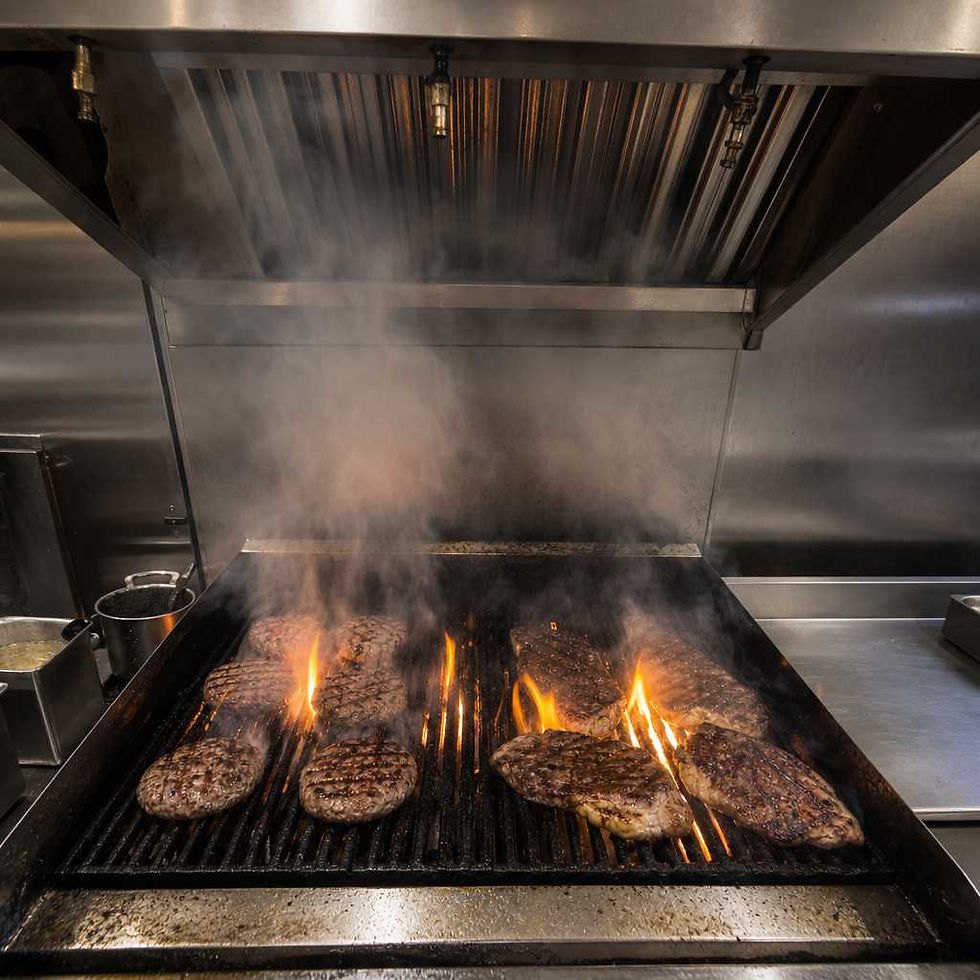
Charbroilers and Open-Flame Grills
When fat from meat drips onto an open flame, it vaporizes instantly and rises as a dense aerosol. Charbroilers produce more combustible grease per hour of operation than virtually any other piece of commercial kitchen equipment. NFPA 96 Table 11.4 specifically lists solid-fuel cooking equipment and high-volume charbroiling operations as requiring monthly cleaning intervals.
A common mistake is assuming that because a charbroiler looks clean on the outside, the duct above it is fine. The heaviest grease deposits often occur 6 to 10 feet into the duct run, well out of sight. Without proper inspection and cleaning, that buildup becomes a fuel source that fire suppression systems are not always positioned to reach.
Pro tip: If your charbroiler is running more than 6 hours per day, schedule a professional inspection after the first month of operation under a new cleaning contract to establish a realistic baseline for your specific grease accumulation rate.
Commercial Deep Fryers
Deep fryers generate a fine oil mist that is lighter than the heavy aerosol from a charbroiler but penetrates further into duct systems. This mist condenses on cooler duct surfaces further from the hood opening, creating deposits that are easy to miss and hard to remove once polymerized.
High-volume fryer operations, such as those in fast-casual chicken or seafood restaurants, typically require cleaning every one to three months. The specific interval depends on how many fryers are running, what oil is being used, and how many hours per day they operate.
Wok Stations
Wok cooking is the single most aggressive cooking method for grease accumulation. Wok burners operate at temperatures exceeding 65,000 BTU per hour, and the rapid tossing of oil-coated ingredients generates an enormous plume of grease-laden smoke. Chinese and Asian fusion restaurants in Connecticut running active wok stations should expect monthly cleaning as a minimum, not a maximum.
Moderate Grease Producers: Griddles, Ovens, and Ranges
Griddles, standard gas ranges, and convection ovens occupy the middle tier of grease production. They generate meaningful grease accumulation but at a pace that typically supports quarterly cleaning schedules for moderate-volume operations.
Flat-Top Griddles
Griddles cook at consistent, relatively lower temperatures than charbroilers, and the fat does not contact an open flame directly. However, griddle cooking still produces steady grease vapor, particularly when cooking fatty proteins like bacon or sausage. A breakfast diner running a griddle from 6 a.m. to 2 p.m. daily will accumulate significant grease over a quarter, enough to warrant cleaning every 90 days at minimum.
Gas Ranges and Convection Ovens
These are workhorses in most Connecticut restaurant kitchens. They produce moderate grease output when cooking fatty menu items but generate relatively little when used primarily for vegetables, grains, or baked goods. The cleaning frequency factors here are tied less to equipment type and more to what is being cooked and for how long.
A range used primarily for pasta and sauce work will need less frequent cleaning than the same model used for sauteing meat-heavy dishes all day. In practice, quarterly cleaning is the standard for this category, with monthly checks of filter condition to catch surprises.

">
Low Grease Producers: Steamers, Ovens, and Light Prep Stations
Not every piece of kitchen equipment is a grease machine. Steamers, combi ovens used primarily for vegetables, and cold prep stations under a hood produce very little combustible grease. NFPA 96 explicitly allows annual cleaning for low-volume cooking operations where grease accumulation is minimal.
A hospital cafeteria or a school food service operation running primarily steam-based cooking may legitimately qualify for annual hood cleaning. The key is documentation. You cannot simply claim low output; you need inspection records showing minimal buildup at each service visit to justify a longer interval.
For Connecticut food service facilities that combine high- and low-output cooking methods in the same kitchen, the cleaning schedule must be driven by the highest-risk equipment present. One charbroiler in a kitchen full of steamers still means the whole system needs to be evaluated on a monthly basis.
Cleaning Frequency Factors Beyond Equipment Type
Equipment type sets the floor for your cleaning schedule, but several other variables push that number up. Ignoring these is one of the most common reasons Connecticut kitchens end up with dangerously thick grease deposits between scheduled cleanings.
Hours of Daily Operation
A charbroiler used for two hours per day at a small bar and grill produces far less grease per month than the same model running from 11 a.m. to 11 p.m. at a high-volume steakhouse. Hours of operation directly multiply grease accumulation rate. If your cooking hours increase seasonally, your cleaning schedule needs to increase with them.
Menu Changes and Special Events
Connecticut restaurant kitchens often shift menus seasonally, add special event services, or bring in temporary equipment for catering. Each of these changes can spike grease output significantly. A restaurant that adds a wood-fired grill station for summer outdoor dining needs to account for that additional load in its cleaning schedule, not wait until the next scheduled service date to assess the impact.
Filter Condition as a Real-Time Indicator
Grease filters are the first line of capture in your hood system. When filters saturate quickly between cleanings, that is a direct signal that your grease accumulation rate has exceeded your current cleaning interval. In practice, a kitchen manager who checks filters weekly and finds them saturated within 10 to 14 days of a service visit should be calling for an adjusted schedule, not waiting for the next quarterly appointment.
Pro tip: Keep a simple log of filter saturation dates. Three consecutive weeks of early saturation is objective evidence to present to your hood cleaning contractor when requesting a schedule change, and it protects you during health inspections.
Cooking Method Comparison: Grease Output and Cleaning Schedule
The table below reflects NFPA 96 guidance combined with field observations across commercial kitchen environments in Connecticut. Use it as a starting point, not a hard rule. Your actual grease accumulation rate must be verified through inspection.
Cooking Method
Grease Accumulation Rate
Recommended Cleaning Frequency
Charbroiler (open flame, high volume)
Very High
Monthly (every 30 days)
Wok Station (high-BTU burner)
Very High
Monthly or more frequent
Deep Fryer (commercial, high volume)
High
Every 1 to 3 months
Flat-Top Griddle (fatty protein focus)
Moderate to High
Every 3 months
Gas Range or Convection Oven (general use)
Moderate
Every 3 months
Pizza Deck Oven (cheese and oil toppings)
Moderate
Every 3 to 6 months
Combi Oven or Steamer (vegetable or low-fat focus)
Low
Annually
What NFPA 96 Actually Says About Cleaning Intervals
NFPA 96, the Standard for Ventilation Control and Fire Protection of Commercial Cooking Operations, is the governing document for hood cleaning frequency in Connecticut and across the United States. Most kitchen managers know it exists, but fewer have actually read Table 11.4, which is the section that directly ties cleaning intervals to cooking method and volume.
"Systems serving solid fuel cooking operations shall be inspected monthly. Systems serving high-volume cooking operations such as 24-hour cooking, charbroiling, or wok cooking shall be inspected quarterly to monthly." NFPA 96, Table 11.4 (2021 Edition)
The standard does not say every kitchen gets cleaned quarterly. It says high-volume operations and specific cooking methods require monthly cleaning. Quarterly is the interval for moderate-volume cooking, and annual cleaning is reserved for low-volume cooking. The three-month default that many contractors push as a standard package is not always appropriate and can leave high-output kitchens dangerously under-serviced.
Connecticut fire codes adopt NFPA 96 by reference, which means these intervals are not just best practices. They are legally enforceable cleaning frequency factors during fire marshal inspections. A documented cleaning schedule that does not match your cooking methods is a liability, not a compliance achievement.
How Connecticut Kitchens Should Adjust Their Schedules
The practical approach for any Connecticut restaurant or food service facility is to start with an honest audit of every piece of cooking equipment under the hood and the daily hours each one runs. From there, assign each piece of equipment to a tier based on the comparison table above and set your cleaning interval to match the highest-risk item in that system.
If you are running a mixed kitchen with a charbroiler, a flat-top, and a combi oven, your whole system cleaning interval is monthly because of the charbroiler, not quarterly because two out of three pieces of equipment would qualify for that interval. The entire exhaust path is exposed to the output of every cooking station beneath it.
Restaurants in Connecticut that have recently changed their menus, added cooking stations, or expanded their operating hours should treat those changes as triggers for a professional inspection rather than waiting for the next scheduled service. The hood cleaning and exhaust maintenance services that Superior Clean provides are designed to accommodate schedule adjustments based on actual kitchen conditions, not arbitrary calendar intervals.
The cost of an extra cleaning visit is a fraction of the cost of a grease fire, a failed health inspection, or a voided insurance claim. Connecticut restaurants operating under the assumption that quarterly cleaning is always sufficient are taking a risk that NFPA 96 and their own insurance policies do not support.
Frequently Asked Questions
How often does a charbroiler kitchen need hood cleaning compared to a steamer-only kitchen?
A kitchen running a high-volume charbroiler needs hood cleaning every 30 days under NFPA 96 Table 11.4. A kitchen using only steamers or low-fat cooking methods may qualify for annual cleaning. The difference in grease accumulation rate between these two environments is substantial enough that applying the same schedule to both would leave the charbroiler kitchen dangerously out of compliance.
Can I reduce my cleaning frequency if I switch to a healthier, lower-fat menu?
Yes, but only after documenting the change through professional inspection. If you transition from a heavy charbroil and fryer operation to lighter, lower-fat cooking and your inspection records consistently show minimal grease buildup over several service visits, you may be able to extend your cleaning interval. The documentation is required to justify the change during a fire marshal inspection.
Do pizza ovens need the same cleaning frequency as fryers?
No. Pizza deck ovens produce moderate grease output from cheese and oil-based toppings, which places them in the quarterly to semi-annual cleaning range for most operations. Commercial fryers, especially high-volume units running animal fats, generate significantly more grease mist and typically require cleaning every one to three months.
What happens if grease accumulation is heavier than expected at a scheduled cleaning?
A finding of heavy accumulation at a scheduled cleaning visit is a direct signal that your current interval is too long. The correct response is to shorten the interval immediately, not to wait and see if the next cleaning shows the same result. NFPA 96 allows and encourages frequency adjustments based on documented inspection findings, and a professional hood cleaning contractor should be recommending a revised schedule when buildup is excessive.
Does a wood-fired oven require more frequent cleaning than a gas charbroiler?
Yes. Solid-fuel cooking operations, including wood-fired ovens, wood-burning grills, and charcoal-burning equipment, require monthly cleaning as a baseline under NFPA 96. The combustion byproducts from solid fuels include not just grease but also carbon and creosote deposits, which are highly combustible and build up faster than the grease generated by gas-powered equipment.
How does a seasonal increase in cooking volume affect my cleaning schedule?
Directly and immediately. If your kitchen operates at reduced volume during winter months and ramps up significantly for summer, your grease accumulation rate increases proportionally during the high-volume period. A quarterly schedule that worked in January may be completely inadequate by July. Review your cleaning frequency at the start of each high-volume season and schedule an inspection if you have added cooking hours or new menu items involving high-fat cooking methods.
We'd love to hear what cooking method has caused the most grease buildup surprises in your own kitchen. Share your experience in the comments or reach out directly.
We would love your feedback and any insights you would share with others. What perspective would you add?
References
NFPA official resources on fire protection standards and commercial kitchen ventilation requirements
CDC resources on food service safety and commercial kitchen health standards
OSHA guidelines for workplace fire hazard prevention in food service environments
Statista data on commercial kitchen fire statistics and food service industry trends
Forbes business insights on restaurant operations, maintenance costs, and fire risk management


Comments