


CT Kitchen Staff Exhaust Training: What Managers Must Teach
Grease fires in commercial kitchens rarely start with a dramatic failure. They start with a filter that got skipped on a busy Tuesday, a hood that nobody wiped down after the dinner rush, or a new cook who had no idea what the exhaust fan was doing overhead. If you manage a Connecticut kitchen, your new hires are learning the line from you in their first week, and the exhaust system is usually the last thing anyone explains. That gap is where most avoidable problems begin. This guide covers what to tell new kitchen staff about exhaust system care, what they can safely handle on shift, and what belongs with your hood cleaning contractor.
Table of Contents
Quick Takeaways
Key Insight | Explanation |
|---|---|
Teach the hood as one system | The hood, filters, ducts, and fan work together to pull grease-laden air away from the line. A neglected part loads every other part. |
Filters are the daily job | Filters catch the heaviest grease and are the first place it collects. Every cook should know how to remove, soak, dry, and reinstall them correctly. |
Never run the hood without filters | Without filters, grease travels into the duct and fan housing, where it builds up out of sight and is hard to remove. |
Learn the fire response before the fire | Cooks should know where the extinguisher is, which heat source to cut, and that water is never used on a grease fire. |
Report odd sounds and smells the same shift | A squealing fan, a slipping belt, or a burning smell from the hood is a manager call, not something to watch until the weekend. |
Keep deep cleaning with a qualified contractor | Staff handle wipe-downs and filter swaps. Cleaning hoods, ducts, and fans to NFPA 96 expectations stays with a professional on a schedule. |
Why New Staff Need Exhaust Basics on Day One
Most new line cooks get a tour of the walk-in, the sanitizer buckets, and the point-of-sale system. Few get shown what the hood is actually doing. That is a problem, because the exhaust system runs whenever the line is hot, and it is the piece of equipment nobody checks until something goes wrong.

The system is simple to describe. Hoods capture smoke, heat, and grease vapor. Filters catch the heaviest grease first. Ducts carry what gets past them to a fan that pushes it outside. When one link fails, the others have to work harder, and grease ends up in places nobody can see from the cooking line.
Training matters here because the person who notices a problem is usually the newest cook standing closest to the hood, not the manager who walks through once a week. A cook who understands that a loaded filter reduces capture will speak up. A cook who thinks the hood is "the maintenance guy's problem" will not.
An exhaust system only works as well as its least-attended part, and the people standing under it every shift are the ones who see that part first.
Tell your staff the reason behind each rule, not just the rule itself. Once a cook understands that grease is fuel, they are far more likely to keep filters clean on their own initiative. A checklist alone rarely produces that habit.
Recognizing Grease Buildup Before It Becomes a Hazard
What Grease Buildup Looks Like on Hoods and Filters
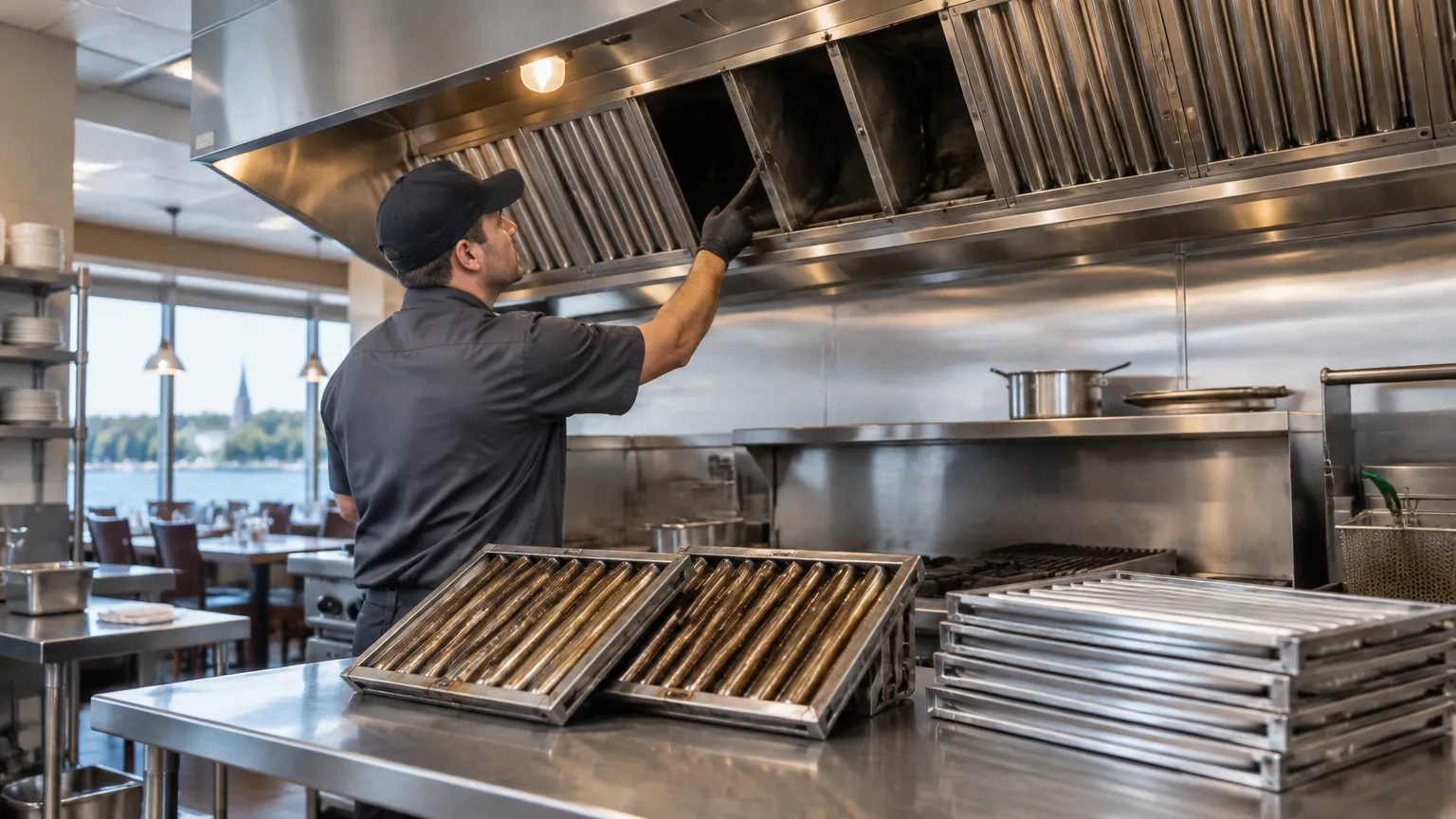
Fresh grease is thin and amber. Over days it thickens, darkens, and picks up flour and dust from the air. On a filter, it shows up as a sticky, dark crust along the mesh, and eventually the filter stops flexing when you press on it. On the hood lip, the drips harden into shiny brown streaks that look like varnish.
Have new staff compare a loaded filter with a clean one on their first day. Holding them side by side makes the difference obvious in a way that a written description never will.
Where Buildup Hides Above the Line
The filters are only the visible part. The worst grease sits where nobody looks: the internal channels of the hood, the transition into the duct, and the fan housing. Cooks cannot clean those areas safely with line tools, and they should not try. What they can do is report when filters load faster than normal, because that usually means grease is getting past them.
A useful signal is a hood that smells heavily of cooking oil after close even though the filters look clean. That often means vapor is escaping the capture zone, and it is worth raising with the manager before the next contractor visit.
Pro tip: During orientation, ask new cooks to point out the grease channel on the hood and the filter seat. Staff who can name the parts of the system are much more likely to report problems early.
Daily Shift Habits for Hoods, Filters, and Surfaces
Daily care is the part of exhaust maintenance your staff controls. Professional cleaning happens on a schedule, but a line that wipes the hood face and swaps filters on time goes much longer between deep cleans. Keep the list short enough to memorize, then post it at the station.
Removing, Soaking, and Reinstalling Filters
Filters come out for cleaning, not for repairs. Staff should wear gloves, pull the filter out carefully so grease does not drip across the floor, and carry it to the sink. Use the degreaser the manager has approved, let it dwell for the time on the label, and rinse it thoroughly.
The most common mistake is reinstalling a filter that is still damp. A damp filter can carry water into hot grease at the start of service, which is a splatter risk. Make sure the filter is fully dry, seats flush in the frame, and latches correctly, because a gap lets vapor bypass the mesh entirely.
Wipe-Downs That Actually Matter
At the end of each shift, wipe the hood face, the front lip, and the light fixtures with a grease-cutting cleaner. Staff should never spray degreaser into the fan intake or near an open flame. Work from the top down so drips land on surfaces you have not cleaned yet.
Lights are easy to forget. A film on the lens reduces visibility at the line, and cooks who cannot see their pans clearly make more mistakes around hot oil.
Pro tip: Hang a dated sign-off sheet at the hood. Initials and a date for each filter change make gaps in the schedule easy to spot, and they show an inspector that someone owns the task.
Fire Hazards and Shutdown Steps Every Cook Should Know
Grease fire is the hazard you are training for. It spreads quickly along the hood and up the duct, and the cook closest to the fryer or flattop usually has only seconds to act. Training should cover what to do in those seconds, not just the names of the extinguishers on the wall.
Flare-Ups Under the Hood
A flare-up is a flame that rises suddenly from a pan or fryer. Many small flare-ups die down once the heat source is cut, so staff need to know how to cut it. Turn off the burner, slide a lid over the pan if it is safe to do so, and step back. Never pour water on burning oil, because water sinks below the grease, turns to steam, and throws burning oil outward.
Each station should know where the Class K extinguisher is and how the hood suppression system is activated. Cooks should not discover these details during an incident. Walk new hires to the actual locations on their first shift, with the manager standing beside them.

When to Shut Down Equipment and Call for Help
Turn off the fryer or the gas supply to the appliance as the situation allows, but leave the exhaust fan decisions to the manager or the fire response. The fan is what pulls smoke away, so shutting it down should be a deliberate call, not a reflex. Anyone who is unsure should call the emergency number before attempting cleanup.
Make sure new hires understand that a grease fire still burning after an extinguisher attempt is a reason to leave the area, not to keep fighting it. After any fire, even a small one that went out fast, the hood and duct need inspection before the line runs again. Staff should report the event to the manager immediately, not at the end of the week.
What Staff Should Report and What Belongs to Your Contractor
Clear lines between staff tasks and contractor tasks prevent two problems. The first is cooks attempting repairs they are not trained for. The second is managers assuming someone else is watching a part of the system that nobody is actually watching. Spell out the split in writing and hand it to every new hire.
Staff should handle daily wipe-downs and filter swaps. They should not open fan housings, remove duct access panels, or adjust belts. Those jobs involve electrical and fire-safety work, and a loose fan component can turn into a hazard quickly.
Approach | What It Covers | Where It Falls Short |
|---|---|---|
Staff daily wipe-downs and filter swaps | Hood face, lip, lights, and filter removal on every shift | Cannot reach ducts, fan housings, or internal hood channels |
Scheduled professional hood and duct cleaning | Hoods, ducts, fans, and filters cleaned to NFPA 96 expectations | Grease rebuilds between visits, so daily habits still matter |
Reactive repair after a fan or belt failure | Fixing a failed fan, belt, or motor once the problem is visible | Usually means an unplanned shutdown, and it does nothing about the buildup that caused the failure |
The third approach is the most expensive way to learn that the first two were skipped. If you want a second set of eyes on your hood and fan schedule, Superior Clean works with Connecticut food service operators on NFPA 96 compliant cleaning and exhaust system maintenance.
Warning Signs Staff Should Report Right Away
Train staff to report a squealing or grinding fan, a fan that sounds louder or slower than usual, a hood surface that feels hot above the filters, a burning smell that lingers after the line cools, and any smoke escaping around the edges of the hood. Each one deserves a call to the manager the same shift.
Make it clear that reporting is part of the job, not tattling. The cook who flags a noisy fan at 4 p.m. is doing exactly what you hired them to do. The cook who keeps quiet is the one who ends up dealing with a snapped belt during Friday service.
Common Mistakes New Staff Make Around Exhaust Equipment
Most mistakes are small, repeated, and easy to fix with training. The three below show up more often than they should in busy kitchens, and each one is worth naming directly during orientation.
Running the Hood Without Filters
During a rush, or after a filter tears, some cooks run the hood without filters because they assume the fan will catch everything. It will not. Without filters, the heaviest grease goes straight into the duct, where it is hard to see and expensive to remove. Tell new staff that a missing filter gets reported immediately, not patched with a guess.
Cleaning With the Wrong Products
Oven cleaners, abrasive pads, and harsh solvents can strip protective finishes on hood surfaces and leave residues that are hard to rinse off. Keep an approved product list posted at the station. If a product is not on the list, it does not go near the hood. Cleaners should never be sprayed into the fan intake or into any duct access point.
Storing Boxes and Towels Near the Hood
Paper towels, cardboard, and plastic containers stacked on shelves under the hood are fuel waiting for a spark. Keep a clear zone around the hood and the suppression nozzles. Make the rule specific: nothing stored above the cooking line, and no towels hung from the hood edge.

Building a First-Week Exhaust Walkthrough
The best training happens standing at the hood, not in a break room. Schedule a 20-minute walkthrough during the new hire's first or second shift, when the line is quiet. Show them the hood, the filters, the suppression nozzles, the extinguisher, and the sign-off sheet, then have them do one task themselves.
Walkthrough Steps for Managers
Start with the fan running so the new hire can feel the draft at the hood edge. Then have them remove one filter, inspect it, and explain what they see. Finish by pointing out the shutoffs and the emergency contact sheet. A cook who has handled a filter once is far less likely to hesitate later.
A Sign-Off Checklist That Holds Up
Keep the checklist short. It should cover extinguisher locations, filter removal and reinstallation, the daily wipe-down zone, the warning signs to report, and the contractor contact. Have the new hire sign and date it, then file it with their training record. A signed checklist is far easier to defend during an inspection than a verbal "I told them."
Pro tip: Repeat the walkthrough after your next professional hood cleaning. Staff who see the hood opened up understand what they have been keeping clean, and that makes the daily work stick.
Frequently Asked Questions
How much exhaust training should a new cook get before working the line?
New cooks should be able to remove and reinstall filters, recognize the warning signs, and follow the fire response at their own station. Most kitchens can cover that in one hands-on walkthrough plus a signed checklist.
Should line cooks clean the exhaust fan?
No. Staff can wipe accessible hood surfaces and swap filters, but fan housings, ducts, and internal hood channels belong to a qualified contractor working to NFPA 96 expectations.
What should a cook do if a grease fire starts on the fryer or flattop?
Cut the heat source if it is safe to do so, use the extinguisher designated for cooking oil fires, and call for help. Never use water on a grease fire. If the fire keeps burning after the extinguisher attempt, leave the area and let the emergency response take over.
How often should filters be cleaned?
In a busy kitchen, filters should be checked every shift during service and removed for cleaning at least daily. Managers should then adjust the schedule based on how quickly the filters load, because volume and menu style change the answer.
Does NFPA 96 affect what restaurant staff need to know?
NFPA 96 covers fire protection, operations, and safety guidance for commercial cooking, so it shapes the cleaning and inspection program your staff works within. Training should connect daily tasks to that program, explaining why each habit matters, rather than quoting the code at the line.
Tell us what your team covers in its first week, and where new hires have surprised you with what they did or did not know about the hood.
We would love your feedback and any insights you would share with others. What perspective would you add?


Comments