


CT Restaurant Health Inspection Preparation Guide
A failed health inspection can shut your restaurant down the same morning you served breakfast. Connecticut Department of Public Health inspectors do not announce most visits, and they are not looking for effort. They are looking for documentation, cleanliness, and proof that your kitchen operates within code every single day. For restaurant owners and kitchen managers across Connecticut, health inspection preparation is not a seasonal project. It is the baseline standard your operation should meet without scrambling. This guide walks through exactly what CT inspectors check, where most kitchens fail, and why your exhaust system is one of the most overlooked compliance liabilities in the building.
Table of Contents
What CT Inspectors Actually Check
Connecticut food service inspections are conducted under the authority of the Connecticut Department of Public Health and local municipal health departments. Inspectors follow the FDA Food Code as adopted and modified by Connecticut, which means violations are categorized as either Priority, Priority Foundation, or Core. Priority violations are the ones that can get you closed on the spot.
In practice, inspectors move through your kitchen in a predictable pattern. They start at receiving and cold storage, work through prep and cooking stations, then examine your ventilation, sanitation systems, and employee hygiene records. They are not making judgment calls. They are working through a scored checklist, and every deficiency costs points.
A common mistake is assuming that a clean-looking kitchen passes inspection. Visual cleanliness and measured compliance are not the same thing. A surface can look spotless and still harbor improper sanitizer concentrations, incorrect food storage temperatures, or grease accumulation inside ductwork that an inspector can identify from a visual check of the hood.
Quick Takeaways
Key Insight
Explanation
CT inspections are unannounced
Most routine inspections in Connecticut arrive without prior notice, which means your kitchen must be inspection-ready at all times, not just after a heads-up call.
Grease buildup in hoods is a citable violation
Visible grease accumulation in your exhaust hood or ductwork can result in a Priority Foundation violation and a reinspection requirement within days.
NFPA 96 cleaning records must be on-site
Connecticut fire marshals and health inspectors can request your hood cleaning documentation. If you cannot produce it, you are out of compliance regardless of how clean the hood looks.
Temperature logs are not optional
Inspectors expect written or digital temperature records for all cold and hot holding equipment. A verbal "we check it daily" is not sufficient documentation.
Employee food handler certifications must be current
Connecticut requires at least one certified food protection manager per establishment. Expired or missing certifications are a direct compliance failure.
Filters and fans are part of the inspection scope
Dirty or missing grease filters over cooking equipment are a documented fire hazard and a common violation source during CT restaurant inspections.
Reinspection fees compound the cost of failure
A failed inspection in Connecticut triggers a reinspection, which carries its own administrative cost and consumes management time during your busiest periods.
The pattern across Connecticut food service establishments is consistent. Operators who pass cleanly on the first visit are not smarter. They have built repeatable daily processes and they work with vendors who provide documentation, not just service. Every item in the table above has a solution that costs less than a single failed reinspection.

">
The CT Restaurant Inspection Scoring System
Connecticut uses a risk-based inspection frequency model. High-volume establishments, those with complex menus or serving vulnerable populations, are inspected more frequently. The FDA Food Code, adopted by Connecticut, assigns violations to three tiers, and the difference between a warning and a closure order often comes down to which tier your violation lands in.
Priority Violations
These are the violations that present an immediate food safety risk. Improper temperature control, cross-contamination between raw proteins and ready-to-eat foods, and presence of pests all fall into this category. A single Priority violation can result in immediate closure or a mandatory correction before the inspector leaves the building.
Priority Foundation Violations
These support the prevention of Priority violations. Missing temperature logs, lack of a certified food protection manager on duty, or absence of hood cleaning records fall here. Inspectors cite these heavily because they indicate systemic management failures, not just one-off mistakes.
Core Violations
Core violations are general sanitation and maintenance issues. Chipped equipment surfaces, missing caulking, grease buildup on non-critical surfaces. They accumulate into a pattern that inspectors note across visits, and repeated Core violations on the same item elevate the severity of the citation over time.
Pro tip: Post a printed copy of your most recent inspection report in your manager's office. Walk through it with your kitchen team during your next pre-shift meeting. The violations on that report are the exact areas your next inspector will look at first.
The Compliance Checklist That Actually Works
Generic compliance checklists fail because they are written for every restaurant and therefore perfectly suited for none. The checklist below is built specifically around what Connecticut health inspectors cite most frequently in commercial kitchen environments. Use this as your weekly self-audit, not a one-time pre-inspection scramble.
Cold Storage and Temperature Control
All refrigeration units holding at 41 degrees Fahrenheit or below, verified with a calibrated thermometer
Hot holding equipment maintaining 135 degrees Fahrenheit or above
Written temperature logs completed and dated for the past 7 days minimum
Raw proteins stored below ready-to-eat items on every shelf in every unit
No thawing at room temperature. Running water or refrigerator thawing only.
Food Handling and Prep
Color-coded cutting boards in use and free of deep knife score marks
Date labels on all prepared and opened food items
No expired products in active storage. Check every shelf, not just the front row.
Handwashing stations stocked with soap, paper towels, and hot water at all times
Hood, Filters, and Exhaust System
Grease filters clean, properly seated, and free of visible buildup
Hood interior surfaces free of grease accumulation at the filter plenum and duct collar
Most recent NFPA 96-compliant hood cleaning certificate available on-site
Exhaust fan operational and pulling adequate airflow during cooking operations
Sanitation and Pest Control
Three-compartment sink setup correct. Wash, rinse, sanitize in proper sequence.
Sanitizer solution tested and within correct concentration range for the chemical type
No evidence of pest activity. Droppings, gnaw marks, or live insects are immediate Priority violations.
Pest control service logs available on request
Personnel and Documentation
Current food protection manager certification posted or available
Food handler certifications current for all staff as required
Illness reporting policy documented and communicated to staff
Pro tip: Assign one manager to own the compliance checklist each week and sign off on it. When an inspector asks who is responsible for food safety documentation, you should be able to name that person immediately. That single answer changes the tone of the entire inspection.

">
Your Exhaust System Is a Hidden Inspection Risk
Most Connecticut restaurant owners prepare thoroughly for food temperature and storage checks, then walk into a citation because their hood cleaning records are sitting in someone's email inbox instead of a binder in the kitchen. This is preventable and it costs nothing to fix once you understand what inspectors and fire marshals are looking for.
NFPA 96, the Standard for Ventilation Control and Fire Protection of Commercial Cooking Operations, sets the cleaning frequency requirements for commercial kitchen exhaust systems. High-volume cooking operations, those using solid fuel or cooking at high temperatures for extended periods, require cleaning as frequently as every month. Most standard Connecticut restaurants fall into the quarterly or semi-annual category, but the correct frequency depends on your cooking type and volume.
What Inspectors Look for in Your Hood System
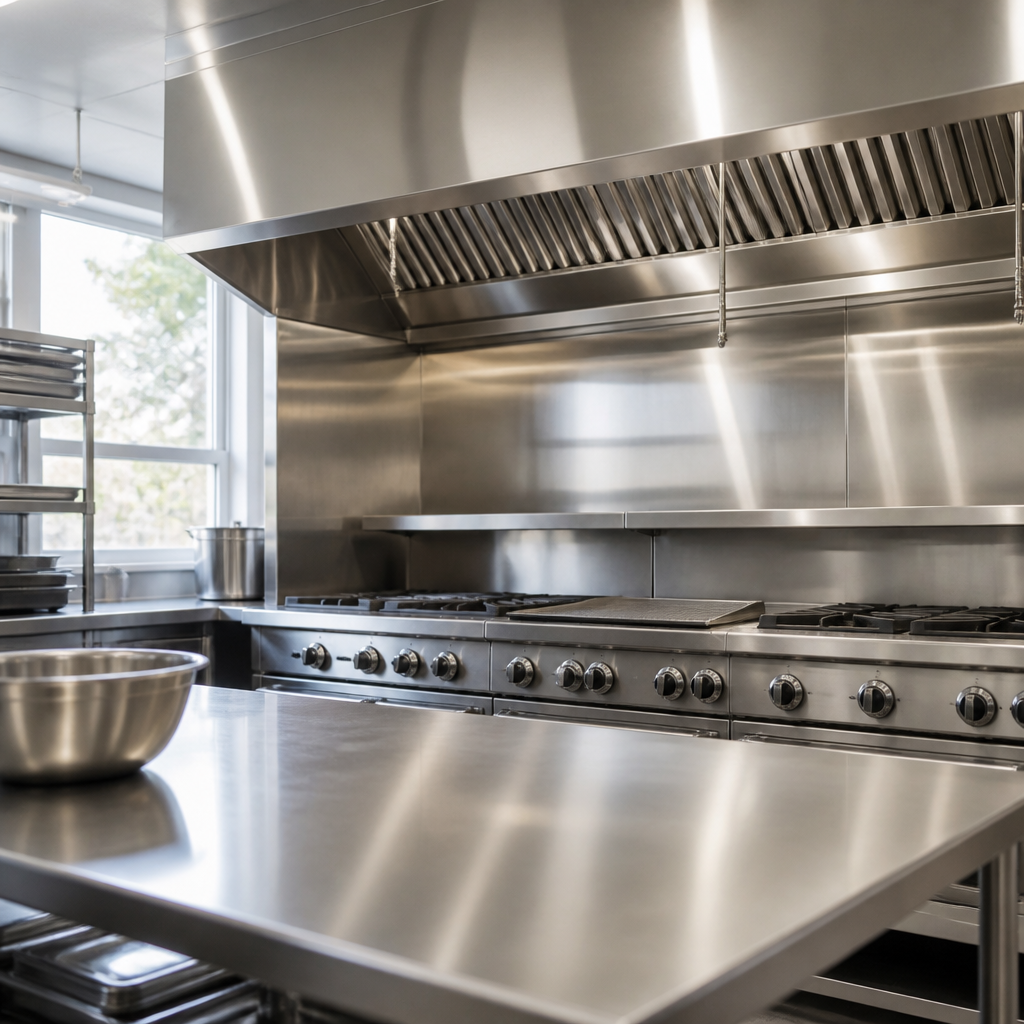
An inspector does not need to crawl into your ductwork to cite you. They look at the filter plenum, the inside of the hood collar, and the grease collection cup or trough. Visible grease dripping, black carbon buildup, or filters that are visibly clogged are all citable on their own. They will also ask for your cleaning documentation, and "the service company has it" is not an acceptable answer.
The cleaning certificate provided after a professional hood cleaning should include the date of service, the cleaning company's information, the areas cleaned, and confirmation that the system was cleaned to NFPA 96 standards. That certificate lives in your kitchen. Not in your email. Not at your vendor's office.
Exhaust Fan Performance and Fire Risk
A failing exhaust fan motor or a worn fan belt reduces the airflow that pulls grease-laden vapors out of the cooking area. When that airflow drops, grease deposits accelerate on every surface it touches. The fire risk increases. The frequency of your next required cleaning may increase. And an inspector who notices inadequate exhaust ventilation will note it.
Superior Clean's exhaust fan repair and maintenance services, fan belt replacement, and motor swaps exist specifically because these mechanical failures are common and directly connected to both fire safety and inspection compliance. A kitchen running a struggling fan motor is accumulating a problem faster than any cleaning schedule can address.
"Grease fires in restaurant exhaust systems account for a significant portion of all commercial structure fires in the United States each year. The primary preventive measure is regular cleaning to NFPA 96 standards combined with maintained exhaust airflow." - National Fire Protection Association, NFPA 96 Standard Overview
Comparing Inspection Prep Approaches
Not all approaches to CT restaurant inspection preparation deliver the same results. The table below compares three real-world approaches Connecticut operators use, with honest assessments of where each one succeeds and fails.
Approach
What It Includes
Where It Falls Short
Reactive Cleaning Before Known Inspections
Deep cleaning triggered by news of inspector activity in the area, or a manager tip. Filters pulled, surfaces scrubbed, logs printed.
Most CT inspections are unannounced. This approach fails entirely when no warning exists. Documentation gaps cannot be created retroactively without creating a compliance liability.
Annual Third-Party Hood Cleaning Only
A single scheduled hood cleaning per year from a service provider, with a certificate issued after each visit.
Does not meet NFPA 96 frequency requirements for most commercial kitchens. Certificate covers compliance for only a fraction of the year. Grease accumulation between annual cleanings still creates fire and inspection risk.
Scheduled Maintenance Program with Documentation
Hood cleaning at NFPA 96-appropriate intervals, exhaust fan and filter maintenance between cleanings, on-site documentation binder, and a weekly internal compliance checklist.
Requires upfront investment in a vendor relationship and internal management time. The cost is predictable and lower than the combined cost of a single failed inspection plus emergency service call.
The data consistently shows that operators on a scheduled maintenance program spend less on compliance annually than those cycling through reactive service calls and reinspection fees. The third approach is not the premium option. It is the practical one.
Common Violations and How to Prevent Them
Connecticut health department inspection reports are public record. Reviewing them for establishments in your market is one of the most useful competitive and operational intelligence exercises you can do. The same five categories show up repeatedly across CT restaurant inspections.
Improper Food Temperatures
This is the most frequent Priority violation in Connecticut food service establishments. The fix is calibrated thermometers in every unit, verified daily, with logs that prove it. A digital log system is better than paper because it removes legibility disputes. The thermometers themselves need calibration records.
Missing or Expired Certifications
Connecticut requires a certified food protection manager at each establishment. The certification must come from an accreditation that Connecticut accepts, such as ServSafe or the National Registry of Food Safety Professionals. Keep the physical certificate in your documentation binder and set a calendar reminder 90 days before expiration.
Cross-Contamination Risk in Cold Storage
Raw chicken stored above ready-to-eat produce is one of the most common and most preventable violations. Every walk-in and reach-in unit in your kitchen should have a posted storage order diagram on the door. New staff training must include this before their first shift on cold storage.
Grease Accumulation in Exhaust Systems
As discussed, this is both a fire risk and an inspection citation. The prevention is a cleaning schedule matched to your cooking volume and type, with documentation on-site. Superior Clean provides NFPA 96 compliant cleaning and issues the certification records you need to hand an inspector immediately. Learn about our Connecticut hood cleaning services and how we document every service visit for your compliance records.
Handwashing Station Deficiencies
Inspectors check every designated handwashing station for soap, paper towels, hot water, and clear access. A handwashing sink blocked by a sheet tray, a soap dispenser that ran out three hours ago, or a paper towel holder that requires two hands to operate are all citable. Assign a staff member to check every station at the start and middle of every shift.
Frequently Asked Questions
How often does the Connecticut Department of Public Health inspect restaurants?
Connecticut uses a risk-based inspection frequency. High-risk establishments, such as those with complex cooking operations or prior violation histories, may be inspected two or more times per year. Lower-risk operations may see annual inspections. Because the schedule is not published and most visits are unannounced, treating every day as inspection day is the only reliable strategy.
What is the most common reason Connecticut restaurants fail their health inspection?
Temperature control failures, specifically food held outside of safe temperature ranges without documentation, are the leading cause of Priority violations in Connecticut food service inspections. Missing or expired food protection manager certifications are the most frequent Priority Foundation violation. Both are preventable with basic daily operating procedures.
Does a dirty kitchen exhaust hood affect my health inspection score in Connecticut?
Yes. Visible grease accumulation in or around the exhaust hood, filters, or ductwork is a citable condition during a Connecticut health inspection and may also trigger a fire marshal referral. Inspectors are trained to look at the filter plenum and hood interior as part of their kitchen review. Missing or inadequate hood cleaning documentation compounds the citation.
How does NFPA 96 connect to Connecticut health inspections?
NFPA 96 is the national standard for commercial kitchen exhaust system cleaning frequencies and methods. Connecticut fire marshals and, in some cases, health inspectors can request documentation proving your exhaust system has been cleaned to NFPA 96 standards at the required intervals. Failing to produce that documentation is a compliance violation independent of how clean the hood appears visually.
Can I use my own staff to clean the kitchen hood instead of hiring a professional service?
You can clean the visible surfaces of the hood with your staff, but NFPA 96-compliant cleaning requires access to and cleaning of the full duct system, including the exhaust fan and all internal surfaces. That work requires specialized equipment and produces a certification document that an inspector can verify. Staff surface cleaning does not satisfy NFPA 96 requirements and will not produce the documentation you need.
What should I keep in my on-site compliance documentation binder?
At minimum, your binder should contain your current food service permit, the most recent health inspection report, your food protection manager certification, temperature logs for the past 30 days, pest control service records, and your most recent hood cleaning certificate from a certified provider. Some operators also keep their employee illness policy and equipment calibration records in the same binder. When an inspector walks in, you hand it over without searching.
How far in advance should I prepare for a Connecticut health inspection?
The correct answer is that preparation should be continuous, not scheduled around inspections. That said, if you are starting from a poor baseline, a 30-day intensive program using a weekly compliance checklist, updated documentation, and any overdue maintenance including hood cleaning gives you enough time to address most systemic issues. Trying to address everything in 48 hours before a suspected inspection visit is ineffective and creates its own risks.
What has been the most surprising item on your Connecticut health inspection report? Share your experience in the comments so other Connecticut operators can learn from it.


Comments