


Dirty Exhaust Filter Warning Signs for CT Restaurants
A dirty exhaust filter at a restaurant in CT is rarely just a cleaning problem. The grease on those metal baffles is a running record of what your hood is pulling out of the air, how well your fan is moving it, and how much fuel is sitting in the path of your next flare-up. Most owners only notice the filter when it looks disgusting. The better approach is to read it as a diagnostic signal, learn which signs matter most, and act before a routine check turns into an emergency call.
Table of Contents
Quick Takeaways
Key Insight | Explanation |
|---|---|
Filter color is a grease load reading | Dark, tacky grease on the baffles means the hood is capturing more than your current schedule can handle. Shorten the interval before you wait for a visible problem. |
Smoke escaping the canopy | Smoke drifting past the hood during normal service usually points to restricted airflow from saturated filters, not just a weak fan. |
Grease beyond the filter | If you see grease on the plenum walls or the fan housing, the problem has moved past the filter and needs professional attention. |
Odor after the line shuts down | Cooking smells that linger the next morning mean grease has baked onto surfaces above the filters, which a quick wipe will not remove. |
Filter washing is not a system clean | Swapping and washing filters protects the first stage of the system, but the plenum, fan, and ductwork still need documented cleaning. |
Keep dated records | Photos and service logs make inspections faster and give your insurer proof that you are managing grease risk on schedule. |
What the Filter Is Actually Measuring
Your hood filter is the first stage of the grease removal system. It sits at the bottom of the canopy and catches the heaviest particles before they reach the plenum, fan, and ductwork. In practice, the filter does the job nobody wants to do, and it is usually the first component to show how much grease your line is producing.

Every filter is a measurement tool, even if nobody reads it that way. A clean filter with a light film tells you the exhaust is working and your cleaning interval is reasonable. A filter that is coated, stiff, or dark along the baffles tells you the grease load has outpaced the schedule. The same hood can look fine on a slow Tuesday and be badly loaded after a weekend of fryers and charbroilers.
Why filters load faster than ducts
Filters take the first hit from grease-laden vapor, so they saturate first. Ducts and fans accumulate grease more slowly, but they keep whatever the filter misses. A common mistake is assuming that a filter which looks acceptable means the system is clean. Those are two different claims, and only one of them is true.
Menu mix matters. A kitchen running heavy frying, wok work, or open flame on a broiler will load filters faster than a bakery or a cafe doing mostly cold prep. Many Connecticut restaurants also shift their menus with the seasons, so a schedule that worked in summer may be too loose once heavier braises and soups hit the line.
Reading the filter as a schedule check
Use the filter to test your cleaning interval rather than trusting the calendar alone. If filters need pulling early every few weeks, the interval is too long. If they still look clean at the end of a scheduled period, the interval may be more generous than your kitchen needs. Write down what you see at each cleaning so the pattern becomes obvious within a few cycles.
Warning Signs Your Filters Are Saturated
Most saturation shows up in your senses before it shows up on a checklist. The three signs that matter most are visible grease, smoke that gets past the hood, and odor that lingers after service. Industry guides on dirty vents describe the same pattern: problems tend to appear as warning signs well before the system stops working altogether.
Visible grease on the filter and canopy
Look for drips along the front lip of the hood and on the underside of the filters. Grease that runs or pools means the filter is no longer holding it. Check the canopy walls too. Grease creeping onto the edges of the hood suggests that capture is failing at the perimeter, and that grease is moving toward the plenum.
Tacky filters are a red flag even when they are not dripping. A filter that still feels coated after a wash was not cleaned properly, so check every filter by touch before it goes back in the hood.
Smoke and haze leaking into the kitchen
Smoke that drifts out from under the hood during normal cooking usually points to restricted airflow or a capture problem. Saturated filters reduce the air the fan can pull through the hood, so the hood stops catching smoke at the source. If your line cooks wave smoke away from the hood every shift, the filters are the first suspect.
Odor that lingers after close
Grease that has baked onto surfaces above the filters keeps producing odor after the line shuts down. If the dining room or back of house still smells like the fryer the next morning, the grease is not all in the filter. That is more than a surface wipe-down can fix.
Pro tip: With the hood running at full service, hold a strip of lightweight tissue near the front edge of the filters. If it is pulled tightly upward, airflow is fine. If it flutters, hangs, or blows back toward the line, the filters are restricting flow.
Why Saturation Becomes a Fire Problem
A saturated filter is a fuel source. Grease is flammable, and when it collects in a hood, the filter, plenum, and duct become a path for fire to travel. That is why fire codes and insurers treat grease buildup as a hazard rather than a housekeeping issue. A guide on commercial kitchen exhaust cleaning notes that grease fires, explosions, and smoke damage are among the common hazards tied to hoods that do not get regular attention.
How grease travels past the filter
Vapor that gets past a saturated filter cools and condenses inside the plenum and ductwork. Over weeks, that layer thickens and becomes harder to remove. A filter that looks manageable can sit on top of a duct that has not been cleaned in months, which is why filter-only fixes leave the real risk in place.
What inspectors and insurers look for
Industry guidance commonly cited in the trade says fire codes call for inspection by a qualified company, and some insurance policies require cleanings as often as every one to four months. If your insurer asks for records and all you have is a receipt for filter swaps, that gap can become a claims problem. Keep dated proof of every professional service.
Do not assume a schedule that passed inspection last year still fits today. Menus change, equipment gets added, and a second fryer can double your grease output without anyone updating the cleaning interval.
A clean-looking filter tells you about the first stage of the system. The fire risk usually lives in the stages you cannot see from the hood.
Diagnosing the Hood System Beyond the Filter
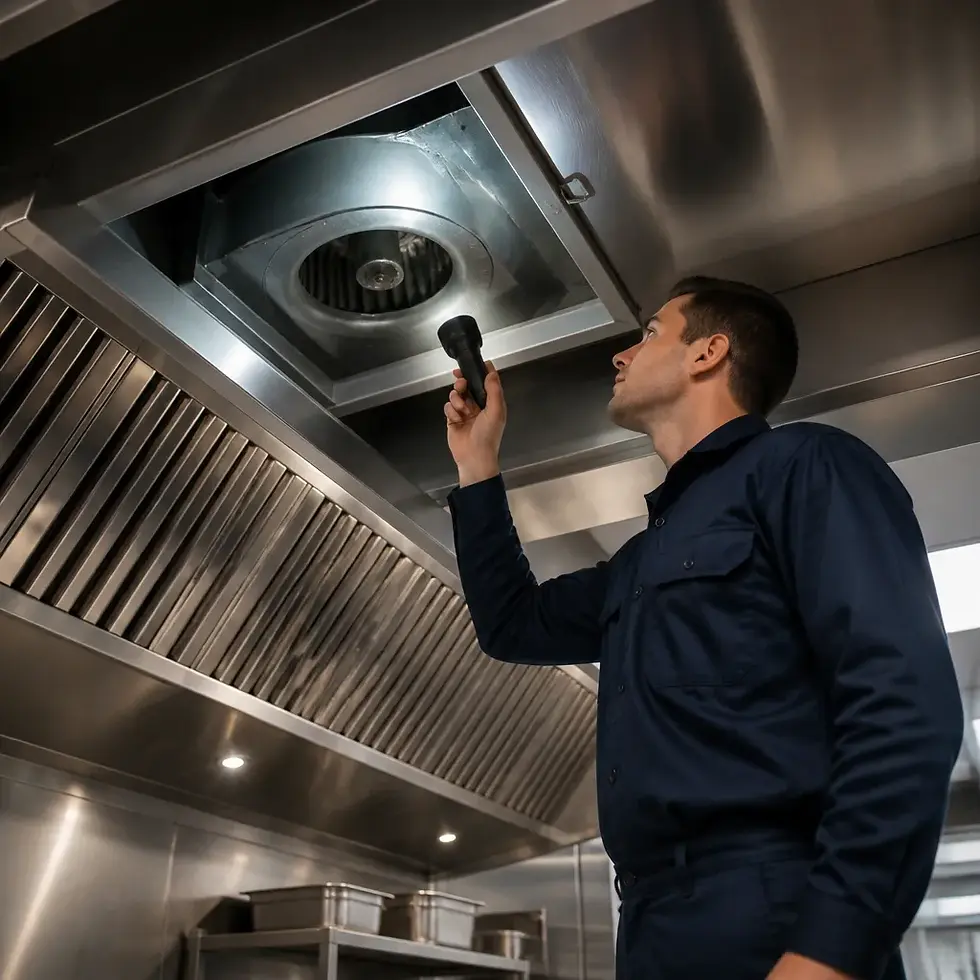
When the filters are the only thing you check, you miss the failures that matter most. A hood system has several connected parts: the canopy, baffles, plenum, fan, belts or direct drive, motor, and ductwork. Each part can tell you something about the others. A good diagnosis follows the airflow path from the hood to the roof rather than stopping at the component that is easiest to reach.
Airflow and fan performance
Loud or uneven fan noise, vibration, or a fan that struggles to reach full speed can signal grease loading on the blades or housing. Belts that squeal or wear unevenly also change airflow. Fan belt replacement and motor swaps often fix a mechanical failure, but if the fan is working hard against a clogged system, a new belt will not solve the underlying grease problem.
Hinge kits, access panels, and seals
Hood components that do not close properly leak air and grease. A broken hinge or missing access panel lets air bypass the filters, so the hood pulls less from the zone where the cooking happens. Check hinge hardware and gaskets during every filter pull. Small failures here are cheap to fix and easy to miss.
Plenum and baffle condition
The plenum behind the filters should be checked for grease pooling and corrosion. Sheets of grease on the plenum walls mean the filters were not catching what they should, or the cleaning frequency is too low for the cooking load. Record the condition with dates so you can see whether it is getting better or worse over time.
Filter Cleaning Versus Full System Cleaning
Swapping filters is necessary, but it is not a system clean. Many kitchens rotate a set of spare filters through a sink soak or a dishwasher. That keeps the first stage working, yet the plenum, fan, and ducts still collect grease between visits. Filter maintenance and hood system cleaning answer different questions, and you need both.
The right approach depends on how much grease your kitchen produces and how much you can verify. The table below compares the three approaches most Connecticut operators end up choosing between.
Approach | What It Covers | Where It Falls Short |
|---|---|---|
In-house filter washing | Filters, pulled and cleaned between professional visits | Does not reach the plenum, fan, or ducts, and results depend on soak time and degreaser strength |
Scheduled hood and filter cleaning | Hood canopy, filters, and accessible plenum surfaces on a set interval | Can miss fan interiors and duct runs, and the frequency must match your actual grease load |
Full exhaust system cleaning | Hood, plenum, fan, and ductwork, documented for inspection | Costs more per visit, and it is most valuable when paired with a filter routine between cleanings |
In practice, the best setup for most restaurants is a combination. Staff handles filter checks and swaps between visits, and a professional handles the full system on a documented schedule. A filter wash is a good habit. It is not a substitute for a documented clean.
Pro tip: Mark each filter pull date on a strip of tape on the hood frame. When a filter comes out looking worse than the last one, you have a timestamp to measure the change against, and your provider can see the trend too.
Setting an Inspection Schedule for Connecticut Kitchens
There is no single interval that fits every restaurant. Your schedule should reflect your cooking methods, operating hours, and what your insurer and inspectors expect. National standards and insurance policies set the requirements and frequency, so your schedule is partly a compliance decision and partly a fire prevention decision.
Matching frequency to cooking style
Heavy fryers, charbroilers, and wok stations need tighter intervals than a kitchen doing mostly baking or cold prep. Start with a conservative interval, then extend it only if filters and plenum surfaces stay clean at each inspection. Do not stretch a schedule on hope.
Logging the results that matter
A useful log records the date, the technician, what was cleaned, the filter condition, and any repairs. Photos of the filters and plenum taken from the same spot each visit make trends obvious at a glance. This is the evidence an insurer or inspector will ask for first.
Be careful about stretching intervals to save money. The cheapest cleaning in a given quarter is not cheap if a grease fire closes the kitchen for months.
Documenting Findings and Working With Your Cleaning Provider
A good cleaning provider does more than scrub. They should tell you what they found, what it means, and what should change before the next visit. Ask for written findings after every service, including notes on filter condition, fan performance, duct access, and any repairs they recommend.

Questions to ask before you sign a service agreement
Ask whether the work follows NFPA 96 requirements, whether technicians document access and cleaning on every visit, and how they handle damaged parts. Ask what happens if they cannot reach part of the duct run. A provider who avoids those questions is not giving you a system view, only a surface view.
Turning a service report into action
Assign one person to review every report within a week. Repairs such as hinge kit installation, fan belt replacement, or motor swaps should go on a dated list with a status next to each item. Repeat findings are the signal that your schedule, your menu, or your grease handling needs to change.
Small habits pay off. Keep spare filters on hand, label them, and rotate them through a proper cleaning routine. When the provider arrives, your records let them focus on real problems instead of the obvious ones.
Frequently Asked Questions
How often should I check exhaust filters in a busy restaurant?
In a high-volume line, do a visual check at least once per shift and pull filters for a closer look at least weekly. If you see grease on the front lip or tacky filters before the scheduled date, shorten the interval right away.
Can I wash the filters myself and skip professional cleaning?
Washing filters in-house is a useful routine, but it only cleans the first stage of the system. The plenum, fan, and ductwork still need professional cleaning on a documented schedule.
Is a dirty filter always a fire risk?
A saturated filter is a fuel source, so yes, it raises fire risk. The bigger danger is grease that has already traveled past the filter into the plenum and ducts, where it is harder to see and harder to remove.
How do I tell a filter problem from a fan problem?
Start with the filters. If they are clean and smoke still escapes the hood, check the fan speed, belt condition, and any airflow restrictions in the ductwork. If the filters are heavily loaded, clean them first and then recheck airflow before blaming the fan.
What should I do if smoke leaks from the hood during service?
Reduce the heat on the most smoke-producing equipment, check the filters for saturation, and confirm the fan is running at full speed. If smoke keeps escaping after those steps, stop the affected equipment and call your cleaning provider before the next service.
What records should I keep for my insurer?
Keep dated service reports, invoices, photos of the filters and plenum, and a log of repairs and filter swaps. Insurers and inspectors ask for this paperwork first, so having it organized can prevent a claims dispute later.
Tell us which warning sign showed up first in your own kitchen, and how you caught it before it became an expensive repair.
We would love your feedback and any insights you would share with others. What perspective would you add?
References
Guide to commercial kitchen exhaust cleaning frequency and fire code inspection
Five steps restaurants can take when vents show warning signs
Hood filter cleaning tips and best practices for commercial kitchens
Government guidance on maintaining exhaust fans and building ventilation


Comments