


Duct Cleaning vs Hood Cleaning CT: Know the Difference
- Jul 12
- 11 min read
Most Connecticut restaurant owners who call asking about hood cleaning actually need both hood cleaning and duct cleaning, but they do not realize those are two separate scopes of work. This confusion is not a small matter. A kitchen where the hood has been wiped down but the connected ductwork has not been professionally cleaned still carries serious fire risk and will fail a health department inspection. Understanding exactly what duct cleaning vs hood cleaning CT means in practice, what each service covers, how they differ, and when each is required will save you money, keep your staff safe, and keep your doors open.
Table of Contents
Quick Takeaways
Key Insight
Explanation
Hood cleaning and duct cleaning are not the same service
Hood cleaning covers the canopy, filters, and plenum area above the cooking equipment. Duct cleaning extends through the entire exhaust pathway, including horizontal and vertical duct runs and the rooftop exhaust fan.
NFPA 96 requires full system cleaning, not just hood wiping
The National Fire Protection Association standard mandates that grease removal covers hoods, plenums, ducts, and fans. Cleaning only the visible hood does not satisfy this standard.
Grease accumulates fastest inside ductwork, not on the hood surface
Airflow carries aerosolized grease deep into ducts where it condenses and builds up. This hidden accumulation is where most kitchen fires actually ignite.
Cleaning frequency in Connecticut depends on cooking volume and type
High-volume fryer operations may need full system cleaning monthly. Solid fuel operations like wood-fired pizza ovens require even more frequent service under NFPA 96 guidelines.
A quote that only mentions the hood surface should raise a red flag
Some lower-cost providers clean only what is visible. Ask specifically whether the duct run and exhaust fan are included in the scope before signing any service agreement.
Exhaust fan condition directly affects how well duct cleaning works
A worn fan belt or failing motor reduces airflow, which causes grease to drop out of suspension and coat ducts faster. Fan maintenance and duct cleaning must be coordinated.
Post-service documentation protects your CT food service license
A legitimate cleaning provider will leave a dated inspection sticker and a written service report. Connecticut health inspectors will look for this evidence during routine visits.
What Is Hood Cleaning in a Commercial Kitchen?
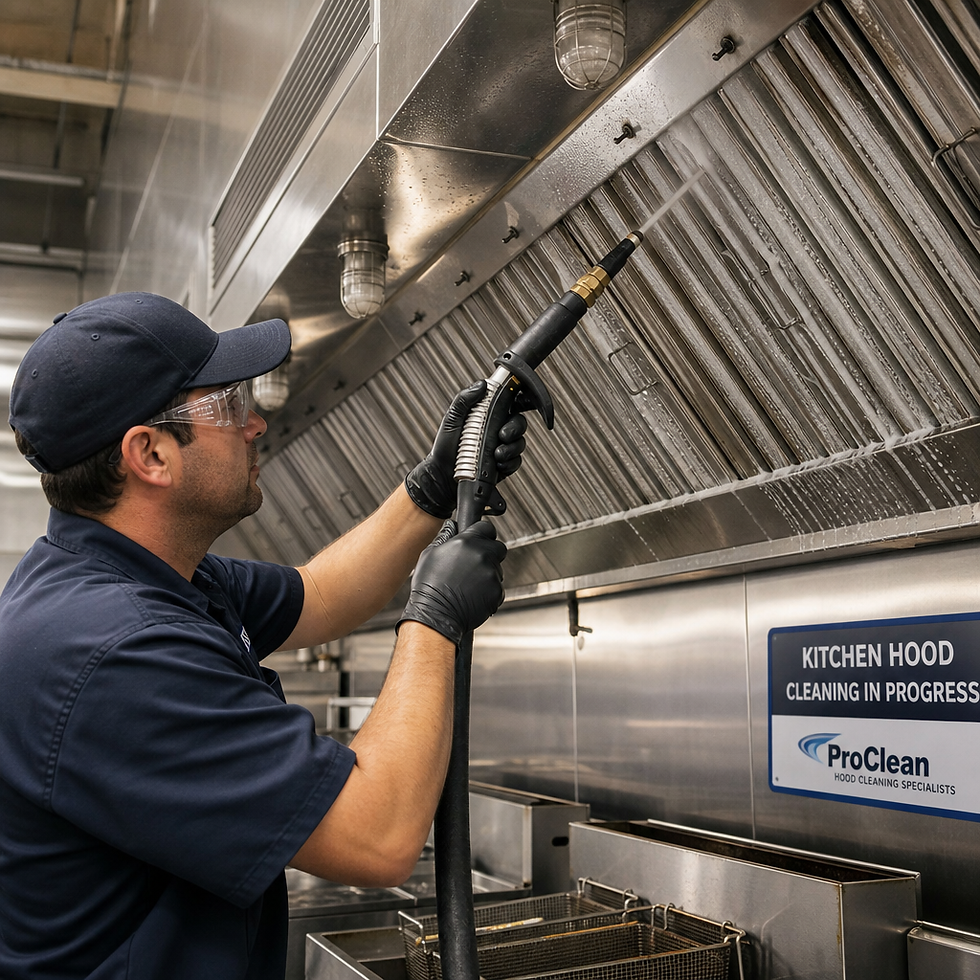
Hood cleaning refers specifically to the degreasing of the exhaust hood canopy, the grease filters or baffles inside that canopy, and the plenum chamber directly above the filters. These are the components that sit directly above your cooking line and capture grease-laden air before it enters the duct system.
In practice, a thorough hood cleaning involves removing the baffle filters, soaking them in a degreasing solution, scrubbing the interior plenum surfaces, and wiping down the exterior canopy surfaces. The goal is to remove accumulated grease before it drips onto cooking equipment or migrates into the duct run.
A common mistake is treating hood cleaning as a cosmetic task. The hood is the entry point of the exhaust system, not the whole system. A visually clean hood with a grease-packed duct behind it is still a fire hazard and still non-compliant with NFPA 96.

What Is Commercial Kitchen Duct Cleaning?
Commercial kitchen duct cleaning Connecticut covers everything downstream of the hood plenum: the horizontal duct runs, any vertical risers, the rooftop curb, the exhaust fan housing, and the fan blades themselves. This is the territory that most restaurant owners never actually see, which is exactly why it gets neglected.
What Happens Inside the Ductwork
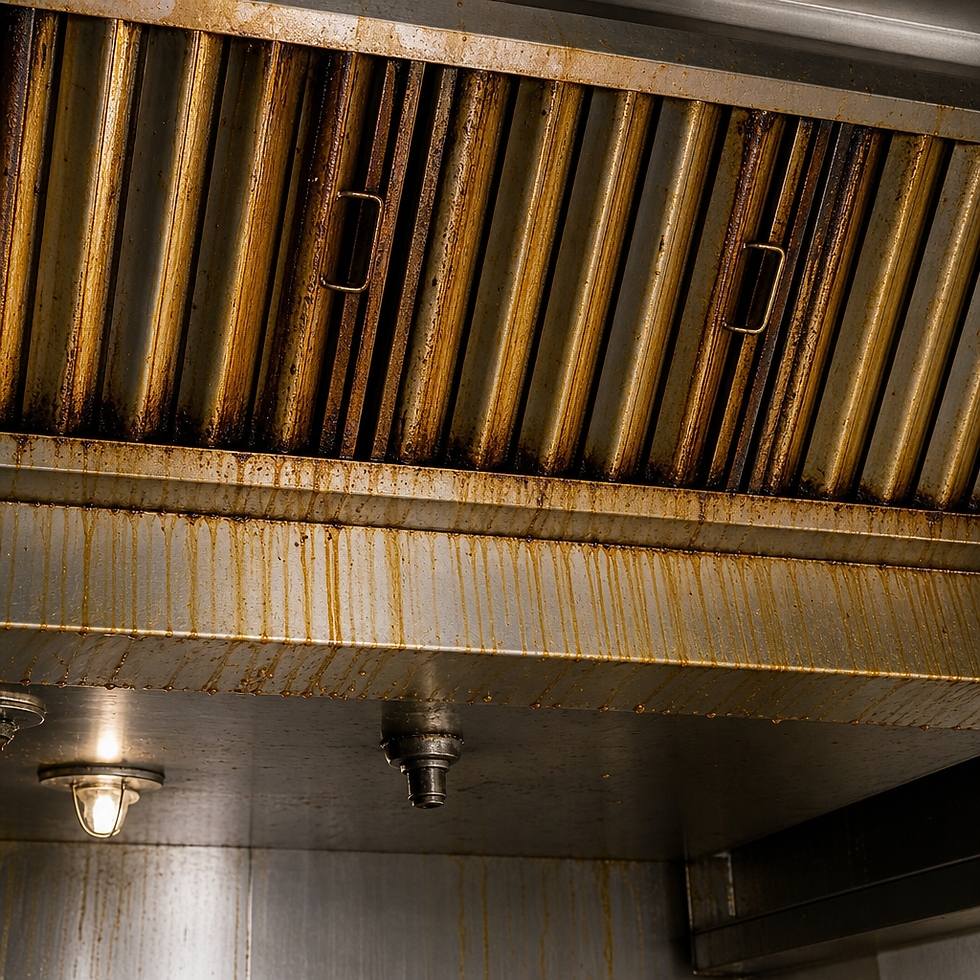
When your kitchen is cooking at full capacity, grease particles become airborne and travel with the exhaust air. As that air moves through the duct, it slows down and cools. The grease condenses on the interior duct walls and accumulates in layers. In a high-volume operation using fryers or charbroilers, this buildup can reach a quarter inch or more within just a few months.
Grease ignition temperature is roughly 500 to 700 degrees Fahrenheit depending on its composition. The surface temperature of exhaust duct walls near cooking equipment can approach this range during a busy service. The math is straightforward and unforgiving.
Tools and Methods Used for Duct Cleaning
Professional duct cleaning uses a combination of hand scraping, rotary brushes, pressure washing, and chemical degreasing agents applied through access panels cut into the duct at code-required intervals. Technicians work from the hood plenum toward the rooftop fan, ensuring the entire pathway is cleared.
Any provider who claims to clean a duct system without opening access panels or going to the roof is not completing a full clean. This is a non-negotiable scope item on any legitimate service job.
Pro tip: When scheduling commercial kitchen duct cleaning in Connecticut, ask the technician to photograph the duct interior before and after service. These images are evidence that the work was done properly, and they are useful if you ever face a fire insurance claim or a health department question.
The Key Differences Between Hood and Duct Cleaning
The simplest way to understand the distinction is by location. Hood cleaning covers what you can see from the kitchen floor. Duct cleaning covers what you cannot see without opening the system. Both are part of a single exhaust pathway, but they require different access, different tools, and different labor time.
Scope of Access
Hood cleaning requires access to the kitchen cooking line and a ladder to reach the plenum. Duct cleaning requires roof access, the use of harness equipment in some installations, and often the fabrication or use of existing access panels along the duct run. This is why duct cleaning takes significantly longer and typically costs more per service visit.
Frequency Differences
The filters inside a hood should be cleaned on a weekly or bi-weekly schedule by kitchen staff as part of routine maintenance. The full exhaust system, including ducts and the fan, requires professional service on a schedule determined by cooking volume. NFPA 96 Table 11.4 sets the baseline, ranging from monthly for solid fuel and high-volume operations down to annually for low-volume operations like churches or seasonal venues.
Fire Risk Contribution
The data consistently shows that the ductwork and exhaust fans, not the hood canopy, are the most common ignition points in commercial kitchen fires. According to the National Fire Protection Association, cooking equipment is the leading cause of restaurant fires, and grease-laden exhaust systems are the primary fuel source once ignition occurs. A clean hood with dirty ducts does not prevent a duct fire.
"Failure to clean cooking equipment, including exhaust systems, is the leading contributing factor in restaurant structure fires in the United States." - National Fire Protection Association (NFPA) Fire Analysis and Research Division
Side-by-Side Comparison: Hood Cleaning vs Duct Cleaning vs Full System Cleaning
Connecticut restaurant operators regularly ask which service they actually need. The answer depends on how complete your current maintenance program is. This table breaks down the three service scopes you will encounter from providers in the market.
Service Type
What Is Included
NFPA 96 Compliant on Its Own?
Hood Cleaning Only
Exterior canopy surfaces, baffle filters, interior plenum up to the duct collar. Does not include the duct run, fan housing, or rooftop components.
No. NFPA 96 Section 11.6 requires the entire exhaust system to be cleaned to bare metal, including ducts and fans.
Duct Cleaning Only
Interior duct walls from plenum to rooftop, access panel areas, fan housing, and fan blades. Does not address the hood canopy or filters.
No. The full system must be serviced together for code compliance.
Full Exhaust System Cleaning (Hood + Ducts + Fan)
Hood canopy, baffle filters, plenum, all duct runs, access panels, exhaust fan housing, fan blades, and rooftop curb area. Service report and inspection sticker provided.
Yes, when performed by a qualified contractor and documented properly. This is what Superior Clean performs on every service visit in Connecticut.
The practical takeaway is that partial cleaning is not cleaning in any meaningful sense. Any provider offering hood cleaning and duct cleaning as separate optional add-ons is structuring their pricing in a way that creates compliance gaps for their customers.

NFPA 96 Requirements and Connecticut Compliance
NFPA 96, the Standard for Ventilation Control and Fire Protection of Commercial Cooking Operations, is the code that Connecticut local fire marshals and health departments use when evaluating commercial kitchens. It is not optional, and it is not satisfied by partial cleaning.
What NFPA 96 Actually Requires
Section 11.4 of NFPA 96 specifies cleaning intervals based on cooking type and volume. Section 11.6 specifies that all grease-collecting components must be cleaned to bare metal, meaning all grease must be removed, not just the surface layer. The system includes the hood, filters, grease trays, ducts, and fans without exception.
Section 11.6.2 also requires that access panels be installed wherever cleaning cannot be performed from the existing hood or rooftop entry points. If your duct system was installed without adequate access panels, a compliant cleaning provider will flag this and the deficiency must be corrected.
Connecticut-Specific Enforcement
Connecticut local fire marshals conduct inspections on a schedule that varies by municipality. In cities like Hartford, New Haven, Bridgeport, and Stamford, active enforcement is common. A kitchen found with inadequate exhaust system maintenance documentation can receive a citation that delays your health permit renewal. In practice, the inspection sticker left by your cleaning provider after each service is your first line of defense in any inspection conversation.
Pro tip: Keep a physical folder or digital file of every exhaust system cleaning service report for at least three years. Connecticut fire marshals can ask for historical maintenance records, and being able to demonstrate a consistent cleaning schedule supports your case significantly better than a single recent report alone.
When Your CT Kitchen Needs Both Services
The short answer is: always. A Connecticut commercial kitchen cannot be considered compliant or fire-safe if only one component of the exhaust system has been serviced. The hood, ducts, and exhaust fan are a single interconnected system, and grease travels through all of it.
High-Volume Cooking Operations
Kitchens running charbroilers, high-output fryers, or solid fuel equipment like wood-fired ovens generate significantly more airborne grease than a light-volume operation. These kitchens need the entire exhaust system serviced monthly under NFPA 96, and in practice they often need unscheduled interim service if grease accumulation is visible at the access panels.
After Equipment Additions or Changes
When a Connecticut kitchen adds cooking equipment or changes its cooking style, the existing duct cleaning schedule should be re-evaluated. A kitchen that switched from steam table service to a charbroiler-heavy menu may have an existing contract that underestimates how frequently the full system now needs attention.
When Exhaust Fan Performance Drops
A fan that is struggling to move air will cause grease to accumulate faster in ducts because the reduced airflow allows more grease to drop out of suspension before it exits the building. If your kitchen is smoky during service or the hood is not capturing all cooking vapors, this is a sign the exhaust system needs immediate inspection, fan maintenance, and a full cleaning. Superior Clean handles fan belt replacement, motor swaps, and hinge kit installations as part of exhaust system maintenance, which means these mechanical issues can be corrected during the same service visit as a full cleaning.
How to Choose the Right Provider in Connecticut
The Connecticut market has several providers, and the quality differences are significant. Price alone is a poor selection criterion when the stakes include fire safety and your operating license.
Questions to Ask Before Signing a Contract
Ask specifically whether the service scope includes the full duct run from the plenum to the rooftop exhaust fan, not just the hood canopy and filters. Ask whether the technicians will go to the roof and service the fan housing and blades. Ask for a written service report and inspection sticker upon completion. If any of these answers are vague or if the provider says roof access is an additional charge, that is a sign the base service does not meet NFPA 96 requirements.
Documentation Standards
A reputable provider will leave a service sticker on the hood that shows the date of service, the technician name, and the next recommended service date. They will also provide a written report detailing what was cleaned, any access panel deficiencies noted, and any mechanical issues observed with the fan. This documentation is what protects you during a fire marshal inspection.
Exhaust System Expertise Beyond Cleaning
Grease buildup and exhaust fan mechanical problems are directly related. A provider that only cleans and does not evaluate fan belt condition, motor performance, or hinge kit integrity is delivering an incomplete service picture. Superior Clean combines cleaning with mechanical inspection and repair because these are not separate concerns in a functional exhaust system.
Frequently Asked Questions
Is hood cleaning the same as exhaust system cleaning?
No. Hood cleaning refers specifically to the canopy, baffle filters, and plenum chamber directly above the cooking equipment. Exhaust system cleaning includes the ductwork, rooftop components, and exhaust fan, which are separate from the hood but connected to it. NFPA 96 requires the entire system to be cleaned, not just the hood.
How often does a Connecticut commercial kitchen need duct cleaning?
NFPA 96 sets the standard based on cooking type and volume. Solid fuel operations like wood-fired ovens require monthly service. High-volume charbroiler and fryer operations typically need quarterly service at minimum. Moderate-volume operations may qualify for semi-annual cleaning, and very low-volume kitchens may be eligible for annual service. Your cleaning provider should assess your specific cooking operation and recommend an interval in writing.
What happens if a Connecticut restaurant fails a hood and duct inspection?
A failed inspection can result in a citation from the fire marshal, a required re-inspection, and potential delay in health permit renewal. In serious cases where grease accumulation presents an immediate fire hazard, the fire marshal has authority to require the kitchen to cease operations until the system is brought into compliance. This is not a theoretical risk. It happens in Connecticut kitchens every year.
Can kitchen staff perform hood cleaning themselves?
Kitchen staff can and should clean the removable baffle filters on a weekly basis as part of routine maintenance. However, the plenum interior, the duct run, and the exhaust fan require professional service with specialized equipment and chemicals. Staff-performed filter cleaning does not satisfy NFPA 96 requirements for a full system cleaning, and it does not replace scheduled professional service.
Why does exhaust fan condition affect how quickly ducts get dirty?
The exhaust fan is what creates the negative pressure that pulls grease-laden air through the hood and duct system and expels it outside. When the fan is underperforming due to a worn belt, failing motor, or grease-coated blades, airflow decreases. Lower airflow means grease particles spend more time inside the duct, condense more readily on duct walls, and accumulate faster. This is why fan maintenance and duct cleaning must be managed together rather than treated as unrelated tasks.
How do I know if my duct cleaning provider is actually going to the roof?
Ask for before-and-after photographs of the rooftop fan and the duct interior at the highest access point. A legitimate provider will have no objection to this request. You can also ask to be present during the service or request a timed service report that documents when the roof work was completed. If a provider cannot produce this documentation, the roof component was likely skipped.
If you are a Connecticut restaurant owner or facility manager wondering whether your current exhaust maintenance program covers both hood cleaning and duct cleaning correctly, share your experience or questions below and we will give you a straight answer.
We would love your feedback and any insights you would share with others. What perspective would you add?


Comments