


Fall Kitchen Maintenance Guide for CT Restaurants
October marks the start of the highest-revenue stretch of the year for Connecticut restaurants, and it is also the period when a neglected exhaust system creates its most serious consequences. The combination of accelerating cooking volumes, heavier menus, and more kitchen hours means grease accumulates faster, airflow gets restricted sooner, and the gap between a clean system and a fire hazard narrows faster than at any other time of year. Fall restaurant kitchen maintenance in Connecticut is not a box-checking exercise - it is the single most leveraged action a restaurant owner can take before the October-through-December rush begins.
Table of Contents
Why Fall Is the Highest-Risk Season for CT Kitchens
Connecticut restaurants that operate year-round almost universally report their busiest period running from early October through New Year's Eve. Holiday parties, family dinners, and cold-weather dining all drive volume up sharply. That means more cooking hours, more grease-laden vapor passing through the exhaust system, and a faster buildup rate inside hoods, plenums, and ducts than any other quarter.
The financial stakes match the workload. Restaurant fires originating in exhaust systems cause an average of $20,000 to $50,000 in direct damage before factoring in business interruption losses, and Connecticut restaurants can face three to six months of closure after an exhaust fire depending on the extent of damage and the pace of local permitting. Losing your kitchen during the holiday season does not just cost you one bad week - it can eliminate an entire quarter's profit.
The takeaway is straightforward: the right time to service your exhaust system is before the rush starts, not during it or after something forces your hand.
Quick Takeaways
Key Insight | Explanation |
|---|---|
Fall is peak grease accumulation season | Higher cooking volumes from October through December accelerate grease buildup inside hoods, ducts, and fans faster than any other quarter, compressing the timeline to hazardous levels. |
NFPA 96 sets enforceable cleaning intervals | Connecticut fire marshals treat NFPA 96 as enforceable law during inspections. High-volume kitchens must clean quarterly; moderate-volume operations clean semiannually. Entering fall out of schedule puts your operating license and insurance at risk. |
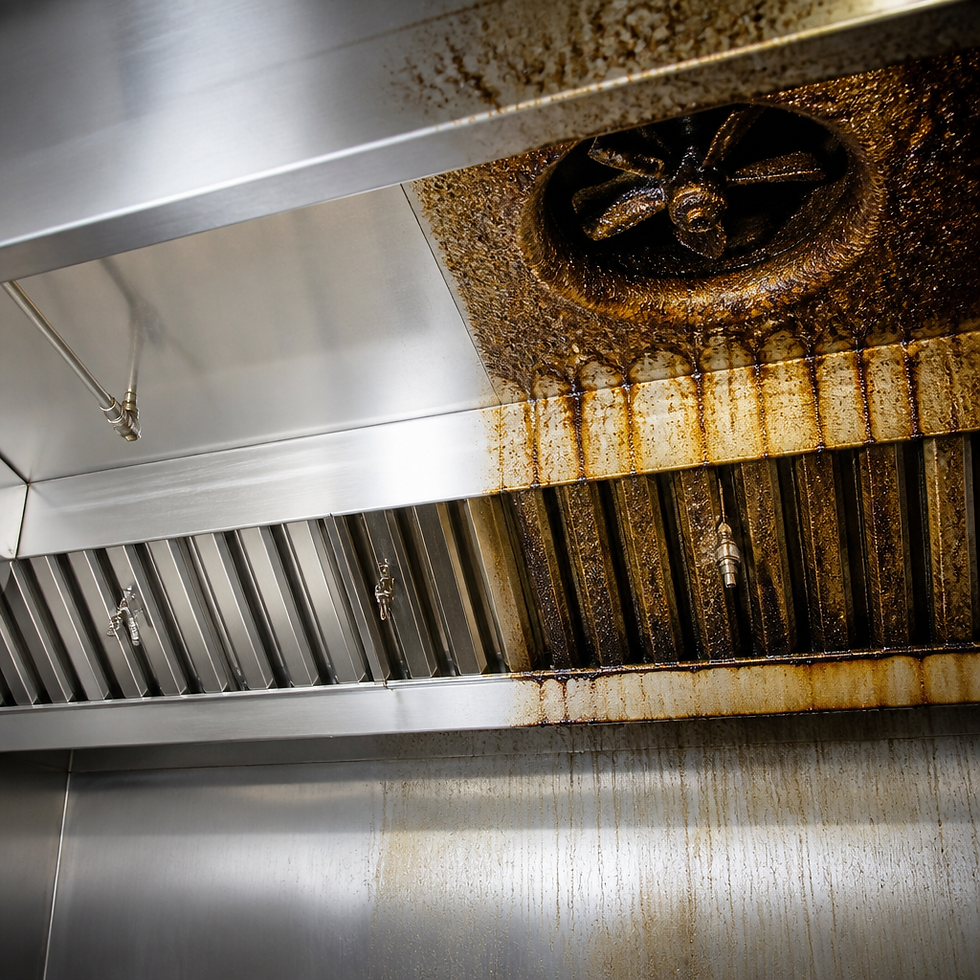
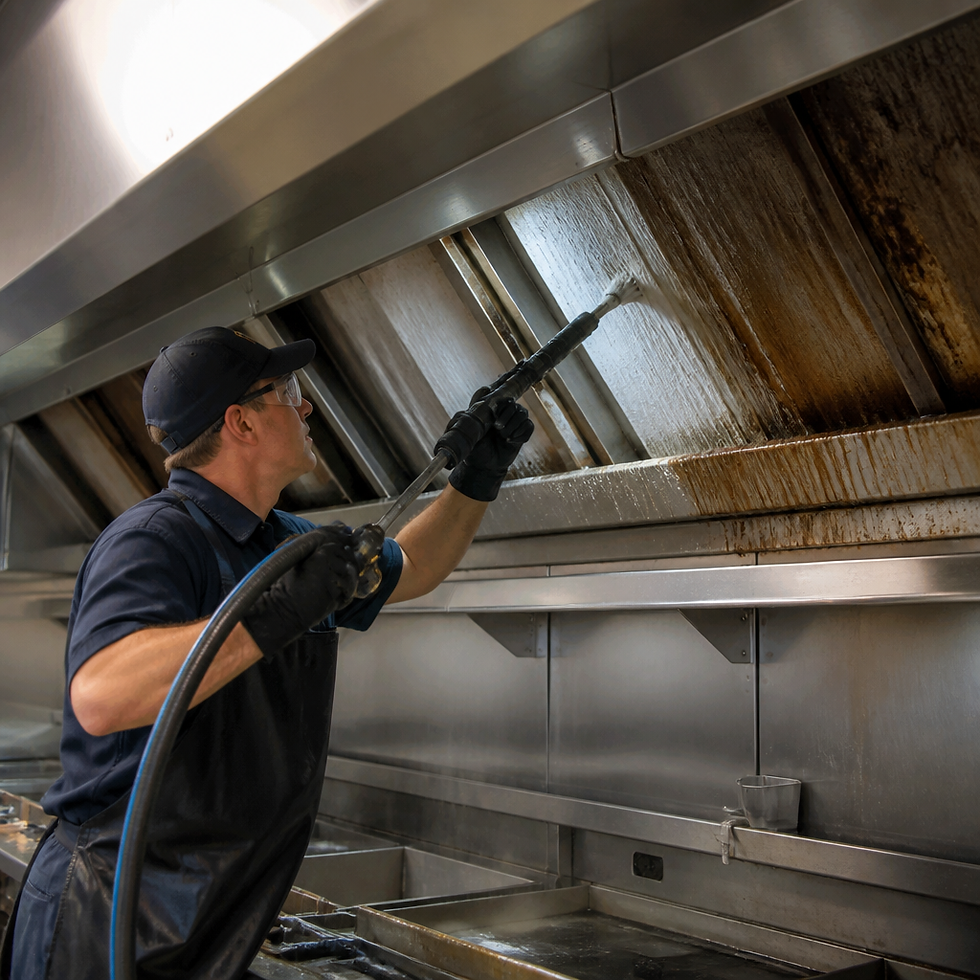
Cleaning must reach bare metal on every surface | NFPA 96 requires the entire contaminated system to be cleaned to bare metal - not just the filters you can see. Partial cleaning leaves grease inside plenums and ducts where it becomes the primary fire accelerant. |
Mechanical fan components need fall inspection too | Fan belts, bearings, motors, and hinge kits degrade under heavy seasonal use. A worn belt reduces airflow and accelerates grease condensation inside the system, creating exactly the conditions a cleaning was meant to prevent. |
Missing documentation is its own violation | Hartford, New Haven, Bridgeport, and Stamford fire departments request cleaning records during routine inspections. No paperwork means an immediate violation notice, regardless of your system's physical condition. |
Grease traps need pre-fall service alongside the hood | Higher cooking volumes overload grease traps faster in fall. A backed-up trap forces grease back into drains, creating health code violations and compounding the fire risk already elevated by a dirty exhaust system. |
Schedule before Labor Day, not after Thanksgiving | Certified hood cleaning companies in Connecticut book up quickly as fall approaches. Waiting until October or November guarantees you will not get service before the busiest weeks arrive. |
Every one of those insights points to the same practical reality: pre-fall maintenance is something you plan in September, not something you react to in December. The sections below cover each major area in the order a Connecticut restaurant operator should actually work through them.
NFPA 96 Cleaning Requirements: What Connecticut Restaurants Must Know
NFPA 96, the Standard for Ventilation Control and Fire Protection of Commercial Cooking Operations, is the governing document for every commercial kitchen exhaust system in the country. In Connecticut, local fire marshals treat NFPA 96 as the enforceable standard during inspections, even though Connecticut does not maintain a separate state-level kitchen exhaust mandate. The practical result is the same: violate NFPA 96 and you are in violation.
The Four Cleaning Frequency Tiers
NFPA 96 Table 11.4 sets cleaning intervals based on cooking type and volume, not on building size or seat count. The four tiers are monthly, quarterly, semiannual, and annual. Solid-fuel operations such as wood-fired pizza ovens and charcoal grills require monthly cleaning because creosote and solid fuel residue build at a rate that makes longer intervals genuinely dangerous. High-volume operations including 24-hour diners, heavy charbroilers, and wok cooking stations require quarterly cleaning. Moderate-volume sit-down restaurants operating standard hours fall into the semiannual category. Low-volume seasonal kitchens, such as church halls or event spaces that cook infrequently, may qualify for annual cleaning.
A common mistake in Connecticut kitchens is self-classifying as moderate-volume when actual cooking patterns put them firmly in the high-volume category. If your kitchen runs charbroilers or woks for more than four hours daily, the quarterly schedule applies regardless of your total operating hours or how large or small your restaurant is.
Pro tip: NFPA 96 triggers cleaning based on the inspection finding combustible deposits, not just the calendar date. If your quarterly inspection reveals grease accumulation, cleaning must begin immediately - not at the next scheduled service date. This is a critical distinction that affects how you document compliance.
What "Cleaned to Bare Metal" Actually Means
When NFPA 96 says the exhaust system must be cleaned to bare metal, it means every surface in the contaminated pathway: the hood canopy, baffle filters, the plenum chamber behind the filters, all horizontal and vertical ductwork, and the rooftop exhaust fan. Polishing the filters and leaving grease in the plenum does not constitute compliance, and it leaves the most dangerous accumulation exactly where it is most likely to ignite. Any professional cleaning service that does not document work on every component of the system has not performed an NFPA 96-compliant clean.
The Complete Fall Exhaust System Inspection Checklist
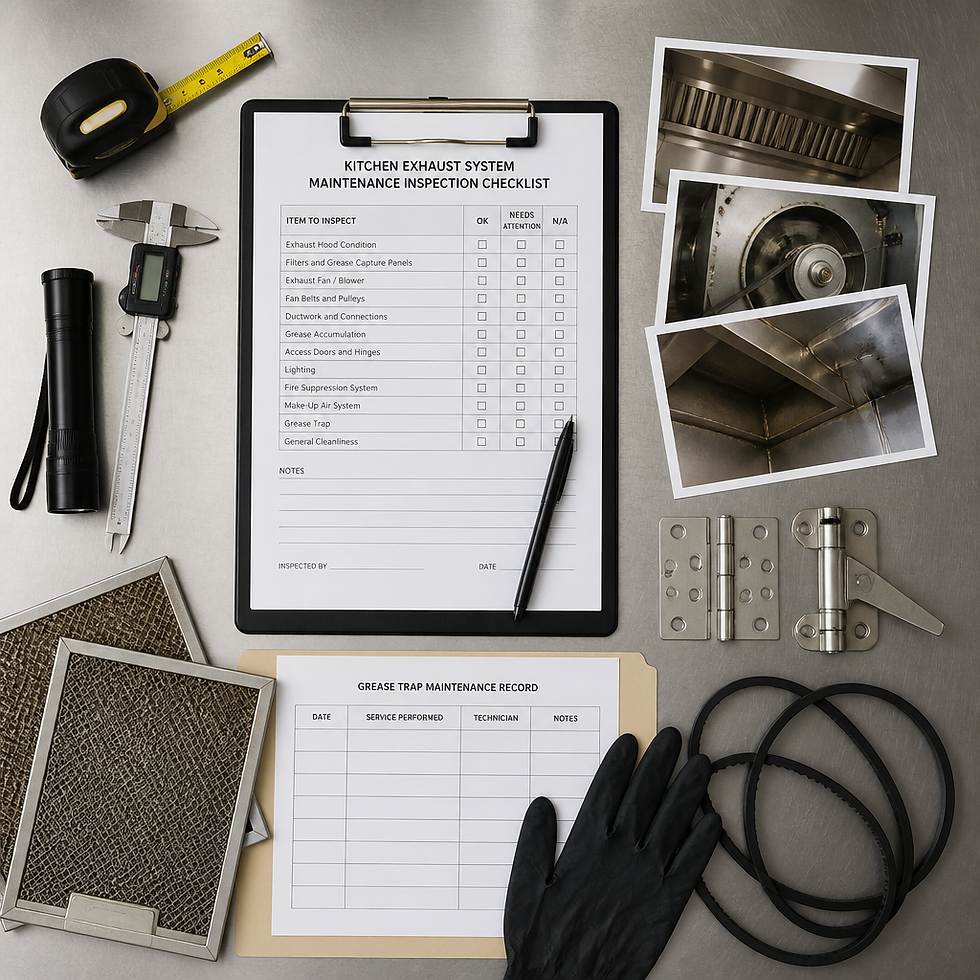
A pre-fall exhaust system inspection is not a walk-through with a flashlight. It is a structured review of every component in the airflow path, documented in a way that will hold up when a fire marshal requests your records. Here is what the inspection needs to cover.
Hood Canopy and Filters
The interior surfaces of the hood canopy and the underside should be inspected for grease deposits and physical damage. Baffle filters need to be removed individually and checked for grease saturation, physical deformation, or missing components. A saturated filter does not just fail to perform - it becomes a flame spreader if a flare-up reaches it. Filters should be professionally degreased and returned in the correct orientation.
Plenum and Ductwork
The plenum is the chamber between the filters and the duct entry point. It is the first place grease vapors condense and collect, and it is the component most often inadequately cleaned in quick-turnaround service jobs. The ductwork running from the plenum to the rooftop fan needs to be inspected through access panels for grease buildup along the walls and at directional transitions where accumulation is heaviest. Horizontal duct runs collect grease faster than vertical ones.
Rooftop Exhaust Fan and Grease Containment
The rooftop fan is where grease that has traveled the full length of the system accumulates on fan blades, housing surfaces, and the roof deck around the fan base. An NFPA-approved hinge kit must be installed to safely tip the fan back for access to the interior of the duct below it. Inspecting the fan without this access is not compliant and is not complete. Check grease containment devices for overflow and verify they are functioning correctly before the system processes fall cooking volumes.
Pro tip: Schedule your fall exhaust inspection to coincide with grease trap cleaning. Combining both services in a single visit minimizes kitchen downtime and gives you a complete picture of your grease management situation before the heavy season starts, not during it.
Exhaust Fan Mechanical Maintenance Before the Busy Season
Grease cleaning addresses the fire hazard. Fan mechanical maintenance addresses the performance failure that often precedes it. The two are connected: a worn fan belt or failing motor reduces airflow through the system, which causes grease vapor to condense and settle faster inside the ductwork rather than being expelled. You can clean the system perfectly and then watch it deteriorate three times faster than expected if the mechanical components are not performing correctly.
Fan Belt Inspection and Replacement
Belt-driven exhaust fans are standard in commercial kitchens throughout Connecticut. A belt that is cracked, glazed, frayed, or operating with excessive slack is not moving the rated volume of air through the system. This is not a hypothetical risk - it is a direct, measurable reduction in the system's ability to capture grease-laden vapor at the hood level. Fall belt inspection and replacement is a maintenance item that costs a fraction of what a cleaning-interval compression caused by degraded airflow will cost over the winter.
Bearing and Motor Condition
Exhaust fan bearings should be inspected for noise, heat, and wear as part of pre-fall service. Bearing failure during peak operating hours is an emergency repair situation, not a scheduled one. Fan motors - both single-phase and three-phase - should be checked for operating temperature, amperage draw, and any signs of moisture intrusion or insulation degradation. Catching a motor that is starting to fail in September is straightforward. Replacing one in December when your kitchen is running at capacity is expensive and disruptive.
Hinge Kit Installation and Compliance
NFPA 96 Section 8.1.1.1 requires that exhaust fans be accessible for full inspection of the duct opening below. Without an NFPA-approved hinge kit, a technician cannot safely tip the fan for this access, which means the inspection is incomplete and the system is not technically compliant. Fire marshals in Connecticut cite missing hinge kits as a deficiency during inspections. If your rooftop fan does not have a hinge kit installed, fall pre-season service is the right time to add one.
Cleaning Method Comparison: What Actually Gets Your System to Bare Metal
Not all exhaust system cleaning services deliver the same result, and understanding the difference matters when you are choosing a provider for pre-fall service in Connecticut. The comparison below covers the three approaches you will encounter.
Cleaning Approach | What It Covers | NFPA 96 Compliance |
|---|---|---|
Full system cleaning to bare metal | Hood canopy, baffle filters, plenum, all ductwork, and rooftop fan. Access panels used for interior duct sections. Before-and-after photos documented for compliance records. | Fully compliant when properly documented. This is what NFPA 96 requires and what Connecticut fire marshals expect to see in your records. |
Filter-and-hood surface cleaning only | Visible surfaces of the hood and filter cleaning. Plenum and ductwork not addressed. Rooftop fan may be wiped but not fully accessed. | Not compliant. Leaves the highest-risk grease accumulation in place inside the plenum and ductwork. Often sold as a quick service at a lower price point. |
Chemical spray application without mechanical cleaning | Degreaser applied to accessible surfaces. No mechanical removal of hardened deposits. No duct or fan interior access. | Not compliant. NFPA 96 requires physical removal of deposits to bare metal. Chemical treatment alone does not meet the standard and will not satisfy an inspector review of your records. |
The price difference between a full bare-metal clean and a filter-only service is real, but so is the difference in outcome. An incomplete cleaning that leaves grease in your plenum provides almost none of the fire protection the service is meant to deliver - and it will not protect your insurance coverage or operating license if an incident occurs.
The most dangerous exhaust system is one that looks clean at the filter level but has never had its plenum or ductwork touched. A restaurant operator who schedules annual filter cleaning and calls it maintenance is carrying full fire risk while believing the risk has been managed.
Connecticut Enforcement: What Local Fire Marshals Look For
Connecticut delegates commercial kitchen fire code enforcement to local fire marshals, and their inspections have teeth. Cities including Hartford, New Haven, Bridgeport, and Stamford conduct routine commercial kitchen inspections with specific attention to exhaust system maintenance records. What inspectors request during those visits goes beyond a quick visual of the hood.
Documentation That Must Be On Hand
Fire marshals request records showing cleaning dates, the credentials of the company that performed the service, and the scope of work performed. A sticker on the hood noting a cleaning date is not documentation of compliance - it is evidence that someone visited. Your records need to show what was cleaned, which components were accessed, and who performed the work. The 2025 NFPA 96 edition has increased the emphasis on verifiable documentation, and Connecticut inspectors are applying that standard during reviews.
The Connecticut Department of Public Health also requires restaurants to maintain records of all equipment maintenance affecting food safety and fire prevention. Kitchen exhaust systems explicitly fall under this requirement, which means health inspectors can and do request your cleaning records during routine inspections, entirely separately from fire marshal visits.
What Triggers a Violation Notice
Missing documentation triggers an immediate violation notice regardless of the system's physical condition. Inspection findings that show grease deposits when the cleaning records indicate a recent service also trigger violations, because they signal either incomplete work or a cleaning schedule that does not match the operation's actual cooking volume. Both outcomes are avoidable with properly scheduled, fully documented professional service.
Grease Trap and Equipment Detailing: The Overlooked Fall Maintenance Items
Most Connecticut restaurant operators think about exhaust hood cleaning when they hear "fall kitchen maintenance," which is correct. Fewer extend the same pre-season discipline to grease traps and equipment surfaces, both of which directly affect the same fire and compliance outcomes.
Grease Trap Capacity Under Fall Cooking Volumes
A grease trap sized for your summer cooking volume may not have adequate capacity for the increased fats, oils, and grease generated during fall and winter menus. When a grease trap reaches capacity, it backs up into drains and creates conditions for health code violations and drainage failures. Scheduling a grease trap cleaning before October, rather than reacting to a backup during your busiest service week, is the correct approach. Combining grease trap service with an exhaust system cleaning in a single visit minimizes downtime and gives your kitchen a complete pre-season baseline.
Restaurant Equipment Detailing and Surface Grease Management
Grease accumulation on cooking equipment surfaces, behind units, and on ventilation components close to the cooking line contributes to the overall fire load in the kitchen even when the exhaust system is well maintained. Professional equipment detailing before the fall season reduces the ambient grease level in the kitchen, extends equipment life, and makes subsequent cleaning services faster and more effective. It is also a meaningful factor in health inspection outcomes, where inspectors evaluate general kitchen cleanliness alongside exhaust system records.
Fall is also the right time to verify that fire suppression systems serving the cooking equipment are current on their semiannual inspection requirements. Exhaust system maintenance and suppression system inspection are separate obligations under NFPA 96, and both need to be current before your high-volume season begins.
Frequently Asked Questions
How often does a Connecticut restaurant need its exhaust hood cleaned?
The required frequency is set by NFPA 96 Table 11.4 and depends on your cooking type and volume. High-volume operations including 24-hour kitchens, charbroilers, and wok stations require quarterly cleaning. Most full-service sit-down restaurants in Connecticut that operate standard hours fall into the semiannual category. Solid-fuel operations such as wood-fired ovens require monthly cleaning. Connecticut fire marshals treat these intervals as enforceable minimums, not suggestions, and will check your documentation during inspections.
What does NFPA 96 compliant hood cleaning actually include?
A compliant cleaning covers the entire exhaust pathway from the hood canopy and baffle filters through the plenum, all ductwork sections accessed through panels or inspection points, and the rooftop exhaust fan. Every contaminated surface must be cleaned to bare metal. Before-and-after documentation should be provided for your compliance records. Any service that addresses only the filters and visible hood surfaces is not compliant under NFPA 96 regardless of what a certificate on the wall says.
Why is fall specifically the right time to schedule exhaust cleaning in Connecticut?
The October-through-December period is the highest-revenue and highest-cooking-volume stretch for most Connecticut food service operations. Holiday dining, heavier menus, and extended kitchen hours all accelerate grease accumulation. Scheduling your cleaning before this period means your system enters its most demanding stretch at full performance and compliance rather than entering it already partially loaded with grease from the summer and fall shoulder season. Booking slots also become limited as the season approaches, so scheduling in September gives you the best access to qualified providers.
Can a fire marshal shut down my restaurant over an exhaust system violation in Connecticut?
Yes. Connecticut fire marshals have authority to issue immediate violation notices for exhaust systems that are out of compliance, and unresolved violations can result in operating license suspension. Missing documentation is itself a citation-worthy violation even if the physical system appears clean. The combination of no cleaning records and visible grease accumulation during an inspection is the fastest path to a forced closure, which is particularly damaging when it happens during the fall and winter high-revenue months.
What mechanical components should be checked on the exhaust fan before fall?
Belt-driven fans should have the belt inspected for cracking, glazing, fraying, and proper tension. Bearings should be checked for noise and heat signatures indicating wear. Motors should be evaluated for correct amperage draw and any signs of moisture intrusion. An NFPA-approved hinge kit should be installed if one is not already present, since it is required for compliant inspection of the duct opening below the rooftop fan. Catching mechanical degradation in September prevents emergency repairs during December peak service.
Do I need to clean my grease trap at the same time as my exhaust hood?
Not required simultaneously, but scheduling both in the same visit is practical and cost-effective. Fall cooking volumes increase the load on grease traps significantly, and a trap that reaches capacity during your busiest months creates health code violations and drainage problems. Combining grease trap service with exhaust cleaning in one scheduled visit minimizes kitchen downtime and gives you a complete picture of your grease management baseline before the busy season starts.
If your experience with fall kitchen maintenance in Connecticut has given you a lesson worth sharing, leave a comment below - other restaurant operators benefit from what you have learned the hard way.
We would love your feedback and any insights you would share with others. What perspective would you add?
References
2026 NFPA 96 compliance guide for Connecticut and New York restaurants covering cleaning schedules and enforcement
NFPA 96 kitchen hood inspection requirements including Table 11.4 cleaning frequency tiers
NFPA 96 cleaning frequency summary covering cooking volume categories and fire risk data
Kitchen exhaust hood cleaning and NFPA 96 complete compliance guide including hinge kit requirements


Comments