


Fast Food Restaurant Hood Cleaning CT: Monthly Service Guide
- Jul 8
- 11 min read
If you operate a fast food restaurant in Connecticut, monthly hood cleaning is not optional. It is a legal requirement under NFPA 96, and the fire risk without it is not theoretical. Grease accumulates faster in fast food kitchens than in virtually any other commercial food service environment. Deep fryers, charbroilers, and high-output griddles run continuously, pushing enormous volumes of grease-laden vapor into your exhaust system every single day. Fast food restaurant hood cleaning CT operators who skip monthly service are not saving money. They are accumulating liability, and the Connecticut State Fire Marshal's office takes that seriously.
Table of Contents
Quick Takeaways
Key Insight
Explanation
Monthly cleaning is mandatory for solid fuel and high-volume fryer operations
NFPA 96 Section 11.4 mandates monthly exhaust cleaning for systems serving solid fuel cooking and high-volume, charbroil-heavy fast food operations.
Grease fires in commercial kitchens cause hundreds of millions in losses annually
The National Fire Protection Association reports that cooking equipment is the leading cause of restaurant fires in the United States, with grease accumulation as the primary accelerant.
Connecticut fire marshals inspect hood cleaning records during routine inspections
Failure to produce signed service reports with before-and-after photos can result in immediate fines and forced closure orders.
Dirty exhaust fans reduce airflow efficiency and increase utility costs
A grease-coated fan motor works harder to move the same air volume, shortening equipment lifespan and spiking energy consumption in your kitchen.
Monthly service protects your insurance coverage
Most commercial property and liability insurance policies for restaurants require documented NFPA 96 compliance. A single gap in records can void a claim.
Fast food operations produce 3 to 5 times more grease vapor than casual dining
High-volume fryers, broilers, and continuous-service griddles saturate exhaust systems far faster than low-volume cooking equipment.
Superior Clean provides compliant service reports after every visit
Every hood cleaning by Superior Clean includes documented before-and-after records, so Connecticut fast food operators have inspection-ready proof on file at all times.
Why Fast Food Kitchens Require Monthly Cleaning
Fast food kitchens are not like full-service restaurant kitchens. They run at full capacity for 12 to 18 hours a day, seven days a week, with cooking equipment that never fully cools down between rushes. A single commercial fryer operating at 350 degrees Fahrenheit for 16 hours a day produces dramatically more grease vapor than an occasional-use grill in a catering kitchen. Multiply that by six or eight fryers, a charbroiler, and a double-deck griddle, and you have a grease loading rate that overwhelms any exhaust system within weeks.
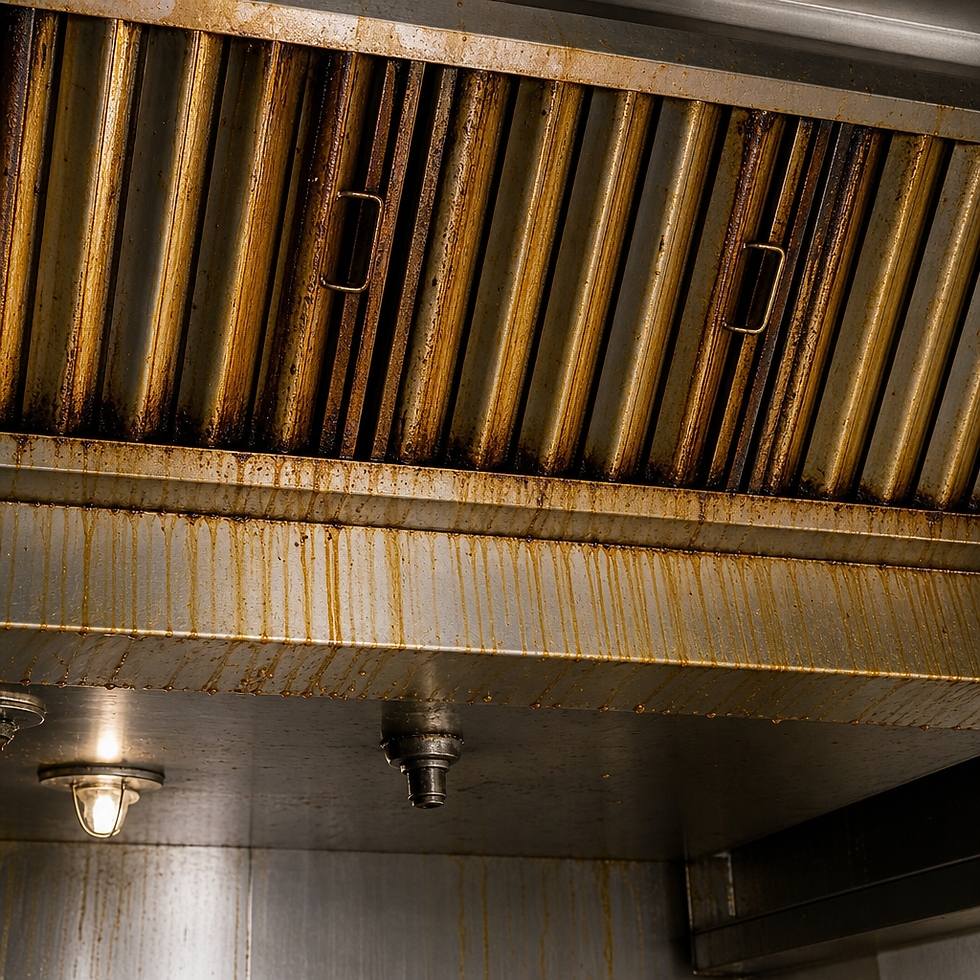
In practice, what this means for fast food operators is simple. By week three of a month, the grease baffles in a high-volume exhaust hood are already carrying enough accumulated grease to present a measurable fire risk. By week six, the risk is serious. Quarterly cleaning schedules, which are acceptable under NFPA 96 for lower-volume operations, are completely inadequate in this environment.
Pro tip: If your Connecticut fast food location runs a charbroiler, a wood-burning oven, or operates more than 12 hours per day, assume you are in the monthly cleaning category under NFPA 96. Do not wait for an inspector to tell you.


The Fire Risk Is Not Theoretical
The National Fire Protection Association documented that between 2017 and 2021, U.S. fire departments responded to an average of 7,640 structure fires in eating and drinking establishments per year. Cooking equipment was involved in 61 percent of those fires. Grease accumulation in hood and duct systems is consistently identified as the primary factor that allows a small cooking fire to escalate into a full structural fire.
Connecticut fast food operators who have experienced even a minor flare-up in their kitchen already understand how quickly grease ignites. The temperature inside an active exhaust duct can exceed 700 degrees Fahrenheit during a cooking fire, and if the duct walls are coated with accumulated grease, the fire travels the full length of the duct system in seconds.
NFPA 96 Cleaning Frequency Requirements Explained
NFPA 96, the Standard for Ventilation Control and Fire Protection of Commercial Cooking Operations, is the governing document that Connecticut fire marshals use to assess exhaust system compliance. It is not vague on the question of frequency. Section 11.4 of the standard establishes a tiered cleaning schedule based on cooking volume and equipment type.
The four tiers are: monthly, quarterly, semi-annually, and annually. Fast food restaurants using solid fuel cooking equipment are categorically required to clean monthly. Fast food operations with high-volume fryers and charbroilers also fall into the monthly category based on cooking volume. The quarterly and annual schedules apply to low-volume cooking operations, which describes almost no fast food restaurant in Connecticut.
"Systems serving cooking operations that use solid fuel-burning cooking equipment shall be inspected monthly." NFPA 96, Section 11.4.1, National Fire Protection Association.
How Connecticut Enforces NFPA 96
Connecticut adopts NFPA 96 as part of its State Fire Prevention Code. Local fire marshals across Hartford, New Haven, Bridgeport, Stamford, and every other Connecticut municipality have authority to inspect commercial kitchens and demand cleaning documentation at any time. They do not need advance notice, and they do not accept verbal assurances. They want to see the signed service report from your last cleaning.
A common mistake among fast food franchise operators in Connecticut is assuming that corporate maintenance schedules satisfy local code requirements. They do not, unless those corporate schedules happen to align with NFPA 96 frequency mandates. The local fire marshal answers to state code, not to a franchise's internal maintenance calendar.
Pro tip: Ask your hood cleaning company to leave a dated service sticker on the hood after every visit. Connecticut fire marshals look for that sticker immediately. If it is missing or outdated, the inspection becomes more intensive.
What Happens During a Monthly Hood Cleaning
A proper monthly hood cleaning for a fast food restaurant covers every component of the exhaust system, not just the filters. The process begins with the hood canopy and grease collection channels, moves through the baffles and filters, then extends into the exhaust plenum, the ductwork, and finishes at the rooftop exhaust fan. Each section accumulates grease differently, and each requires different cleaning techniques and tools.
At Superior Clean, the monthly service for Connecticut fast food operators includes pressure washing the interior duct surfaces, degreasing the fan blades and motor housing, cleaning the grease trap and collection cup, and inspecting the exhaust fan belt, bearings, and hinge kit for wear. The entire system gets cleaned, not just the visible surfaces that an inspector might notice.
Exhaust Fan Service During Hood Cleaning
The rooftop exhaust fan is the component most frequently neglected by discount hood cleaning services. Grease accumulates on the fan blades, reducing their ability to move air efficiently. This forces the motor to work harder, increasing electricity consumption and accelerating bearing wear. In a fast food restaurant running 16 hours a day, a neglected exhaust fan can fail within two years of installation. A properly maintained fan should last 10 years or more.
Superior Clean performs fan belt inspections and replacements during regular cleaning visits, which is a service that purely price-competitive competitors skip entirely. A broken fan belt during a dinner rush is not a minor inconvenience. It means your exhaust system stops working and your kitchen fills with heat and smoke.

Before-and-After Documentation
Every monthly cleaning should produce a written service report with before-and-after photographs. This is not optional. Connecticut fire marshals and insurance adjusters both require this documentation. A service report should include the technician's name, the date of service, the specific components cleaned, and the grease level observed before cleaning began. If your current hood cleaning company does not provide this, you are exposed.
Grease Buildup Rates in Fast Food vs Other Kitchens
The data consistently shows that fast food kitchens generate grease loading rates three to five times higher than casual dining or institutional kitchens. This is driven by equipment type, operating hours, and cooking method. A fast food location running four commercial fryers and a charbroiler for 16 hours a day is producing continuous streams of grease-saturated vapor that coat every surface in the exhaust system.
Compare that to a hospital cafeteria that serves lunch for three hours using steam tables and flat-top griddles. That kitchen might legitimately qualify for quarterly or even semi-annual cleaning under NFPA 96. The same standard does not apply to fast food, and applying quarterly intervals to a fast food exhaust system is a fire code violation waiting to be discovered.
Equipment Types That Drive Monthly Requirements
The specific equipment that pushes a Connecticut fast food restaurant into monthly cleaning territory includes open-flame charbroilers, solid fuel or wood-burning equipment, high-output commercial deep fryers producing more than 35 pounds of oil per hour, and wok stations with continuous open-flame cooking. If any of these are present in your kitchen, monthly cleaning is not a recommendation. It is a requirement.
A common mistake is assuming that having only one high-output piece of equipment means you can use a longer cleaning interval for the rest of the system. The exhaust system is shared. Grease from a single charbroiler contaminates the entire duct run, not just the section directly above it.
Compliance, Inspection, and Documentation in Connecticut
Connecticut fast food operators face inspections from at least two different regulatory bodies. The local fire marshal inspects for fire code compliance, including NFPA 96 adherence. The Connecticut Department of Public Health and local health departments inspect for sanitation, which includes grease trap cleanliness and general kitchen hygiene. A grease-laden exhaust system can generate violations from both agencies simultaneously.
The most defensible position for any Connecticut fast food restaurant manager is a complete, organized file of hood cleaning service reports going back at least three years. Every report should be dated, signed by the technician, and accompanied by photographs. This file is your proof of compliance when the fire marshal walks in unannounced.
Insurance Requirements and Grease Cleaning Records
Commercial property insurance and restaurant liability policies almost universally require NFPA 96 compliant exhaust cleaning at the code-specified frequency. The insurance industry tracks kitchen fire claims carefully. If a grease fire causes damage and your service records show a gap in cleaning, the insurer has grounds to deny the claim. This is not hypothetical. It happens to Connecticut restaurant operators every year.
Superior Clean provides service documentation formatted specifically to satisfy both fire marshal inspections and insurance compliance requirements. This is a practical distinction from competitors who hand you a generic receipt and move on to the next job.
Choosing a Hood Cleaning Company in Connecticut
Not every hood cleaning company operating in Connecticut is cleaning to NFPA 96 standards. Some are wiping visible surfaces and skipping the duct interior entirely. Some are not cleaning the rooftop fan at all. The price difference between a compliant cleaning and a non-compliant surface wipe can look small on an invoice, but the difference in actual fire risk and compliance status is enormous.
When evaluating a hood cleaning company for your Connecticut fast food location, ask three specific questions. First, do they clean the full duct system from the hood to the rooftop fan discharge, or only the accessible sections? Second, do they provide a signed service report with photographs after every visit? Third, are they familiar with NFPA 96 Section 11.4 requirements for high-volume cooking operations?
What Differentiates Superior Clean from Competitors
Superior Clean focuses exclusively on Connecticut commercial kitchens and provides services that go beyond the basic hood wipe-down. The company handles exhaust fan motor swaps, hinge kit installations, fan belt replacements, and grease trap cleaning as part of a comprehensive maintenance program. This means a fast food operator working with Superior Clean does not need to coordinate multiple vendors for exhaust system maintenance.
Competitors operating in Connecticut often specialize in residential duct cleaning or offer hood cleaning as a secondary service. That lack of specialization shows up in the quality of the work and in the accuracy of their compliance documentation. A company that cleans 10 commercial hoods a week understands NFPA 96 in a way that a generalist contractor does not.
Comparison of Cleaning Service Approaches
Service Approach
NFPA 96 Compliance
Practical Value for CT Fast Food Operators
Full-System Monthly Cleaning (Superior Clean standard)
Fully compliant: hood, baffles, plenum, ductwork, rooftop fan, grease trap
Provides signed documentation, before-and-after photos, fan and belt inspection included. Insurance and fire marshal ready.
Filter-and-Hood-Only Cleaning (common discount approach)
Partially compliant: misses duct interior and rooftop fan, which accumulate significant grease in fast food environments
Lowers cost on paper but leaves the most dangerous grease deposits untouched. Fails inspection when the fire marshal checks the duct interior.
Quarterly Schedule Applied to Fast Food (incorrect interval)
Non-compliant: NFPA 96 requires monthly service for high-volume fryer and charbroiler operations
Leaves grease building for 12 weeks in a kitchen that needs cleaning every 4 weeks. Creates documented compliance gap that voids insurance coverage and triggers fire code violations.
Frequently Asked Questions
How often does a fast food restaurant in Connecticut legally need hood cleaning?
Under NFPA 96, fast food restaurants operating high-volume fryers, charbroilers, or solid fuel cooking equipment are required to have their exhaust systems cleaned monthly. Connecticut adopts NFPA 96 as part of its State Fire Prevention Code, making this a legal obligation enforced by local fire marshals, not just an industry recommendation.
What does monthly hood cleaning include for a fast food location?
A compliant monthly cleaning covers the hood canopy, grease baffles and filters, the exhaust plenum, the full duct run, and the rooftop exhaust fan including fan blades and motor housing. A reputable Connecticut provider like Superior Clean also inspects fan belts, bearings, and hinge kits during each visit, and provides a signed service report with photographs for compliance documentation.
What happens if a Connecticut fast food restaurant fails a fire marshal inspection for hood cleaning?
Consequences range from written violations and fines to immediate closure orders if the grease accumulation is severe enough to present an imminent fire hazard. Connecticut fire marshals have authority to shut down a kitchen on the spot if they determine the exhaust system poses a direct risk. Documented non-compliance also gives commercial property insurers grounds to deny fire damage claims.
Can a fast food franchise operator rely on corporate maintenance schedules to meet Connecticut NFPA 96 requirements?
Not necessarily. Corporate maintenance schedules vary widely and are not always calibrated to local fire code requirements. Connecticut fire marshals enforce the state fire prevention code, which incorporates NFPA 96 standards. If a corporate maintenance schedule specifies quarterly cleaning for a location that qualifies as high-volume under NFPA 96, that schedule is non-compliant with Connecticut law regardless of corporate policy.
What documentation should I keep on file to prove hood cleaning compliance in Connecticut?
Keep signed service reports from every cleaning visit, including the technician's name, date of service, a description of all components cleaned, and before-and-after photographs. Maintain at least three years of records on site. Connecticut fire marshals and insurance adjusters can request these records at any time, and gaps in documentation are treated as gaps in compliance.
Does Superior Clean service fast food restaurants throughout all of Connecticut?
Yes. Superior Clean provides monthly hood cleaning and exhaust system maintenance to commercial kitchen operators across Connecticut, including fast food restaurants in Hartford, New Haven, Bridgeport, Stamford, Waterbury, and surrounding areas. The company's services include full NFPA 96 compliant cleaning, exhaust fan repair and motor replacement, grease trap cleaning, and fan belt replacement.
Have you experienced a Connecticut fire marshal inspection related to your hood cleaning records? Share what the inspector focused on so other fast food operators in Connecticut can be better prepared.


Comments