


School Cafeteria Hood Cleaning in CT: NFPA 96 for K-12
A school cafeteria hood runs hard for a few hours a day, then sits cold through nights, weekends, and summer break. That rhythm fools many food service directors into thinking grease is a slow problem. In practice, school cafeteria hood cleaning in Connecticut has to match how a K-12 kitchen actually cooks: heavy bursts of breakfast and lunch production, ovens and kettles running hot, and then long gaps when nobody is watching the exhaust. Grease does not follow the school calendar. This guide covers what NFPA 96 expects from K-12 kitchens, how to build a cleaning schedule around the academic year, and where inspections most often find problems.
Table of Contents
Quick Takeaways
Key Insight | Explanation |
|---|---|
Cleaning frequency follows cooking volume | Industry guides place most commercial hoods between one and six months. A school serving hundreds of lunches on fryers or combi ovens usually belongs at the shorter end, so check the frequency tier against your actual cooking, not the calendar. |
Summer break is a cleaning window, not a shutdown | Book full hood, filter, fan, and duct work for June through August, when the kitchen is idle and crews can work on the roof and in the ductwork without disrupting meals. |
Duct access is a compliance issue | Missing or caulked access panels turn a routine inspection into a failed one, because an inspector cannot confirm the duct was cleaned if no one can see inside it. |
Keep the paperwork at the kitchen | Cleaning certificates, service dates, and corrective action notes belong in a binder at the kitchen, not buried in a district inbox nobody checks during an inspection. |
Grease trays and filters are daily tasks | Staff can empty trays and pull filters between services. That simple habit slows grease buildup between professional visits and keeps small problems from becoming fire hazards. |
Fire suppression needs its own check | Suppression system inspections run on a separate schedule from hood cleaning. They are often missed when a kitchen runs on a skeleton summer crew. |
What NFPA 96 Requires in a K-12 Kitchen
NFPA 96 is the Standard for Ventilation Control and Fire Protection of Commercial Cooking Operations. NFPA describes it as a set of preventive and operative fire safety requirements for public and private commercial cooking operations. Schools fall within that scope, and guides written for restaurant owners list cafeterias and institutional kitchens among the operations that must follow it.

The standard covers far more than the visible hood. It addresses exhaust ducts, grease removal devices, fans, fire suppression, cleaning schedules, and inspection procedures. For a school, the hood is only the part staff can see, and most of the grease risk sits in the duct run and the fan housing above the ceiling.
Cleaning Frequency Tiers
NFPA 96 ties cleaning frequency to the type and volume of cooking, not to one fixed calendar rule. Guides for restaurant owners commonly summarize the range as one to six months, but the right interval for your kitchen depends on your equipment and daily load. Read the current edition text, pick the tier that matches your cooking, and write down why you chose it. An inspector will ask.
Pro tip: Record your cooking equipment and daily meal counts in a one-page summary and attach it to your cleaning records. When an inspector questions your frequency, that summary shows the decision was deliberate.
Who Owns Hood Cleaning in a District Kitchen
In a school, the district usually owns the building, a food service contractor may run the line, and the fire marshal inspects the result. Hood cleaning falls into the gap between those groups. Without a named owner, the cleaning date slips, and nobody notices until the inspection report arrives.
Assign one person in facilities and one person in food service to share responsibility. The facilities contact should own the contract and the calendar, while the food service lead owns daily tray emptying and filter checks. Put both names on the cleaning log.
Building a Cleaning Schedule Around the School Year
A school kitchen does not cook at a steady pace. It peaks during breakfast and lunch, drops during afternoon snack service, and goes quiet for weeks at a time. A cleaning schedule that ignores this pattern either wastes money on cleaning during dead weeks or leaves grease sitting through peak months.
Matching Cooking Load to the Calendar
Start by counting what actually goes on the line. A kitchen running a fryer, a combi oven, and a braising kettle for two lunch periods loads the hood far more than a warming-only satellite kitchen that receives prepared meals. Map each appliance to its daily hours, then compare that load to the frequency tiers in the standard. The result is a defensible interval, not a guess.
Once you have that number, schedule professional cleaning from the calendar backward. Count the instructional weeks, subtract holidays, and place each visit where the kitchen is least likely to be cooking at full load.
Summer as the Deep Clean Window
Summer break is the best time for full hood, filter, fan, and duct work in most K-12 buildings. The kitchen is idle, crews can work without cooking around them, and the system is clean before the first lunch of the fall. Book early. In practice, the calendar fills in late July and August as districts scramble to prepare for reopening, and a contractor who was available in May may be fully booked by the time you call.
Build a fallback date in case the first visit slips. A deep clean that gets pushed into the first week of school means the kitchen runs through September on a system that has not been cleaned in a year.
Mid-Year Checkpoints
Winter break and spring break are useful for quick checks, not full cleaning. Use those closures to pull filters, empty grease collection trays, and look at the duct access points for signs of heavy buildup. Any visible grease accumulation at those checkpoints should prompt an earlier professional visit.
Inspection Findings That Fail School Kitchens
Most failed hood inspections in school kitchens come from the same few problems. The hood looks clean from below, but the grease has moved into places the inspector can see, such as the fan housing, the collection trays, or the duct access points. Municipal hood cleaning guidance repeats the basics for good reason: clean up spills and leaks as they happen, and empty grease collection trays on a regular schedule.
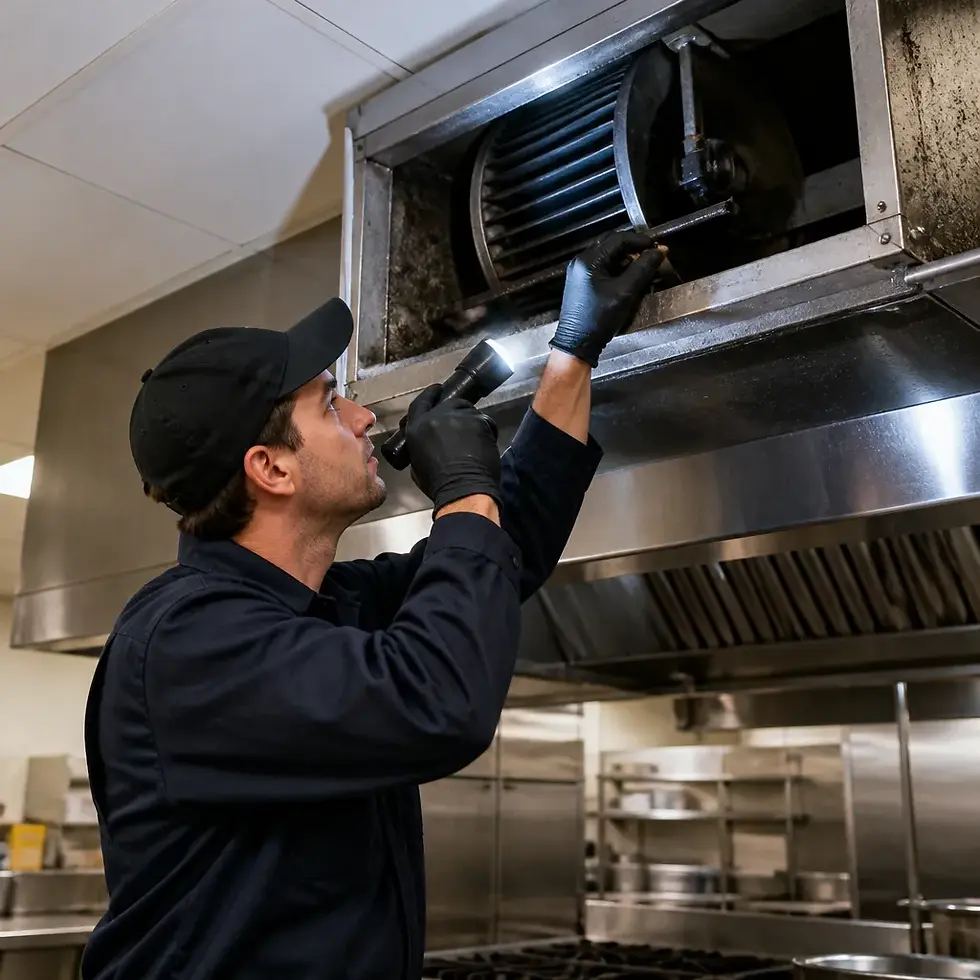
Inspectors also look for things that are easy to overlook in a busy building: filters that are missing or installed backward, hood-to-ceiling clearances that have been reduced by added shelving, and fire suppression tags that are out of date. Walk the kitchen with a checklist before the inspector arrives, and treat every item on that list as a finding waiting to happen.
Access Panels and Sealed Ducts
Access panels are the most common hidden failure. Maintenance staff sometimes seal a panel with tape or caulk after a leak, or a remodel covers it with drywall. Once the panel is gone, the inspector cannot confirm the duct was cleaned, and that alone can fail the inspection. Keep every access panel visible, label it, and make sure the cleaning contractor knows where each one is before the crew arrives.
Fan Belts and Motors During Service
A slipping fan belt or a failing motor does more than make noise. When the fan is not moving air at full speed, grease vapor does not clear the hood and duct as designed, and buildup accelerates. Listen for squealing during the lunch rush and schedule belt or motor work before the next cleaning cycle rather than after an inspection flags it.
A kitchen that passes on the day it is cleaned and fails three months later was never truly clean. It was scheduled, and the schedule did not match the cooking.
Documentation That Holds Up in Inspections and Claims
Paperwork is the part of hood cleaning that most school kitchens treat as an afterthought, and it is the part that matters most when something goes wrong. Restaurant-focused guides note that noncompliance can lead to failed inspections, insurance complications, and business interruptions. Schools face the same exposure, with the added complication that a closed kitchen affects hundreds of students at once.
A clean record is specific. It names the company, the date, the areas cleaned, the access points opened, and any defects found. Ask your contractor for a written report after every visit, and check that it lists the hood, filters, fan, and duct sections separately rather than as a single line item.
What a Cleaning Record Should Include
Each service report should show the date, the technician or company name, the exact components cleaned, any repairs recommended, and the next due date. Add a note for anything the crew could not access. A line that says a duct section was not accessible is far more useful than a report that says everything was cleaned.
Pro tip: Scan every service report the day you receive it and store the copy in the district's shared drive and in the physical binder at the kitchen. Inspectors ask for the binder, not the email.
Who Keeps the File
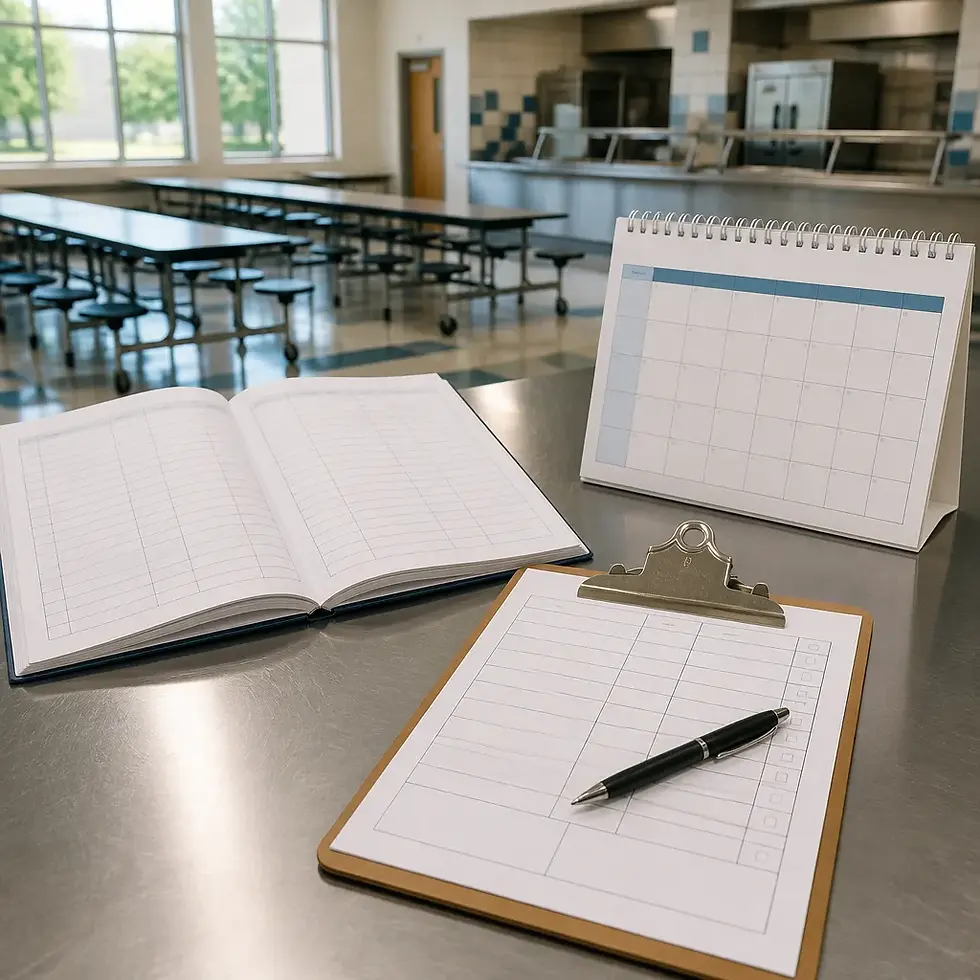
Keep the working file at the kitchen, where the inspector will look first. Keep a copy in facilities so the district can track contracts and budget. When staff change, the binder should stay behind, which prevents the common situation where a new food service director inherits a kitchen with no cleaning history at all.
Comparing Cleaning Approaches for School Kitchens
Schools usually choose among three approaches. Each one has a role, and most well-run kitchens combine at least two of them. The mistake is treating any single approach as enough on its own.
Approach | Best Fit | Main Trade-off |
|---|---|---|
In-house staff cleaning between services | Daily tray emptying, filter swaps, and wipe-downs of accessible surfaces | Staff are not set up for rooftop fan work or duct cleaning, so this cannot replace professional cleaning under the NFPA 96 scope |
Quarterly contracted professional cleaning | High-volume kitchens running fryers or grills every day of the school week | Higher annual cost, and it may exceed what a lightly loaded kitchen needs |
Summer deep clean plus monthly staff checks | Typical K-12 kitchens serving breakfast and lunch with a summer closure | Grease builds during the school year if the monthly checks are skipped, so the log must be kept current |
For most K-12 kitchens in Connecticut, the third option gives the best balance of cost and control. It puts professional work during the closure, when the kitchen is idle, and relies on staff for the daily habits that slow buildup. The weak point is the monthly check, which needs a named person and a log.
Access, Ductwork, and Fan Maintenance in Older Buildings
Older school buildings often have exhaust ducts routed through walls, chases, and ceiling spaces that were never designed for easy cleaning. Fewer access points mean longer cleaning times and a higher chance that some section is missed. When we survey an older kitchen, the first question is always where the duct goes and where the cleaning crew can actually reach it.
Retrofitting access is often the single best investment a school can make in its exhaust system. Add access panels where the duct changes direction, near fan connections, and at any horizontal run that cannot be reached from the roof. Use access hardware suited to the duct and the fire-rated assembly, and confirm the installer documents each location on a simple drawing.
Fan Repair and Motor Replacement Timing
Exhaust fans in school kitchens take a beating from heat, grease, and frequent start-stop cycles. Belt wear, bearing noise, and motor overheating are the most common complaints. Schedule fan repair or motor replacement during summer closure whenever possible, because a fan that fails on the first lunch of September leaves the kitchen with no reliable exhaust while meals are still being served.
Pro tip: Keep one spare fan belt of the correct size in the kitchen or the facilities shop. A belt swap takes minutes, and it prevents a service day from running on a dead fan while the replacement is ordered.
Ductwork Clearances and Reinstallation
Every time a panel comes off, it must go back on properly. Loose fasteners, missing gaskets, and panels reinstalled upside down are common after rushed cleaning. Ask the crew to check each panel before leaving and to note any gasket or fastener that needs replacement. A clean duct with a leaking access panel still produces grease drip and an inspection problem.
Frequently Asked Questions
How often does a school cafeteria hood need professional cleaning in Connecticut?
The required interval depends on cooking volume and equipment type under NFPA 96, and most commercial kitchens fall between one and six months. Many school kitchens with daily fryer or grill use land at the shorter end, while lightly loaded kitchens may fit a longer interval. Document how you chose your interval so you can explain it to an inspector.
Does NFPA 96 apply to school kitchens?
Yes. NFPA 96 covers commercial cooking operations that produce grease-laden vapors, and guides written for restaurant owners list cafeterias and institutional kitchens within that scope. Your local fire authority determines how the standard is enforced in your building, so confirm with the fire marshal which edition applies.
Can our staff clean the hood during summer break instead of hiring a contractor?
Staff can handle daily tasks such as emptying grease trays, changing filters, and wiping accessible surfaces. Full hood, fan, and duct cleaning under the NFPA 96 scope requires trained professionals with the right equipment and access to the rooftop and ductwork. Use staff for the routine work and a contractor for the deep clean.
What is the most common reason a school kitchen fails a hood inspection?
The most common problem is grease in areas that are hard to see, including fan housings and duct sections behind panels that have been sealed or covered. Missing or caulked access panels are a close second, because the inspector cannot verify cleaning in sections they cannot reach. Walk the kitchen with a checklist before the inspection to catch both.
Should cleaning records be kept at the kitchen or at the district office?
Keep the working binder at the kitchen, where the inspector will look first, and keep a copy at the district office for contract and budget tracking. A record that exists only in an email inbox is hard to produce during an inspection, so store paper or digital copies where staff can reach them on the day of a visit.
Do breakfast-only programs need the same cleaning schedule as full lunch service?
Not necessarily. A breakfast-only kitchen with light equipment usually produces less grease than a lunch kitchen running fryers and ovens for several hours. Map the actual equipment and hours before you choose an interval, because breakfast programs that use griddles or ovens for long periods can still build grease faster than expected.
If you manage a school kitchen, tell us what your last inspection flagged or how you split summer cleaning between staff and contractors, because the gaps you run into are the ones we most want to hear about.


Comments