


Hood Cleaning for CT Restaurants During Renovation Closures
A renovation closure feels like a pause, but your exhaust system does not get the memo. Grease that built up before you locked the doors keeps sitting in the hood and ductwork, dust and drywall debris find their way into open duct runs, and the fan waits in a hood that nobody is checking. For Connecticut restaurant owners planning a remodel, restaurant renovation hood cleaning CT is not a box to tick at the end of the job. It is a decision you make before the first wall comes down, and it shapes how smoothly you pass inspection when you reopen.
Table of Contents
Quick Takeaways
Key Insight | Explanation |
|---|---|
A closed kitchen still collects risk | Old grease hardens, and construction dust settles in open ducts. Both need attention before reopening, not after. |
Schedule the hood clean before demolition | The hood and duct access points are visible before framing and ceilings cover them. Waiting makes the job more invasive and more expensive. |
Seal every open duct and fan inlet | Use rigid covers rather than plastic sheeting alone, and check them weekly so debris stays out of the system. |
Test the fan before the first service | Belts crack and bearings seize after months idle. Find those failures on a quiet afternoon, not during dinner service. |
Pump the grease trap before plumbing is cut | Residue in a trap that sat for months can back up into new drain lines if nobody empties it first. |
Build the closure file as you go | Keep dated reports, parts lists, and walkthrough sign-offs in one place so the fire official or insurer gets answers in minutes. |
Why Closure Is the Wrong Time to Skip Hood Cleaning
Most owners assume that when the range is cold, the hood is safe to ignore. In practice, the opposite often happens. Grease that was thin and manageable on your last service day has been sitting for weeks or months, and once the kitchen goes quiet, nobody is wiping down the filters or checking the duct access points.

Renovations also change the risk. Crews cut openings, pull old ductwork, and track drywall dust through spaces that were sealed. That material can settle into a hood plenum or a duct run that you assumed would be handled during a routine service visit weeks later.
A common mistake is treating hood cleaning as one line on the general punch list. General contractors are not trained to judge a grease load, and they will not confirm that your exhaust system is ready for inspection. Your cleaning provider, your insurer, and your local fire official care about what is inside the duct, not how the new ceiling looks.
The exhaust system is the one part of a restaurant that keeps its risk after the cooking stops.
Treat the hood as its own scope of work with its own date on the calendar. When it gets folded into general cleanup, it is usually the first item cut when the budget tightens, and that is exactly when the grease gets left behind.
Pro tip: Ask your general contractor to list hood and exhaust cleaning as a separate line in the closure schedule. A separate line gets scheduled. A line buried under final cleanup often does not.
What NFPA 96 Expects From a Closed Kitchen
NFPA 96 is the standard that covers fire protection, operations, and safety guidance for commercial cooking operations, and the development page on the NFPA site is the best starting point for seeing how the document is maintained. Closing for a renovation does not automatically suspend the standard's expectations. Plan as if the requirements will apply on the day you reopen, because they will.
Why the Standard Still Applies During Closure
The inspection looks at the system you reopen with, not the one you had before the remodel. If you are changing hood size, duct routing, fan location, or the fire suppression layout, the new installation has to be checked against current requirements. Ask your local fire marshal or building official which edition of NFPA 96 your town enforces, and whether any layout change triggers a new permit.
In practice, owners who wait until the walls are closed to ask this question find out that the answer affects the duct layout they already paid for. Get the answer while the ductwork is still exposed.
Documenting Inspection and Cleaning Records
Paperwork is where many reopening plans fall apart. Keep a dated cleaning report that lists the hood, filters, fan housing, and accessible duct sections that were cleaned. Attach before and after photos of the access points, and store the file where your general manager can reach it without calling you.
A useful service report also states what was not cleaned and why. If a section of duct was blocked by new framing, the report should say so, so the gap is documented and scheduled rather than discovered during an inspection.
Sequencing Hood Cleaning With Demolition and Construction
The best window for hood cleaning is after equipment is removed and before demolition or ceiling work covers the hood and duct runs. At that point, the hood is accessible, the duct access points are visible, and the crew can work without cutting through finished surfaces. Every week you wait after the ceiling closes makes the job more expensive and more invasive.
Scheduling the Clean Before Demolition Starts
Set the date with your contractor during the pre-construction meeting, not after the first demo day. Confirm the date in writing and ask the contractor to keep the hood area clear of stored materials on that day. If the schedule slips, move the cleaning date rather than skipping it, because the scope only gets harder.
Ask the cleaning crew to walk the route from the hood to the roof or wall termination with the contractor. Mark any sections that will be covered by new framing, soffits, or insulation. Those marked points are where a future inspection will ask questions.
Protecting Open Ducts During Construction
Once the hood is clean, every open duct opening becomes a path for construction debris. Seal openings with rigid board or metal cover plates fastened securely, because plastic sheeting alone tears, sags, and lets dust through. Label each cover so a worker does not pull it off during a later trade job.
Protect the fan inlet as well. A fan that sits open to a dusty site will collect fine debris that is hard to remove later. Check the covers at the end of each work week and document the check, since a broken cover found on the first walkthrough is an avoidable problem.
Fan, Motor, and Belt Checks Before Reopening
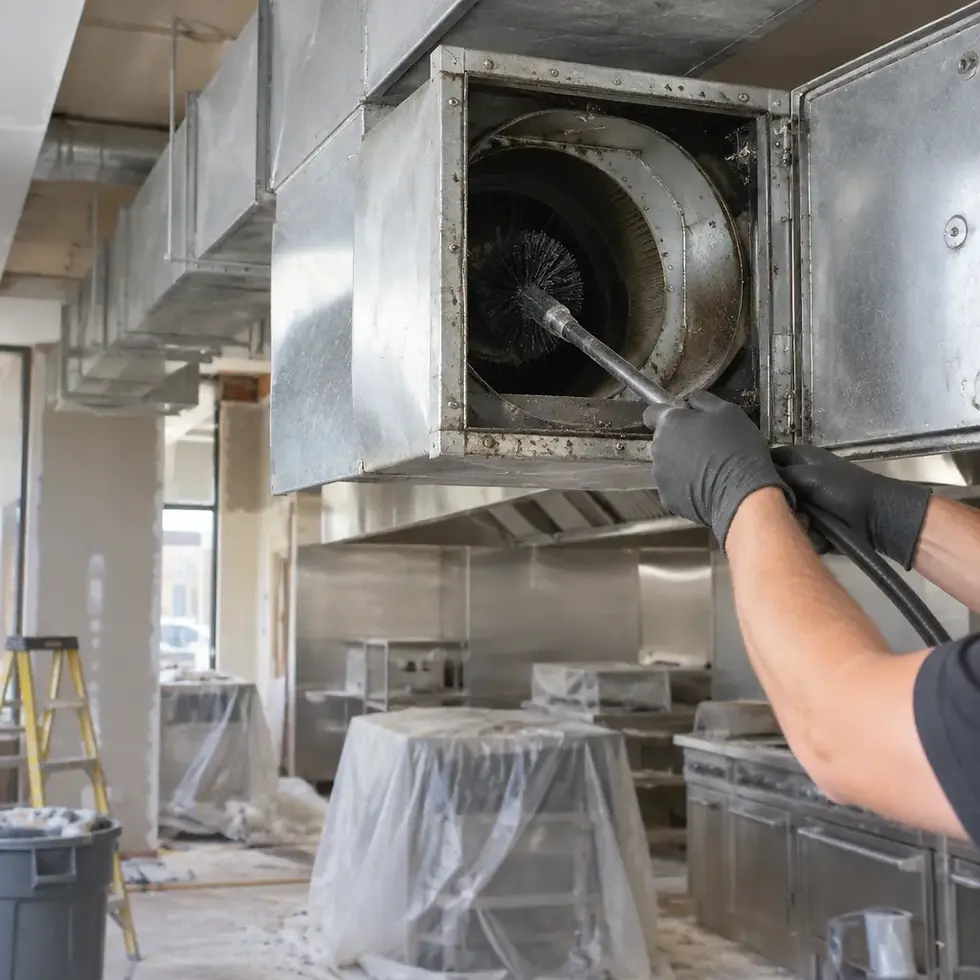
A fan that ran fine on your last service day can fail on its first start after months idle. Belts dry out and crack, bearings can seize from sitting, and motors that were never checked during the shutdown may draw more current than expected when the restaurant comes back online. Reopening day is the worst time to discover any of this.
Schedule a test run of the fan well before the first service. Watch for vibration, unusual noise, and belt slip, and check that the fan spins freely by hand with power off. If anything looks marginal, fix it while the kitchen is still empty and no one is waiting for dinner.
Fan Belts and Motor Condition
Inspect the belt for glazing, cracking, and uneven wear, and replace it if you see any of those signs, even if the belt still turns. Replacing a belt on a quiet weekday costs far less than a failed fan on a Friday night. A motor that is weak, noisy, or overheating should be evaluated before reopening, since a motor swap is much easier to schedule during a closure than during service.
Pro tip: Keep the old belt part number and the motor nameplate data in your closure file. The replacement crew can match parts faster, and your insurer will see that the equipment was maintained rather than simply restarted.
Hinge Kits and Access Panels
Hood cleaning requires opening and securing the hood and duct access panels, which puts real weight and stress on the hinges. Worn or missing hinge hardware makes access panels hard to open, and a panel that drops during cleaning is a safety problem for the crew. Check every hinge and latch during the closure, and install hinge kits where the originals are cracked or stripped.
Do not assume the hardware survived demolition. Crews often pull hoods, panels, and brackets during construction, and the replacement parts may come from different suppliers. Test each panel open and closed before the walkthrough, and confirm it seals tightly enough to hold the airflow the system was designed for.
Grease Trap and Drain Work During Renovation
Grease traps are the other part of the kitchen that quietly stops working during a closure. Residue left in the trap sits, separates, and often produces a sour smell that lingers into the new build. If the trap is opened or disconnected during plumbing work without being emptied, that waste can move into the drain line you are trying to keep clean.
Why Traps Fail After Long Shutdowns
A trap that was full on your last service day does not empty itself while the building sits. Over several months, the fats solidify, the baffles get coated, and the trap can clog or back up once water starts flowing again. Pumping and cleaning the trap before the reopening plumbing test prevents a Monday morning backup from landing in the new floor.
Check the trap's condition as well as its contents. Look for cracked lids, damaged baffles, and broken gaskets, since a damaged trap can let odor and grease escape into the space around it.
Coordinating With Plumbing Rough-In
Most grease trap problems come from timing. The plumber disconnects lines, the trap gets moved or capped, and nobody confirms whether it was emptied first. Put trap pumping on the same schedule as the hood cleaning, and make it a required step before any drain line is cut.
After the new drains are connected, run water through the fixtures and check the trap and connections for leaks. Document the test and the date, because a grease trap that backs up during the first week often gets blamed on the new plumbing rather than the shutdown.
Choosing a Cleaning Schedule for Your Closure
Not every renovation needs the same approach. A gut remodel that opens the ceiling and replaces the ductwork calls for a different plan than a light refresh that keeps the existing hood. The table below compares three common approaches, the situations where each one fits, and the main way each one goes wrong.
Approach | Best Fit | Main Risk |
|---|---|---|
Full clean before demolition, then protection during work | Gut remodels that open the ceiling or replace ductwork | Protection covers fail, and debris enters the duct after the clean |
Partial clean at closure, then a final clean before reopening | Mid-scope projects that keep the hood and main duct run in place | Dust from later trades settles in the duct, and the final clean gets rushed |
Single clean after construction is complete | Cosmetic work with no changes to the exhaust path | The crew must cut into finished surfaces, and the cost climbs quickly |
Which Approach Fits a Gut Renovation
If the ceiling is coming down, use the full clean before demolition. It is the only approach that gives you a clean baseline and visible access to every section of duct. Accept the extra cost of protection and site walks, because the alternative is opening finished walls to reach grease you could have removed in week one.
Which Approach Fits a Light Refresh
If you are keeping the hood, the fan, and the duct path intact, a partial clean at closure followed by a final clean before reopening works well. The second visit matters because the crew sees the dust and debris the other trades left behind. A common mistake is skipping the final clean to save time, which leaves the reopening inspection to find what the crew would have caught.
Reopening Checklist and Documentation
The last two weeks before reopening are when most problems surface, so treat the final walkthrough as a formal step rather than a casual tour. Walk every hood, filter, fan, and access panel with your cleaning provider and your general manager. Bring the closure file, and note anything that does not match the report.

Final Walkthrough Before Cooking Resumes
Run the fan, check the belt, and confirm each access panel opens and closes without force. Confirm that filters are seated correctly and that any grease collection cup is empty and in place. Test the grease trap connection, then walk the line from the hood to the termination point looking for dust, debris, or loose covers.
Then confirm that the hood is clean, not just cleared. A hood that looks clean from the front can still have grease on the baffles and inside the plenum, so ask the provider to show the internal surfaces at the final visit.
Records to Keep On File
Keep the cleaning report, the parts list, the fan test notes, the grease trap pumping receipt, and the final walkthrough sign-off in one closure file. Store a digital copy with your insurer and fire official contacts, and keep a paper copy at the restaurant. When the inspector asks for records, you want the answer in minutes rather than days.
Set the next service interval before the first dinner service. Your restaurant is a different system after the renovation, with new equipment and possibly new airflow, so the old schedule may need adjustment. Write the next cleaning date on the file before you hand the keys back to the kitchen crew.
Frequently Asked Questions
Do I still need hood cleaning if my restaurant is closed for several months?
In most cases, yes. Grease already in the hood and duct does not disappear during a closure, and construction dust can settle in open ducts. Schedule the clean before demolition, and confirm the final walkthrough with your provider before reopening.
When should hood cleaning happen during a renovation?
Before demolition or ceiling work covers the hood and duct runs. That window gives your crew access to the full system and avoids cutting finished surfaces later. Add a final clean before reopening if other trades worked near the exhaust path.
Does NFPA 96 apply to a restaurant that is temporarily closed?
Closing does not automatically suspend the standard's expectations. Plan as if the requirements apply on reopening day, and confirm with your local fire marshal or building official which edition of NFPA 96 applies to your installation and whether your changes need a permit.
How do I know if my fan belt needs replacing before reopening?
Replace it if you see cracking, glazing, fraying, or uneven wear, even if the fan still runs. Test the fan before the first service, and watch for vibration, slip, or unusual noise. A belt that fails during a closure costs far less than one that fails during dinner service.
Should I clean the grease trap before or after plumbing work starts?
Before. Pump and clean the trap before any drain line is disconnected, so waste does not move into the new plumbing. Record the pumping date in your closure file, and check the trap again after the new drains are connected.
What records should I keep from a closure cleaning?
Keep the cleaning report with a list of components cleaned and any sections that could not be reached, plus photos of access points, parts lists, fan test notes, grease trap receipts, and the final walkthrough sign-off. Store a copy with your insurer and at the restaurant.
If you have managed a hood cleaning during a renovation, tell us what surprised you most, whether it was a hidden grease load, a failed fan, or a scheduling problem, because your experience will help other owners plan their closure.
We would love your feedback and any insights you would share with others. What perspective would you add?

Comments